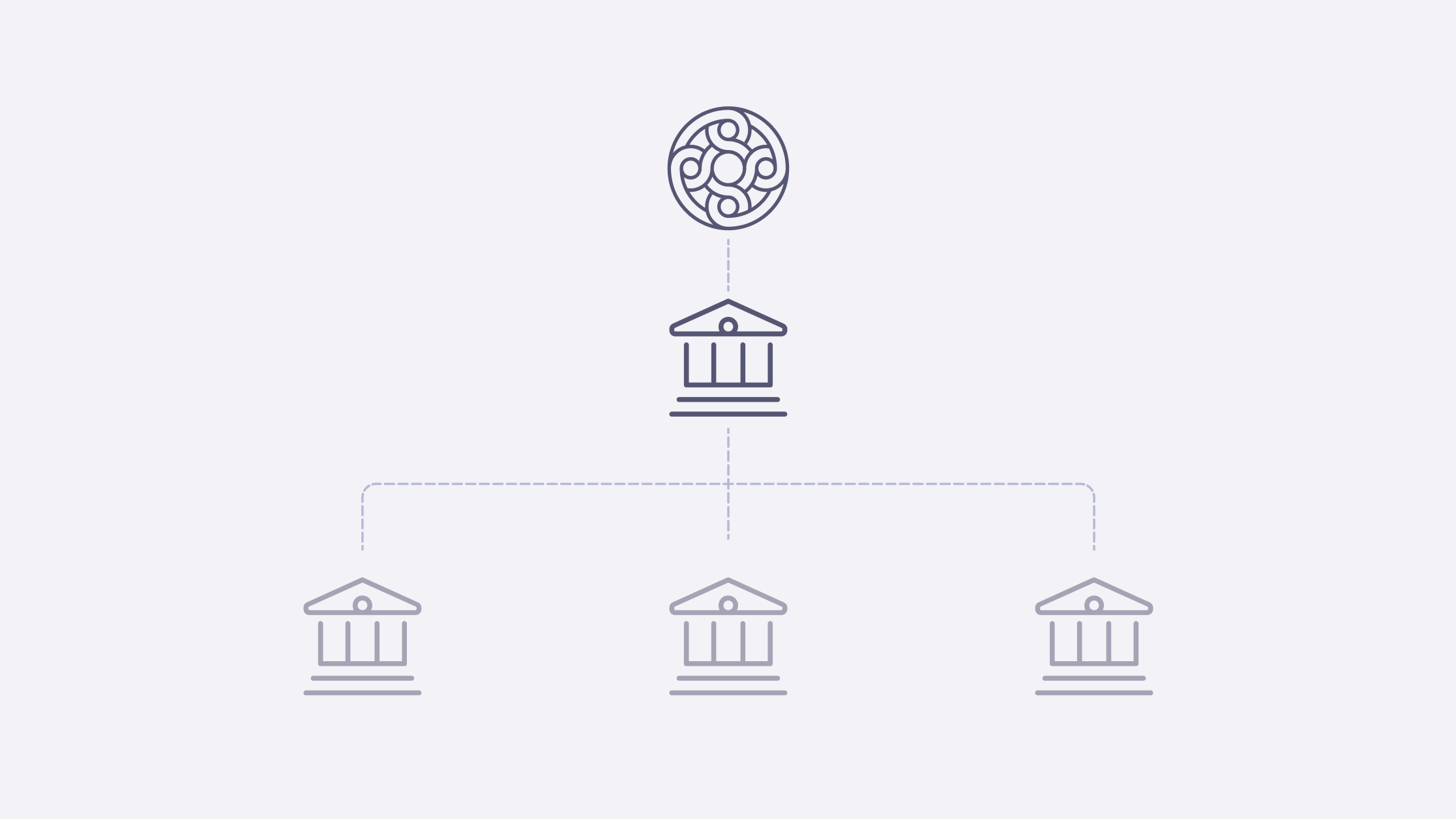
When your startup actually needs multiple bank partners

In the early days of a startup, one bank account often feels like a badge of simplicity: one login, one balance, one source of truth. For a while, that’s enough. Money flows in, money flows out. You can see everything at a glance, and you don’t spend time thinking about structure.
But, as the business grows, that simplicity can become a limitation. As soon as you start managing funds across multiple entities, paying teams in different currencies, splitting responsibilities among operators, or holding larger cash balances, the single-bank setup can start to feel tight. The workflows probably won’t break outright, but friction can build. That friction is usually the signal that it’s time to step back and examine whether you’ve outgrown the one-account model.
This guide walks through the inflection points where startups benefit from additional accounts or banking partners — and how to manage that complexity to keep your financial operations clean, rather than chaotic.
Why founders default to a single bank
Most early-stage founders start with one banking provider, and there’s nothing wrong with that choice. It’s practical, easy to maintain, and avoids unnecessary setup at a time when you’re being pulled in a million directions. Once that account becomes part of your company’s financial rhythm, switching or adding complexity can feel like an unnecessary distraction.
Founders often open their first business account at the same place where they bank personally, which makes the relationship feel stable and predictable. A single account means you don’t need to track naming conventions, jump between dashboards, or coordinate access levels. You can keep all activity visible in one place. That clarity matters when you’re running lean and managing many workflows at once.
In the earliest phases — think pre-seed through early seed — most startups have straightforward spend categories, such as payroll, software, contractors, and maybe some vendor payments. If your operating structure is simple and the stakes are relatively low, one account can carry you further than some people might assume. But there’s a point where simplicity becomes a constraint. And when you reach that point, you’ll feel it.
Trigger points: When you might need multiple banking partners
As a startup becomes more complex, the “one account fits all” approach starts to break down. Here are the most common triggers that push companies toward a multi-account or multi-bank strategy.
Fundraising, investor requirements, and cash management
Once real capital enters the picture, expectations change. Investors may want:
- Dedicated accounts for their funds
- Clear separation between operating spend and long-term reserves
- Better visibility into runway tracking
- A structure that aligns with internal controls
Even without investor pressure, founders often realize that large cash balances deserve more intentional management. That might mean splitting funds between operating cash and reserve cash, or creating separate accounts for specific initiatives (like a major product build or international expansion).
A single account makes it harder to maintain those distinctions; multiple accounts make it easy.
International growth and currency needs
For many companies, the decision to pursue international expansion is when they realize their banking setup needs a new layer of structure.
Going global can introduce banking needs that your original provider may not cover. For example:
- Paying teams or contractors abroad
- Dealing with multiple currencies and FX spreads
- Accepting revenue in a foreign currency
- Speeding up regional payments
- Handling cross-border transfers
Using separate accounts — or different partner banks — lets you manage currency exposure directly, avoid unnecessary conversions, and streamline cross-border money flows.
Treasury strategy and risk mitigation
Holding all your cash in one account at one institution can create concentration risk. As balances grow, so does that risk.
You might start asking questions like:
- What happens if my bank has an outage?
- Am I over the insurance threshold at this institution?
- Should I diversify across partner banks?
This isn’t just a theoretical concern. As companies begin holding millions in cash — whether from revenue or fundraising — many choose to spread funds across multiple accounts or banking partners as part of their standard treasury practice. This helps create resilience. And, in volatile markets, resilience matters.
Functional separation: Payroll, vendors, and multi-entity operations
As operational complexity creeps in, it helps to isolate different financial functions. Examples include:
- One account for payroll
- One account for vendor and contractor payments
- One account for savings or runway
- Separate accounts for subsidiaries or project-based legal entities
Segmentation isn’t about bureaucracy. It’s about clarity. When each account has a clear purpose, month-end reconciliation is faster, audits are simpler, and access controls are clearer.
Security and organizational hygiene
When a single account is responsible for every payment and balance, the blast radius of a mistake or compromise is huge.
Splitting high-risk functions into separate accounts:
- Limits exposure if credentials are compromised
- Makes it easier to manage who can initiate versus approve payments
- Reduces the chances that payroll, vendor payments, and long-term cash are all affected by the same issue
When accounts map to specific roles, responsibilities, and teams, security improves automatically.
How to manage multiple banking partners without losing sleep
The biggest fear founders have around multiple accounts is that everything will become harder to keep track of. In reality, with a little forethought, a multi-account setup can be cleaner than a single-account, not messier.
Here are steps you can take for a seamless transition to a multiple-account system for your startup.
Use clear naming and structure
A consistent naming system makes it easy for anyone reviewing your accounts — including founders, operators, bookkeepers, and accountants — to understand the purpose at a glance. This could be something as simple as:
[Entity] – [Function] – [Currency]
This removes ambiguity in statements, permissions, and treasury management. It’s worth establishing a clear and consistent naming structure early.
Keep access control tight and intentional
As your team grows, not everyone needs access to everything. Clear access control solves two problems at once: It reduces internal risk and lowers cognitive overhead.
Examples of ways to control access include:
- Payroll admins access only the payroll account.
- Finance leads get approval rights.
- Department heads might get view-only permissions.
- Founders maintain access to reserve or savings accounts.
A little discipline here goes a long way toward long-term operational hygiene.
Centralize visibility to reduce mental overhead
If you’re using partner banks, having all accounts visible in one dashboard can make a multiple-bank setup feel like a single unified system. This is where Mercury’suser experience tends to resonate with founders.
Instead of managing different logins, portals, or download formats, on Mercury you get:
- Consolidated cash visibility
- Standardized statements
- Easier reconciliation
- Fewer surprises when transferring funds across accounts
Centralization is the key difference between “multiple accounts create mess” and “multiple accounts create clarity.”
Watch out for common pitfalls
Though the multi-account model is usually a net positive for growing startups, there are a few traps to avoid:
- Redundant fees from unused accounts or services
- Fragmented record-keeping if statements aren’t pulled consistently
- Over-compartmentalization ‚— since too many accounts can defeat the purpose
- Missed transfers or cash stranded where it shouldn’t be
- Inconsistent naming that confuses auditors or operators
If you keep things lean, purposeful, and consistent, these problems stay small.
Decision framework: Is it time for multiple bank accounts?
Here’s a quick checklist founders can use when deciding whether to move toward a multi-bank structure:
- Are you operating across multiple geographies or currencies?
- Do you hold cash balances that exceed deposit coverage thresholds?
- Are investors asking for more structure or fund segregation?
- Do you manage multiple legal entities or business lines?
- Are payroll, vendor payments, and operations all coming from one pot?
- Has reconciliation become harder over time?
- Would dividing responsibilities improve security or clarity?
If your answer is “yes” to even one or two of these questions, it’s worth re-evaluating your bank setup. If you’re experiencing several of these scenarios, it’s usually time to expand to multiple accounts.
A multiple-account system can effectively manage complexity
Growing a startup adds layers of responsibility, and your banking structure often has to grow alongside the business. The decision to add multiple accounts or banking partners isn’t about adding complexity for complexity’s sake; it’s about building a financial system that matches the stage you’re operating at.
With thoughtful structure, clear naming conventions, disciplined access control, and the right tools, the multi-bank model becomes an asset, rather than a liability. You’ll get better visibility, stronger controls, smoother audits, and a financial foundation that can support the next phase of growth.
Related reads

How to reconcile a business bank account step-by-step

How to reconcile business credit card transactions

The 5 best corporate cards for employee spending in 2026