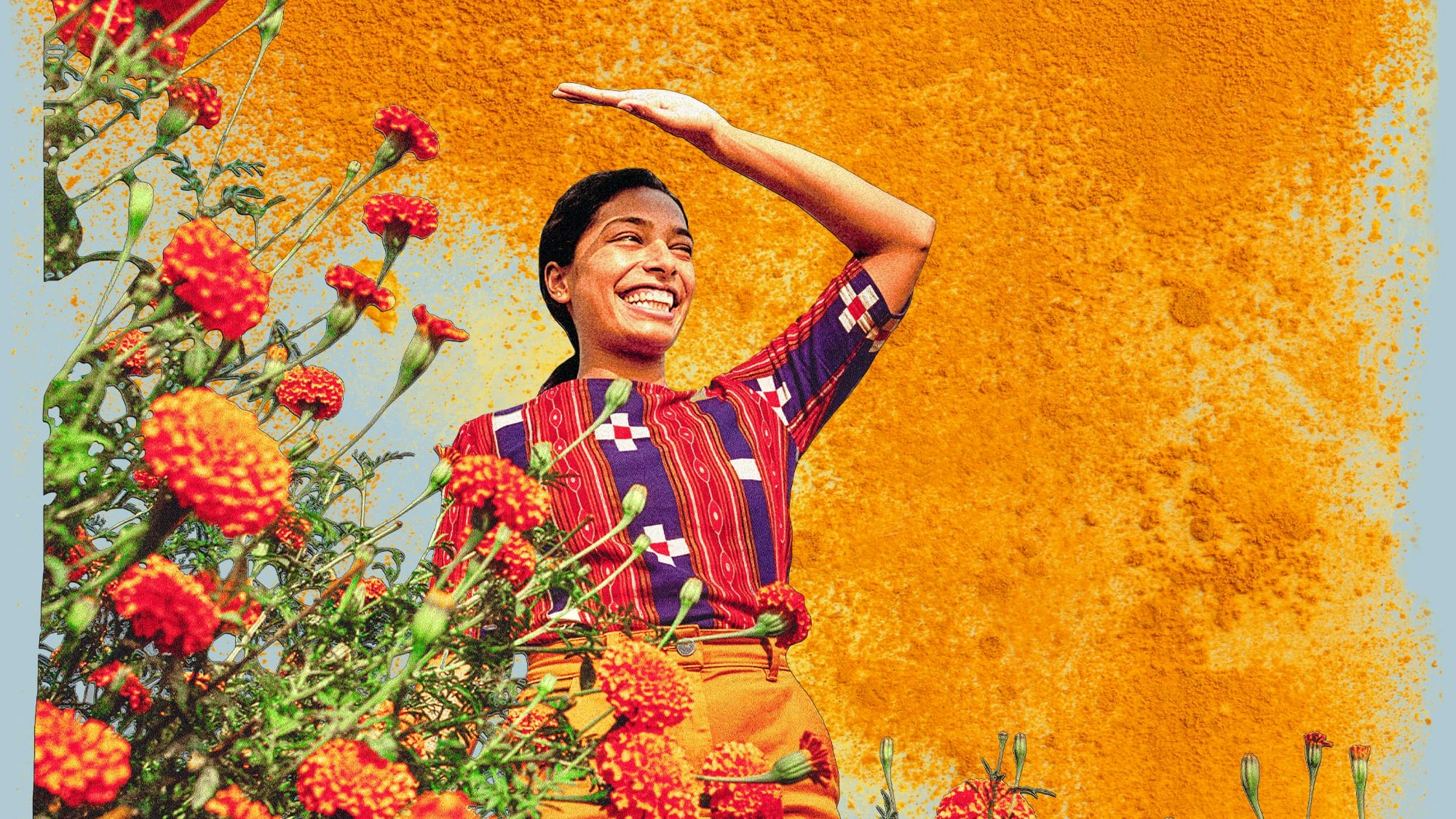
Melissa Gencarelli observes with intention
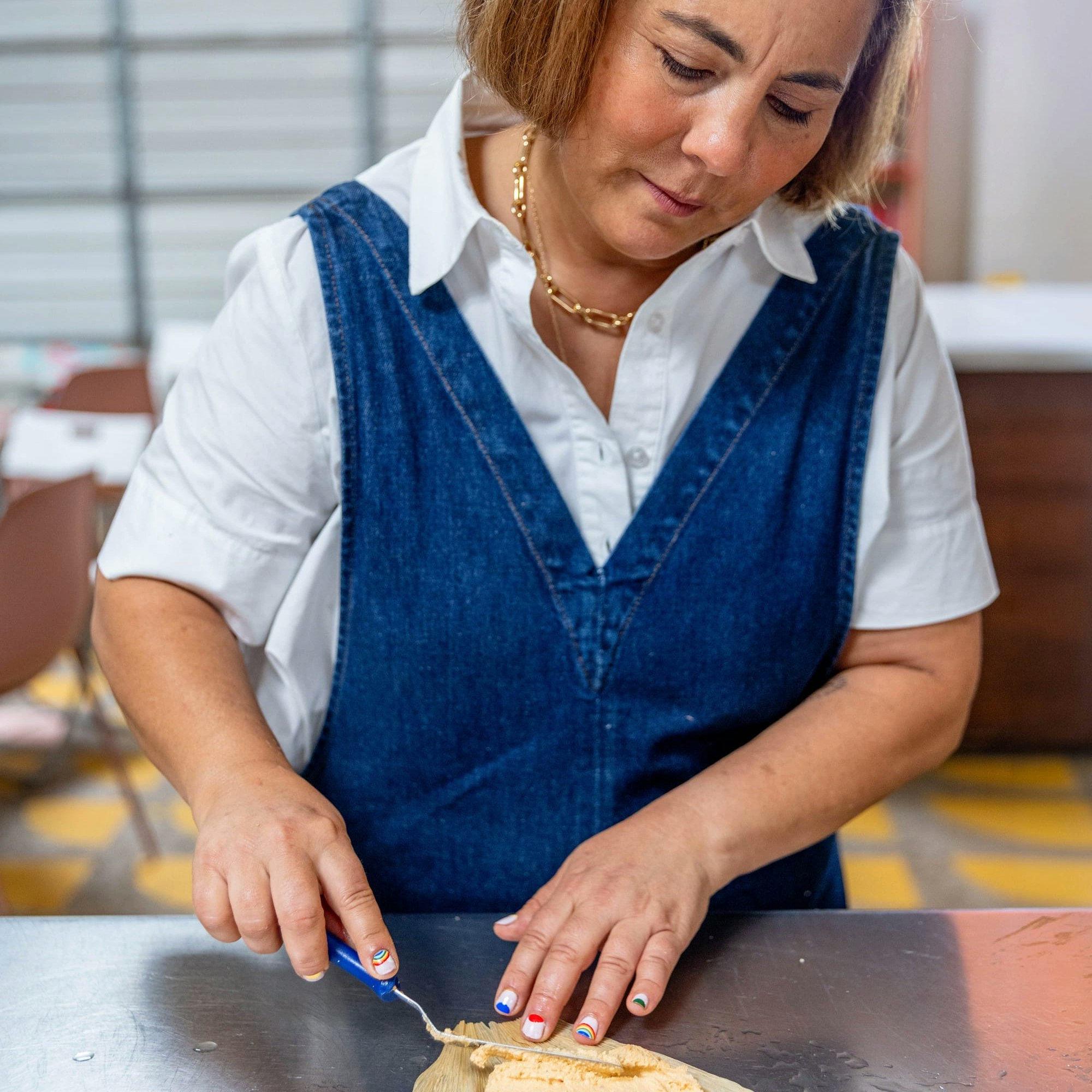
Serena Maria Daniels is a Detroit-based food journalist and cultural critic.
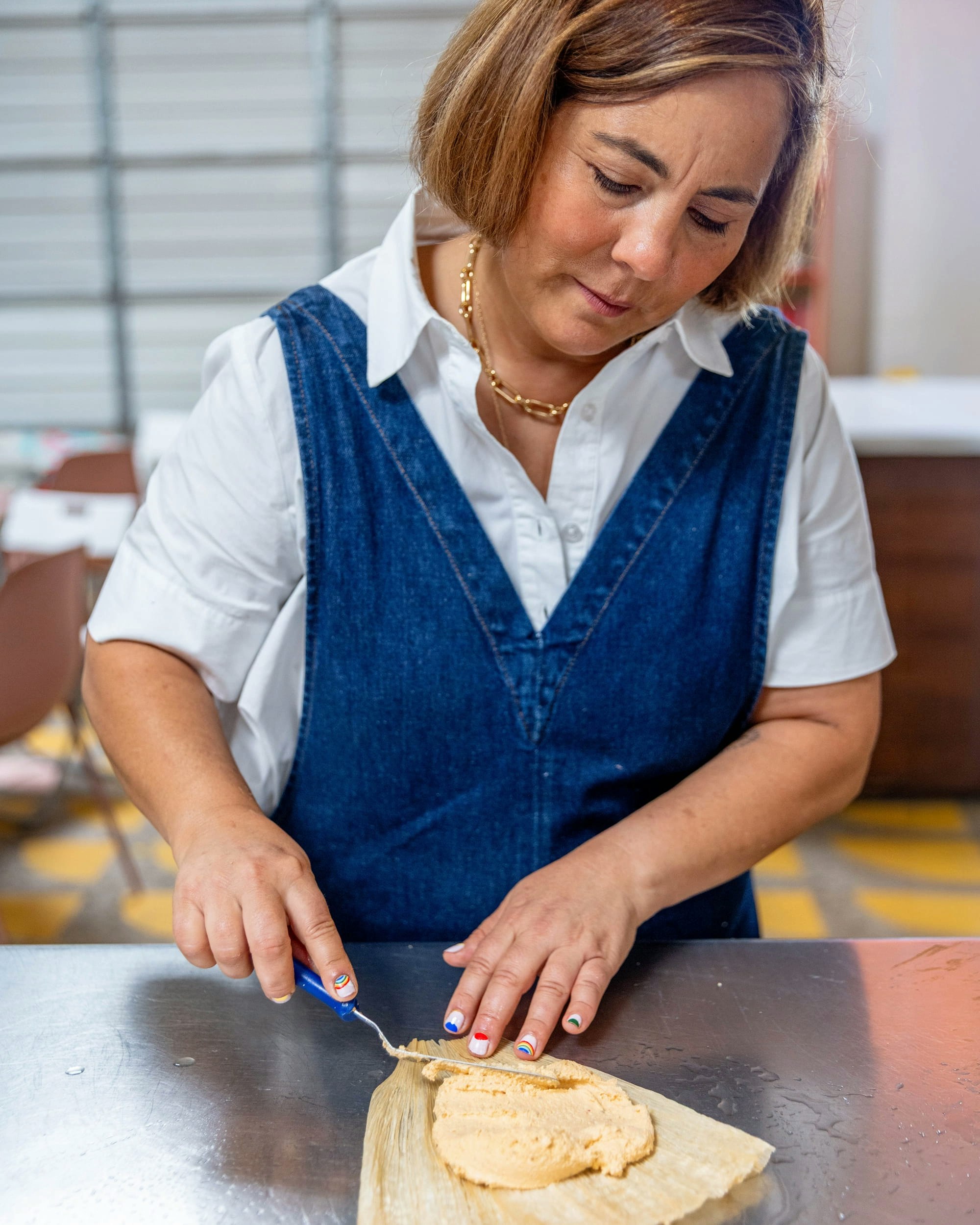
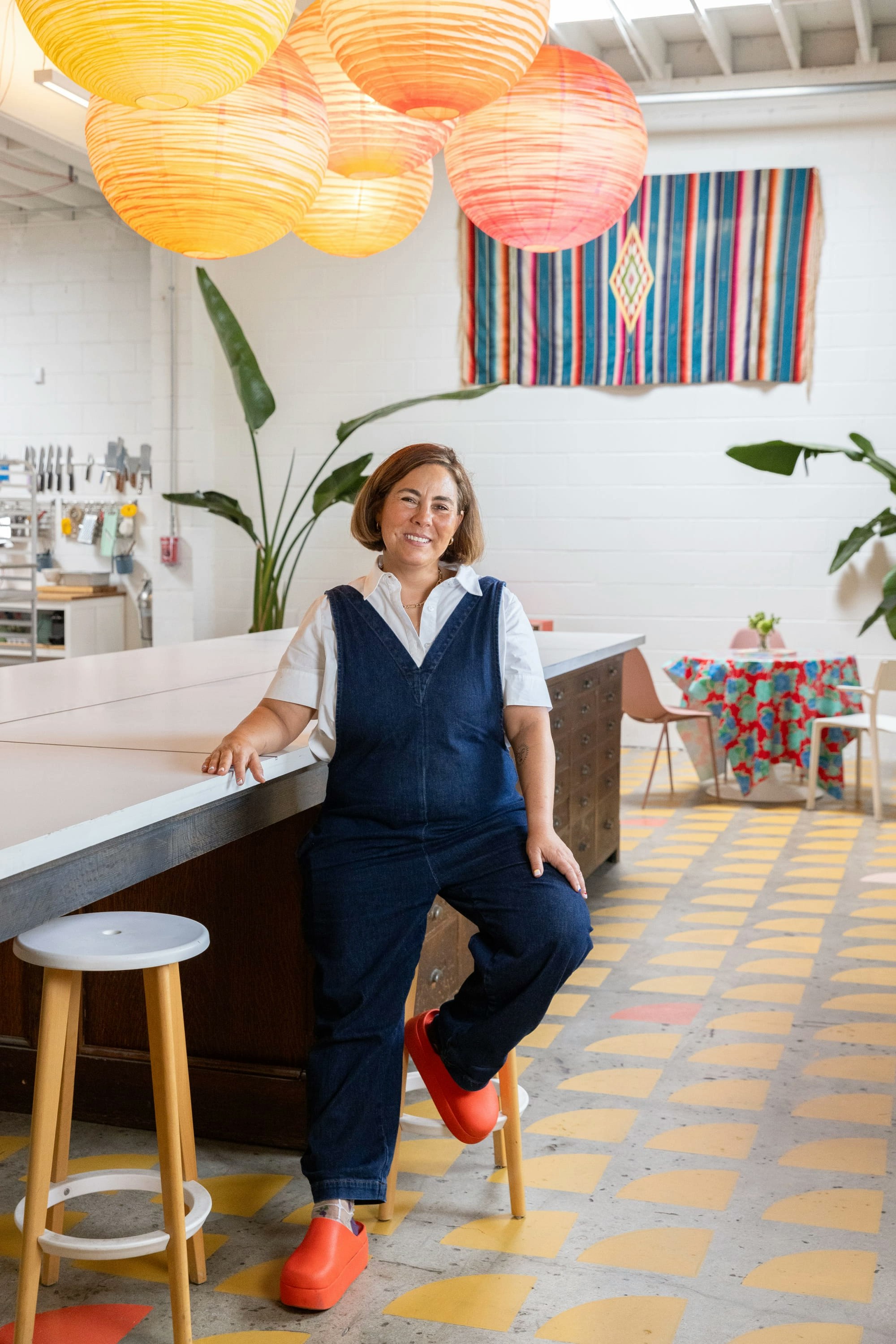
It’s 4 a.m. The sun won’t be up for hours, the kids are still fast asleep, and Marissa Gencarelli is already thinking about tortillas. In an hour, either she or her husband, Mark, will be off to their factory, just in time for production to begin at Yoli Tortilleria, the Kansas City company the couple built into a nationally recognized producer of Sonoran-style flour tortillas, nixtamalized corn tortillas and chips, masa, and a line of bottled salsas.
For generations, tortilleras, or tortilla-makers — whether home cooks or owners of large-scale factories — have started work before dawn to gauge the weather, a seemingly minor variable that actually has a major impact. Humidity changes the way dough behaves; cold weather affects how quickly fats soften. Gencarelli checks the humidity and temperature each morning, making small adjustments to water, flour, and fat before production begins. “It’s just like baking,” says Gencarelli, a native of Sonora, Mexico. “Every single step of the way really matters, so we annotate everything. And then the next day, let’s go ahead and start again.”
Every single step of the way really matters, so we annotate everything.
Yoli is one of the most closely watched tortilla companies in the U.S., with roughly 55 employees, a retail and daytime café space that opened in 2020, and a 10,000-square-foot tortilla manufacturing facility. In 2023, Yoli earned a James Beard Award for Outstanding Bakery. The recognition was unusual: Tortilla makers rarely occupy the same cultural space as artisan bakers and pastry chefs in the United States, and fresh tortillas are cooked on a comal, or a flat griddle, rather than baked in an oven. For the Gencarellis, the award underscored how far the company had come.
The Gencarellis met in Italy while studying abroad through the University of Arizona. After college, the couple moved to Kansas City, Missouri, Mark’s hometown, where Marissa worked at a healthcare technology company. But she quickly found that her options for the kind of tortillas she ate growing up, both corn and flour varieties, were scarce in her new hometown — “I used to bring all my tortillas from Sonora,” she says. So, in her spare time, she and Mark started teaching themselves how to make freshly ground masa for corn tortillas by watching YouTube videos and using a hand-crank molino, a stone mill traditionally used throughout Mexico.
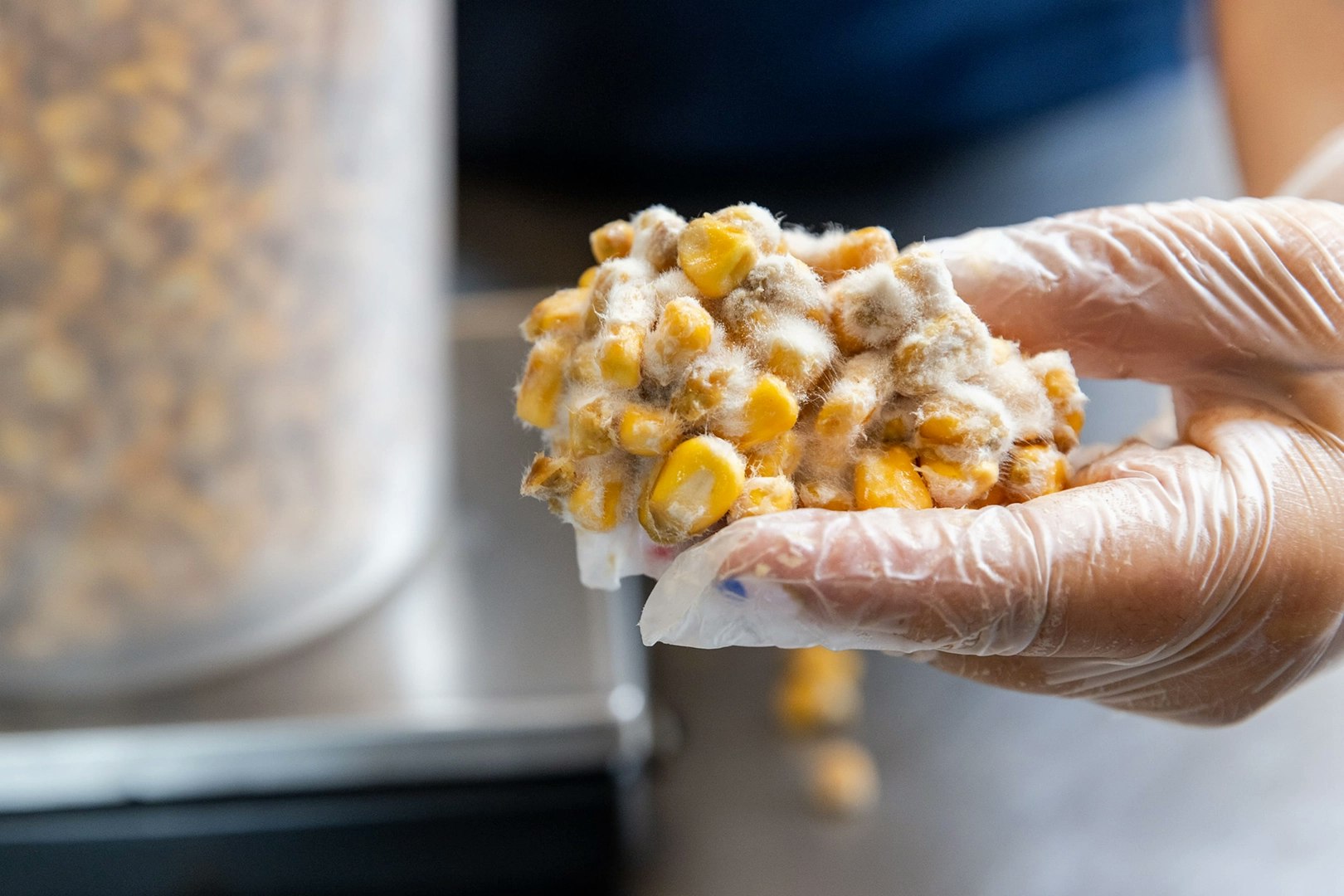
Preparing masa from whole corn is a labor-intensive hobby: It requires soaking cooked kernels in an alkaline solution (usually lime), a pre-Hispanic process known as nixtamalization, which softens the kernels and makes their nutrients more bioavailable. The kernels are then ground in a molino. The technique, dating back more than 3,000 years, transforms the corn’s flavor, aroma, and texture, producing a dough that behaves very differently from tortillas made with commercial corn flour. Each step introduces its own set of variables: water temperature, lime ratios, soak times. Even adding water to the molino becomes an exercise in observation. “When you’re grinding, it’s like drip, drip, drip,” Gencarelli says of the slow process. “When you have a very dry masa, your tortillas will taste very dry. When you have a very wet masa, your tortillas end up looking like ovals. It’s like Goldilocks; they have to be just right.”
The Gencarellis officially launched Yoli in 2017, moving into a dedicated production facility and selling their nixtamal tortillas (featuring white corn from farms in Missouri, Kansas, and Illinois) at the Overland Farmers’ Market in Overland Park, Kansas. Gencarelli named the business after the Nahuatl (Aztec) word for “to live,” drawing inspiration from Mesoamerican tradition and her mother, an American who married into a Mexican family and whose likeness is reflected on the company logo.
Yoli landed its first restaurant account, Chicken N Pickle, within a week of launch. Immediately, the couple realized their manual crank molino wasn’t going to cut it if they wanted to scale their operations. Looking for a way to increase production, Gencarelli traveled to Southern California, where she connected with Guillermo Campbell of Campbell Machine, a manufacturer whose equipment is widely respected among tortilla makers. The investment in a commercial molino allowed Yoli to produce masa at a scale that had previously been out of reach, and marked Yoli’s transition to a manufacturing business that required new systems, new documentation practices, and a deeper understanding of how recipes behaved at scale.
Scaling production meant understanding not only what worked, but why it worked.
“You think you got your recipe just right, and then you get the machines to have some volume, and then it’s a whole different game,” Gencarelli says.
Scaling production meant understanding more than just a baseline recipe — and taking a hard look at not only what worked, but why it worked. Gencarelli says they leaned into the practices they’d absorbed in the earlier days of learning, and took a scientific approach to documenting the details of each batch of tortillas they’d prepare. Water quantities. Temperature fluctuations. Humidity levels. How the dough behaved from one batch to the next. Failed batches were annotated and compared against previous attempts. Preserving and analyzing these details would be necessary if Gencarelli wanted to build a system capable of producing the same results under changing conditions.
By the end of the first year, Yoli’s clients included 10 restaurants and a local butcher shop, in addition to the farmers’ market stall. It was at the farmers’ market that a Whole Foods forager — employees tasked with sourcing new products — discovered the company’s tortillas, leading to Yoli’s first placements in area stores. The Whole Foods opportunity also introduced a new set of demands. Gencarelli says her years in healthcare technology — where she worked on strategic growth, IP strategy, client management, and development planning — had already prepared her for the documentation, tracking, and compliance required to meet large-scale grocers’ standards and complete third-party audits.
“Coming from that background was really instrumental for us to be able to be more agile and have more success at a faster pace,” she says.
For year two, Yoli was ready to chase a more elusive ambition: the Sonoran-style flour tortilla. Sonora is part of a broader flour tortilla tradition that stretches across northern Mexico (states including Chihuahua, Coahuila, Baja California, and Nuevo León), where wheat is a staple crop. But Sonoran tortillas occupy a category of their own. They’re typically larger and thinner, “but still needs to be able to stretch,” Gencarelli says, “and then when it breaks, to look [almost flaky] like a croissant.”
For roughly a year and a half, the Gencarellis tested more than two dozen types of flour, evaluating differences in protein content, elasticity, and flavor. Protein levels had to fall within a narrow range: Too much and the tortillas lost the delicate texture they were after, too little and they lacked the strength to stretch. They compared fats, eventually settling on Berkshire pork fat sourced from a producer just over 20 miles from the factory. (Eventually, Yoli added vegan flour tortillas into the fold, made with avocado oil.)
The work appealed to the same instincts that had shaped the rest of the business. Rather than becoming attached to any single recipe for sentimentality’s sake, Gencarelli focused on understanding why one batch succeeded where another fell short. By 2022, Yoli moved to a larger facility to keep pace with demand.
That’s been a big lesson for us: ‘How do we share my passion without being preachy?’
Today, Gencarelli says between 260 and 300 restaurants across the Kansas City region feature Yoli tortillas, and its packaged goods — salsas, tortilla chips, and seasonal products like tamales and masa — are available at 100 retailers across the U.S. Gencarelli says all Yoli products undergo multiple rounds of evaluation in the company’s test kitchen. Some never make it past the experimental stage. The team evaluates pricing and gathers feedback at Yoli’s retail store and local farmers’ markets before products are considered for broader distribution. Every piece of feedback is documented and reviewed. “You’re used to failing fast,” she says. Products that don’t gain traction may be shelved, reformulated, or revisited later. A hot sauce that struggles to find an audience one season may return under different circumstances. “Sometimes it’s not the sauce," Gencarelli says. “Sometimes it’s timing. Sometimes it’s positioning. Sometimes there’s not enough marketing.”
As Yoli expanded its offerings, the company also found itself in the position of educating customers alongside selling to them — or as Gencarelli says, thinking about “How do we help someone have a complete experience with Mexican food?” Many consumers in the Kansas City area, according to Gencarelli, had little familiarity with how fresh nixtamal tortillas behaved compared to mass-produced supermarket versions. Nixtamal tortillas (which contain no preservatives or additives) demand a bit more attention: They benefit from high heat and quick reheating, and they are best eaten within days rather than weeks. Recipes, reheating instructions, and conversations about regional Mexican food traditions can be found on Yoli’s social media channels, and Yoli organizes community events like cookbook author appearances to educate consumers.
Gencarelli considers these essential components of Yoli’s retail growth strategy, and is also mindful of how she talks about Mexican food traditions. “The average American doesn’t know about the million regions that we have in Mexico, and what makes something different from the other,” she says. “I think that that’s been a big lesson for us: ‘How do we share my passion for that without being preachy?’”
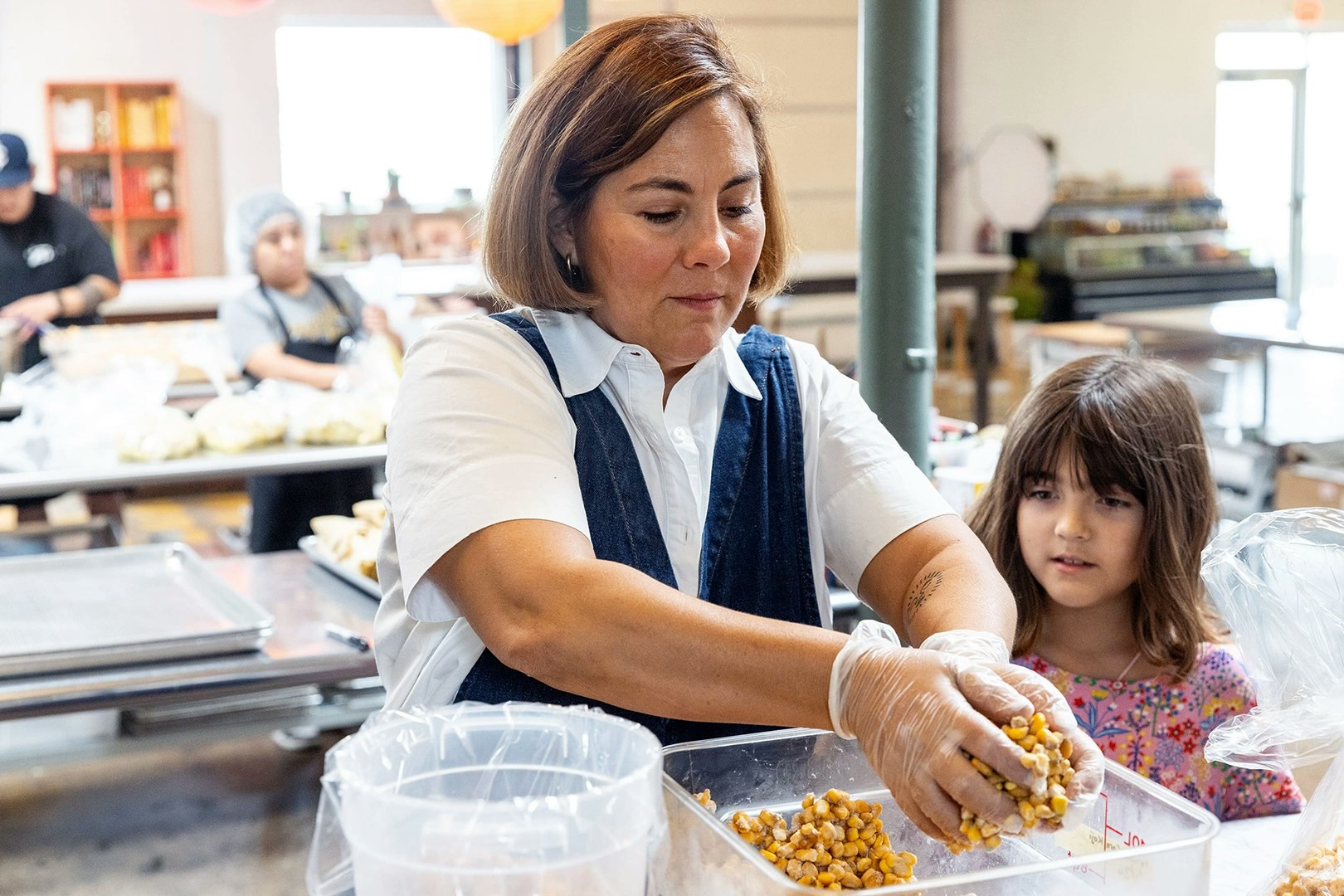
The key, she says, is in educating the consumer on the level of care Yoli takes at every step of the process. The rest is a matter of taste. “It’s like bread. You might be a sourdough person, you might like Wonder Bread. They can both coexist.”
Looking ahead, much of the Gencarellis’s focus is on growth. Every Sunday, Marissa and Mark sit down at a local café to review three-month, six-month, nine-month, and annual goals before planning the week. While Mark oversees production, Marissa focuses on retail expansion and product innovation. Marissa still starts her days the same way: coffee, a conversation with Mark, and a review of her to-do list. The products may have expanded, and the company may have grown far beyond its farmers’ market roots, but the process remains one of constant learning.
“Food is constantly changing, evolving,” she says. “And I think that’s what makes it so fun.”
About the author
Serena Maria Daniels is the founder and editor of Midwest Mexican, an independent publication covering food and culture across the Midwest. Her reporting has appeared in Bon Appétit, Eater, Taste, and other national publications, and her work will be featured in the 2026 edition of Best American Food and Travel Writing. Raised in the Pacific Northwest and Southern California, she's called Detroit home since 2011.
Share article
Related reads
Devin Gaffney wants to overthrow the algorithm
Alex Fine of Fun on the dollars and cents of starting up
Allison Esposito Medina is in the business of opening doors