Can a new crop of founders ‘solve’ streaming music?
Sam Hockley-Smith is an LA-based writer and editor with a focus on music and literature.
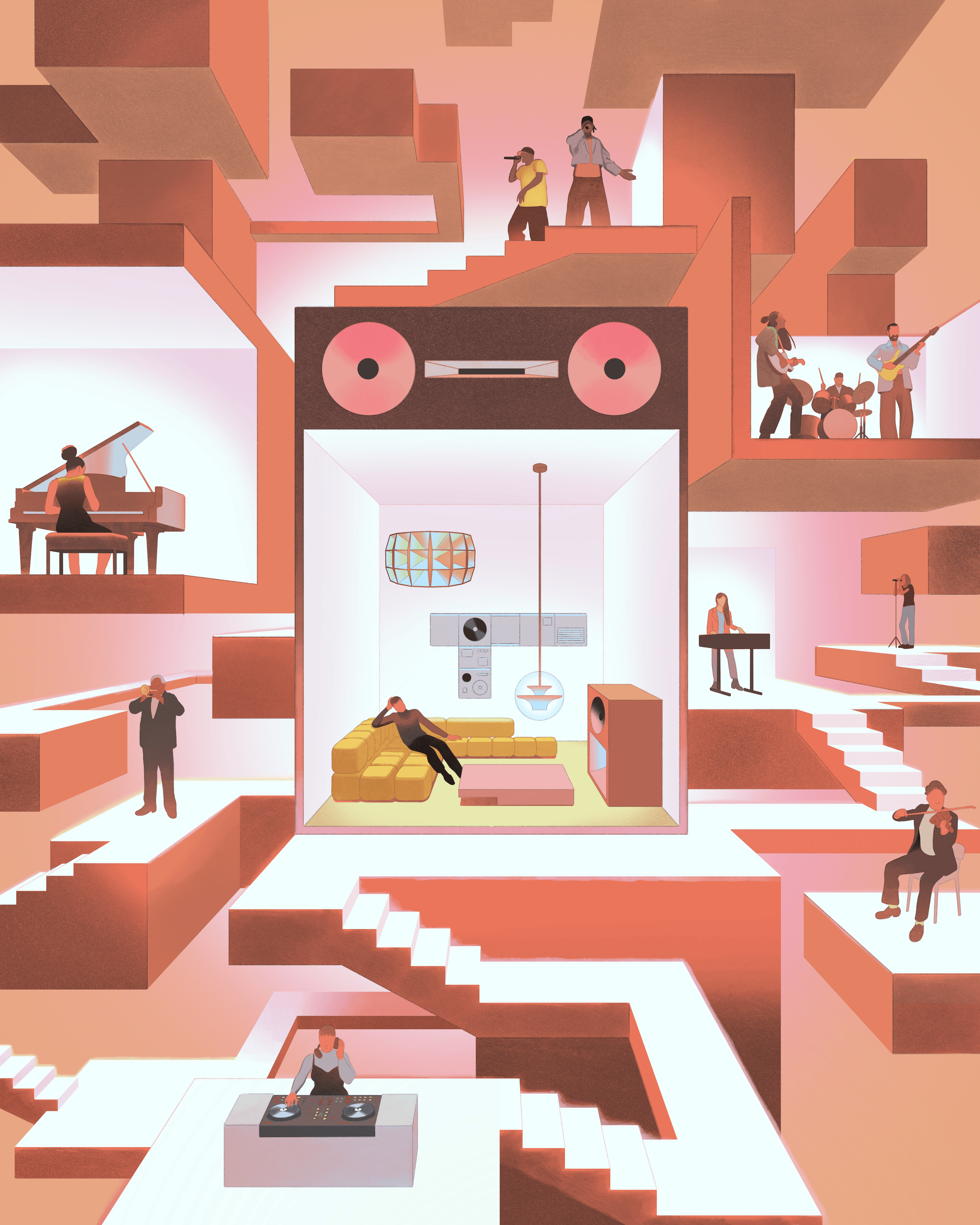
When the compact disc became the dominant physical media format in the early ’90s, it was because CDs took up less physical space than vinyl, sounded better than cassettes, and allowed listeners to jump to any moment of any song instantly. But CDs were sold at progressively higher prices, until the retail price became prohibitive for many listeners. People wanted to hear and own a lot more music than they could afford to purchase.
Less than a decade later, file sharing programs like Napster (launched in 1999) and Limewire (2000) short-circuited the music industry’s economic engine. Suddenly, anyone with an internet connection could find and download almost any song for free. It was blatantly illegal and incredibly easy to access. The temptation was impossible to avoid. It’s easy to look back on this time as a utopia of choice, but given the legal risk for users and the substantial loss of revenue for record labels, it also makes sense that legal streaming services stepped in when they did: First Rhapsody in 2001, followed by Pandora in 2005 and then, Spotify in 2008 (2011 in the U.S.).
The subscription model works by drawing fans in with an (over)abundance of choice, and then keeps them there by feeding them variations of what they already like.
Early streaming music platforms, like many today, were subscription based, and offered not only convenience, but also the promise of a safer internet experience: They negotiated access to most of the world’s music via licensing deals with record labels. For a nominal fee, listeners would discover new music at an unprecedented rate; popular artists still raked in the big bucks, while small to mid-tier artists were frequently lost in the shuffle.
The streaming landscape has since evolved, offering multiple services that do similar things. Spotify, Apple Music (launched in 2015), TIDAL (launched in 2014), and YouTube Music (launched in its current, most successful form in 2018) compete for the largest share of ears. Spotify has (arguably) the best search function. YouTube Music allows you to access a rich archive that includes fan uploads and other obscurities. Apple Music and TIDAL prioritize high-fidelity audio and robust editorial content. All share a similar subscriber-based business model.
The subscription model works by drawing fans in with an (over)abundance of choice, and then keeps them there by feeding them variations of what they already like at low prices. It offers users convenience, but creates a new set of challenges for both the music industry and listeners in the process: How can middle-tier artists make a living when streaming pays them in fractions of cents? Is the payment calculus even fair? And for fans, how do you feel a meaningful connection with the musicians you love, when everything is just a click away, and the algorithm tells you what you like before you could decide if you like it? And perhaps most importantly, how does music retain its cultural influence if access constantly takes precedence over quality and context?
The challenges of the current streaming model remain unsolved, but they’ve also opened up pathways for boutique platforms that are more equitable for artists and more enriching for listeners.
Read more about founders whose products reshape users’ everyday lives:
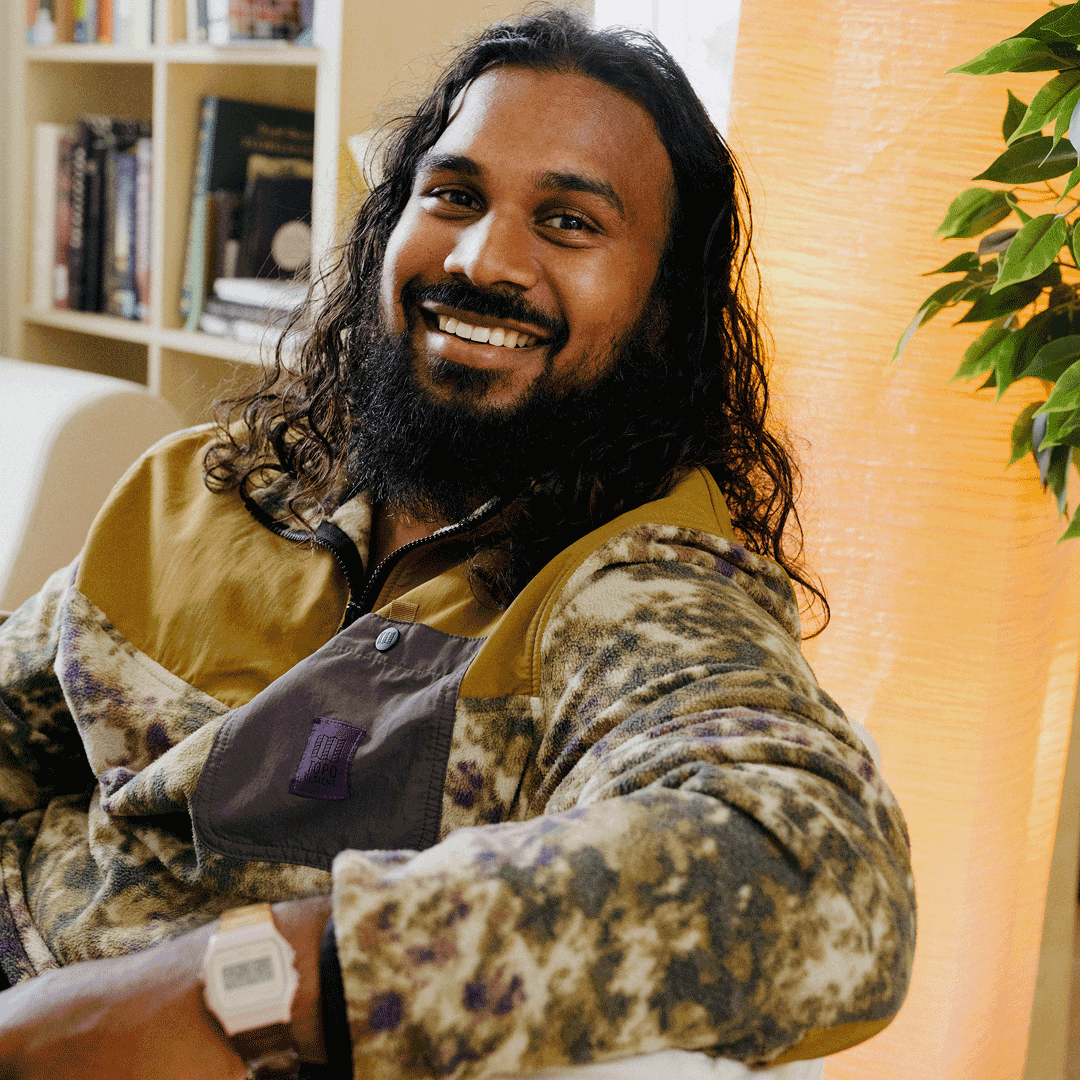

Anyone who uses a streaming music service has access to more music than we ever have before, often with little to no context for who is making it. “What we’re trying to do is say, well, if people are already listening to this, what kind of context will enhance that experience?” says Aaron Skates, founder of streaming platform Cantilever. “How can we expand on a world and just share a little bit of additional knowledge?”
Cantilever’s model is fairly straightforward, with intentional, focused listening at its core. At any given time, there are 30 albums available to stream on the platform. Each day, the oldest album cycles out and a new one cycles in. As of this writing, you can listen to a wide range of albums: from Americana legend Beth Orton’s brooding 2026 album The Ground Above, to Max Tundra’s idiosyncratic, 2008 outsider take on electro pop on Parallax Error Beheads You, to the Magnetic Fields’ seminal 1995 album Get Lost. It’s less about tapping into the zeitgeist (though you can also listen to Geese’s era-defining Getting Killed) and more about creating space for streaming that’s less beholden to the algorithm. In fact, by the time you read this, none of these albums will be on Cantilever at all, and will instead be replaced by a new, diverse crop of releases, supplemented by essays, profiles, and interviews that give listeners context, details, and backstories. If Spotify is a tech platform that trades in music and other audio, then Cantilever is a music and editorial platform that happens to use digital technology. In the Cantilever newsletter, Skates, a former music journalist who’s also done stints at an indie label and a publishing company, describes it as “a magazine you can listen to.”
How can we expand on a world and just share a little bit of additional knowledge?
The platform works with a “user-centric allocation” model, which means that payment to the artist and/or label comes directly from the monthly subscription fee of the user who streamed them, and because there are so few albums on the platform, the overall stream payout could end up being higher than you might find on, say, Spotify. When an album exits Cantilever, you’re encouraged to leave its ecosystem and purchase the digital files or a physical copy.
Of Cantilever’s approach to building trust and community, Skates says: “The [music] industry sees that there’s trust because our investors are independent record labels.” Last June, Cantilever secured £250k (roughly $330k USD) in pre-seed funding from indie label heavy-hitters including Domino, Partisan, Secretly Group, and Sub Pop. “They are backing something that they believe will [...] be good for independent music,” Skates says. “More artists want to talk about [Cantilever] and say, ‘I’ve looked into this. I think it’s good. I’m happy for my music to be here, and am willing to advocate for the platform.’”
This is a useful way of understanding how platforms can collaborate meaningfully with labels to build a more equitable system, but Skates has also made sure to consider the needs of his subscriber base. “There’s a journalism element to it as well, where we need to keep people engaged” with both the articles and musical selections, he says. “But there’s another kind of user, where they might not listen to everything [on the platform], but they will listen to a few things per month, and they’re still willing to pay because those few things are giving them some value.” In Cantilever, Skates has created a service that focuses on quality over quantity, and found that some users vastly prefer less options.
For years now, algorithms have guided us through the treacherous scale of mainstream streaming platforms, pointing toward what they think we’ll like based on what we’ve listened to before. They are not exactly unsuccessful at this — a cursory glance at your Discover Weekly playlist on Spotify will quickly tell you that machines have pretty well learned what you like, and know how to serve you other things you’ll want to hear. But humans recommending music to other humans is rooted in emotion and personal taste, and it turns out many streaming listeners want to be able to define what’s most important to them on their own terms.
People should be skeptical of the model and really look into it and understand it. The lesson is to not place blind faith in people and good intentions.
Or maybe the terms of their peers. In May 2026, music platform Subvert — which functions as a co-op system between musicians, labels, and music fans — launched its site after close to a year of members-only alpha testing. For $100, anyone can become a lifetime member, allowing them to participate in decision-making that has a material effect on how the site works: from voting on board members to considering changes in bylaws to running for leadership positions. Once accepted as part of the co-op, artists and labels may upload their music to the marketplace. Subvert pays artists 100 percent of the profit from songs sold, and is itself funded by co-op membership dues, physical merch sales, and optional donations.
If Cantilever is built on creating a relationship of trust, Subvert is built on proud cultivation of skepticism, encouraging each of us to constantly reevaluate systems we’re part of. “People should be skeptical of the model and really look into it and understand it,” Subvert founder Austin Robey said in a 2025 interview with The FADER. “People should be skeptical of me. The lesson is to not place blind faith in people and good intentions. We have to build real systems of accountability.” Subvert’s system quite literally subverts (sorry) a model that converts earned trust into user acquisition; to ensure that the platform remains truly communal, artists and labels must apply for membership. For artists, this involves “sharing previously published work and/or work samples in digital form,” which can be anything — previously published tracks, work-in-progress samples, or music available on, say, a Bandcamp page. Once they’re admitted, they are required to “upload and maintain original content releases to remain in good standing.” While the entry process for artists is purposefully fluid and straightforward, it’s a bit more rigid for labels, which must prove that they’re releasing works by “multiple musical artists” and have a current catalogue available to purchase.
Keep in touch
Subscribe to our community newsletter for monthly stories, resources, and inspiration from Meridian and across Mercury.
Robey believes the co-op model — which allows every user the ability to suggest and implement solutions — gives music fans a genuine chance of improving a flawed system.
A slightly more traditional version of these ideals can be found on the subscription platform Qobuz, which emphasizes high-fidelity audio. Qobuz offers a deep catalog, some of the highest payouts for rightsholders of any competing platform (an average of $0.015 to $0.019 per stream vs Spotify’s average of $0.003 to $0.005), a download store, original music journalism, and a focus on playlists and recommendations made by actual humans. It launched in France in 2007 and began offering high-quality streaming audio well before any other streaming service, until it nearly went bankrupt and was acquired by French digital entertainment company Xandrie SA in 2015. For the next few years it steadily grew its reach through Europe, setting the stage for its U.S. launch in 2019.
“When I joined [in 2018], it was a question of figuring out a niche or position that made sense,” says Dan Mackta, Qobuz’s managing director. “[We were already doing] all the stuff that seemed like what a real music fan would want out of streaming. We were amplifying these little things [...] that became important differentiators. The best possible online music store. A music service with a built-in fanzine. It doesn’t seem that radical if you’ve gone to a record store.” By creating a digital simulacrum of the time-honored tradition of going to the record store, and then enhancing and iterating on it instead of turning the service into a monolithic app predicated on being everything to everyone, and then advertising itself as such, Qobuz built buzz around an app that felt like it was made by music fans for music fans.
Social habits are essential to how we relate to what we’re hearing; without them, we’re losing out on the full picture.
In October 2025, streaming services like Spotify, YouTube, and Pandora began running ICE recruitment ads. News of this spread like wildfire on social media, prompting some users to explore other platforms like Qobuz, which doesn’t run ads at all. “We didn’t change anything about what we were doing,” Mackta says. “We found that this stuff that was inherent to what Qobuz was all about — independently owned, human curation, focus on music outside the mainstream… people were finding [Qobuz] and were into it.”
The initial wave of streaming services weren’t wrong to assume that access to virtually the entire history of recorded music would be attractive to consumers. But they did underestimate the value of the communal aspects of music discovery. The social habits that became ingrained in music fans for decades (recommendations, song sharing, discourse, context) are essential to how we relate to what we’re hearing. Without them, we’re losing out on the full picture. By focusing on what matters — the music, the people making the music, and the people listening to the music — boutique services have charted a new path forward, focused on a music-first model that feels more personal and specific.
“Music is not like any other business or field or art form. It is so unique in so many ways in terms of how it works, and the humanity of it all,” Mackta says. “Let’s grow the niche. We all come from music. We’re music people.”
About the author
Sam Hockley-Smith is a writer and editor based in Los Angeles. He has contributed to publications like The New York Times Magazine, The FADER, Pitchfork, GQ, New York, The Southwest Review, and more. He enjoys reading excessively and listening to music — usually at the same time.
Share article
Related reads

Creative director Gab Bois on the ‘surreal’ moment of finding an audience

Why VC founder Brandon Bryant is betting big on content
Soulside AI’s Surabhi Bhandari on putting yourself in the shoes of your customers