Devin Gaffney wants to overthrow the algorithm
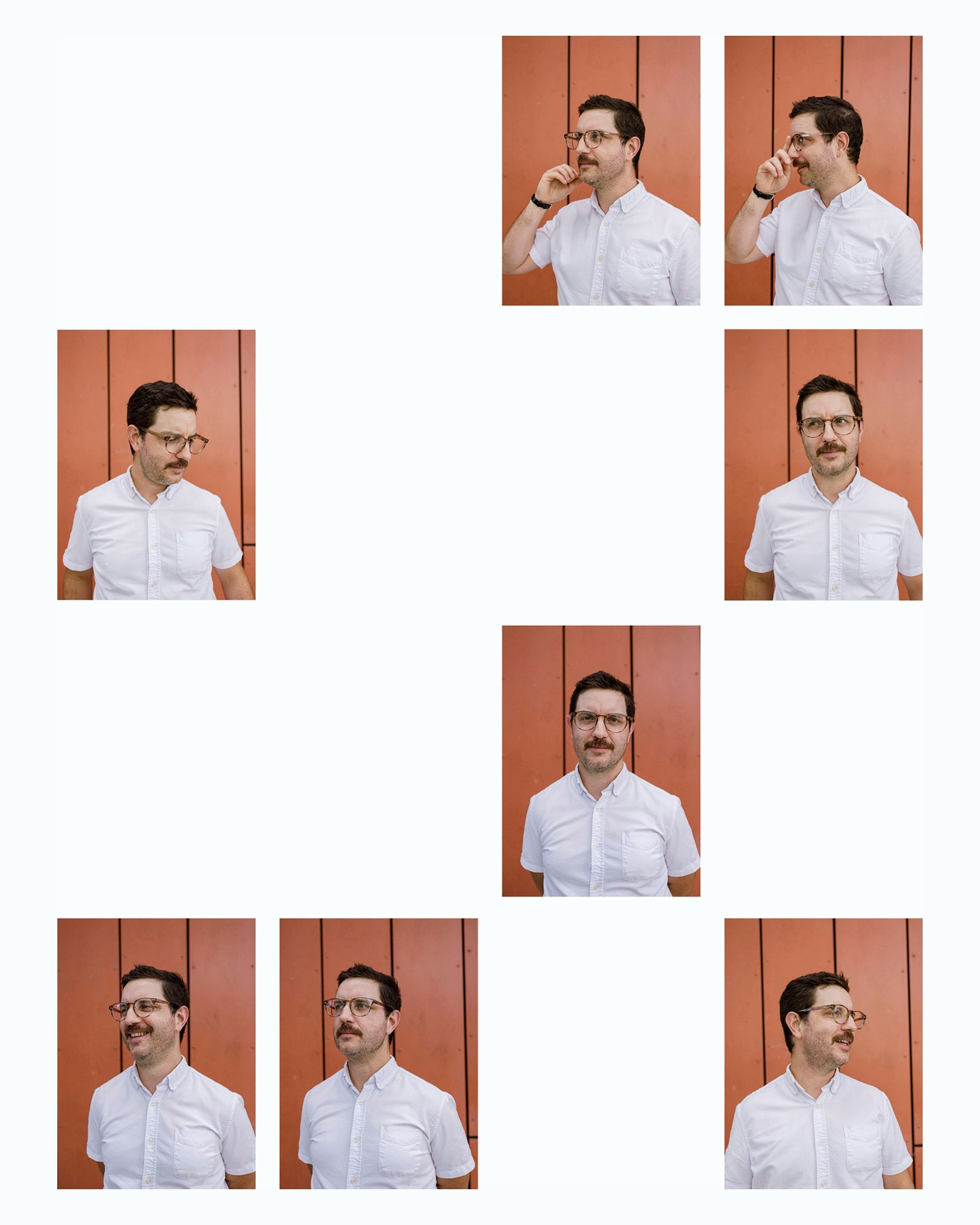
Brooke Jackson-Glidden is an award-winning independent journalist based in Portland, Oregon.
When Devin Gaffney, co-founder of the social media feed builder Graze Social, thinks about the attention economy, he goes back in time — specifically, to 1970s Chile. During socialist Salvador Allende’s presidency, the country experimented with using an algorithm, named Project Cybersyn, to plan its economy and tackle a dizzying scope of decisions, from testing specific policies to using data to determine resource allocations across the country.
The CIA-supported coup that overthrew Allende ended the project, but Gaffney sees more echoes of Project Cybersyn in the TikTok, X, or Instagram algorithm than we realize. “We run the attention economy as a hyper-Soviet central system,” he says, arguing that just a handful of decision-makers “are the ones that decide how this system works.” In Gaffney’s perspective, algorithms shouldn’t be controlled by a small subset of people, regardless of their politics or goals. Rather, he thinks more people should be creating — and sharing — their own.
It’s just an arbitrary architectural decision that we have been frog-boiled into believing is immutable for the last 20 years.
Right now, the algorithms that command our attention were built by a handful of now-gargantuan companies, under their terms of use. Graze Social is Gaffney’s attempt to offer an alternative, to help regulate platforms into what he calls “common carrier status.” Gaffney draws a parallel to a utilities company: While a power company may send a specialist to work on your local power lines, their influence stops at the access point. “The specialists do not get to say what lamp you can use, right?” Gaffney says. “[But] we conflate all of that as the same role in the attention economy. We don’t have to do that. It’s just an arbitrary architectural decision that we have been frog-boiled into believing is immutable for the last 20 years.”
Available on the social media platform Bluesky, Graze allows users to design their own algorithms that they can publicly share. And it’s primed to grow quickly: On August 26, Graze was acquired by the social media aggregating company Flipboard. CEO Mike McCue saw Graze as a natural partner to the company’s own open social network app, Surf (currently in beta testing), which behaves as a browser for custom feeds. Folded into Flipboard, Graze will also be able to expand beyond Bluesky and across the open social web, including sources like Mastodon and WordPress, to allow users to build and share custom feeds. “Mike, the guy who runs Flipboard, is a true believer in this stuff, for better or worse,” Gaffney says. “My team and I can just work on the parts that we’re good at and not have to do the business shit.”
When Bluesky users decide to create a Graze feed, they start by choosing how they want to build. They can either build a feed manually, or use an AI chatbot to help construct a skeleton of their feed. Even the least-savvy programmers can make a simple feed themselves, not unlike a Twitter list with a few extra bells and whistles. Users who want to dig into the guts can go all out, creating feeds with specific bots to help process information or interpret the tone of posts, as well as their own custom-built logic. Still, the most basic Graze feeds are more sophisticated than the typical reverse-chronological follow list; Graze allows users to prioritize types of posts, weight users, and build their own logic.
Keep in touch
Subscribe to our community newsletter for monthly stories, resources, and inspiration from Meridian and across Mercury.
Users have created over 6,500 custom feeds for a wide range of functions. Tech journalist and founder Ændra Rininsland uses Graze to maintain a journalism feed that highlights the work of both large-scale publications and vetted independent outlets, which followers can further adjust to include specific types of stories. Boston-based journalist Jeremy Stanley built a feed specifically focused on Major League Soccer chatter. There are feeds for K-pop fans and transit nerds, prison abolitionists and woodworkers.
Allowing humans to create these custom algorithms functions as a new layer of the creator economy: social media curator. Content creators with expertise in a specific field — wedding stylists, epidemiologists, financial advisors, artists, comedians — can build feeds around creators they trust, uplifting voices too often drowned out by Big Algorithm.
A necessary precondition to solving [the problem with social media] is getting rid of singular economic control.
Furthermore, Graze’s algorithms are transparent, which helps combat the uncertainty and stress so many creators face when working on enormous, black-box platforms. The rules of Graze feeds are public, so users who appear in those feeds can understand which posts are prioritized over others. One of the key components of Graze that separates it from Bluesky’s native custom feeds is that it allows users to “self-host,” which means they could potentially profit by selling advertising slots, including links to Patreons, or even building subscription-based feeds — almost like a Substack but for micro-blogging. (Graze also takes 30 percent of any ad sales hosted by the feeds’ owners.)
“A necessary precondition to solving [the problem with social media] is getting rid of singular economic control,” Gaffney says. “How did media co-create reality before the internet? A plurality of voices mediated by internal editorial control. I think you can start trying to get back there if we solve that first part.”
Gaffney has been fascinated by the promise and peril of social media for over a decade, first while working on the initial version of the online meme encyclopedia KnowYourMeme, and then in graduate school at Oxford and as a PhD student at Northeastern University. While at Northeastern’s Network Science Institute, which studies universality across networks of all kinds (e.g., viruses, misinformation), Gaffney hoped to unpack, or at least better understand, the why behind extremism on the internet. But the more he studied social media’s failures, ethical questions ate at him: Even if social media platforms could be regulated to cut off the streams of bigotry and misinformation seeping in from other corners of the internet, should they be? How could Americans make sure their social media retained its free speech values, and didn’t fall prey to the authoritarian censorship so common around the world? “We can’t solve this,” he thought to himself, “because if we solve this, we just create more fascism.”
Read more about building a better internet:

While struggling with these questions, Gaffney, in his own words, “crashed out,” dropping out of his PhD program in 2018 to work as a machine learning engineer at Crayon, a competitive intelligence provider. He then moved to the media literacy nonprofit Meedan to focus on misinformation and fact-checking language learning models, rather than a more nebulous list of social media’s ills, because, he says, “there’s no valence about misinformation. Coordinated inauthentic behavior is bad, no matter what.”
In an effort to “beat the bad guys by being the bad guys,” he started working on a side project with Subprime Attention Crisis author and internet researcher Tim Hwang. In 2020, they co-founded International Persuasion Machines, a company designed to stress test an organization’s susceptibility to social manipulation. IPM identified bots and replicated their behavior to see how resilient a company was to potential ad fraud, scams, and theft. But Gaffney struggled to find product-market fit. “Showing somebody an existential problem about their platform, and then being like, ‘I don’t know, seems bad,’ is not a business,” he says. “People don’t like that. They prefer a fix.”
The company only lasted from 2020 to 2022, but its website’s blog lives on as an archive of the company’s revealing experiments: an attack on the MyPanera app that demonstrated how a programmer could execute roughly “100 lines of code in order to generate infinite free brownies;” the white hat bot army that could balloon the traffic on a Redfin listing to boost an empty lot into “Hot Home” status on the app.
‘I don’t know, seems bad,’ is not a business. People don’t like that. They prefer a fix.
After IPM folded, Gaffney didn’t intend to create another company. He was still working at Meedan, but after Donald Trump won the 2024 election, he worried the nonprofit would lose its funding. Scrambling to find a life raft, he applied for a role as an algorithm engineer at Bluesky.
Launched in 2023 as a pet project of X (then Twitter) founder Jack Dorsey, who has since left the company, Bluesky is built around its open-source protocol. Users own their data and have more control over their feeds. The platform, in other words, tries to give users more control over their social media experience.
After submitting his application, Gaffney began to dig into Bluesky’s API documentation — essentially a manual for a website’s software — and cobbled together a Bluesky algorithm builder. While he tinkered with this prototype, Gaffney had a much larger epiphany: What if regular-ish people could build their own algorithms, and actually own them?
Over an obsessive three days, Gaffney engineered a custom feed builder with real-time data processing. “I just kept on adding little pieces to it like a Calder mobile, delicately putting another little doodad on an end and going, ‘Ah, it also solves this,’ and, ‘If I change this piece of it, it would also solve this other long-standing frustration for me,’” he says. One problem: It didn’t look particularly user-friendly. So, Gaffney reached out to front-end engineer and user interface designer Andrew Lisowski — “an incredibly talented feed builder,” in Gaffney’s words — to help give Graze a makeover. Gaffney never heard back from Bluesky about the job, but it didn’t matter. When he founded Graze with Lisowski and former CEO Peat Bakke, he became an algorithm engineer on his own.
Gaffney’s ideal version of Graze would serve users beyond the creator economy. It could allow news organizations to construct their own custom feeds that behave like something between a homepage and a news feed. For example, a local city newspaper could create a feed that prioritized their stories and reporters, but also included posts from major politicians. Gaffney’s hope is that the Flipboard acquisition may help Graze level up, helping entire news outlets build individual feeds for their audiences, with their needs and editorial standards in mind.
Building a better feed won’t, of course, rid social media of all its ills. “The inescapable bigness of platforms means that this stuff will never get fixed,” Gaffney says. But he would rather empower individual communities to create their own ethics without financial incentive or a CEO’s personal values warping their interactions. “A big part of the care I’m trying to put into this work is setting up a system that is inherently pluralistic, because I do not have faith in myself or any one person to do the right thing,” he says. “Can we spread the load, so this isn’t built on the inherent benevolence of one person?”
Instead, Gaffney wants people to rethink their own role on social media. “If I can push a conversation forward, or at least sideways,” he says, “that’s more than enough.”
About the author
Brooke Jackson-Glidden is an award-winning independent journalist, feature writer, and editor covering the arts, culture, labor, and technology. She was previously the editor-in-chief of Portland Monthly. Her work has appeared in Food & Wine, Eater, the Arizona Republic, and the Boston Globe, among other publications.
Share article
Related reads
Alex Fine of Fun on the dollars and cents of starting up
Allison Esposito Medina is in the business of opening doors

Sana Javeri Kadri finds flavor in sustainability