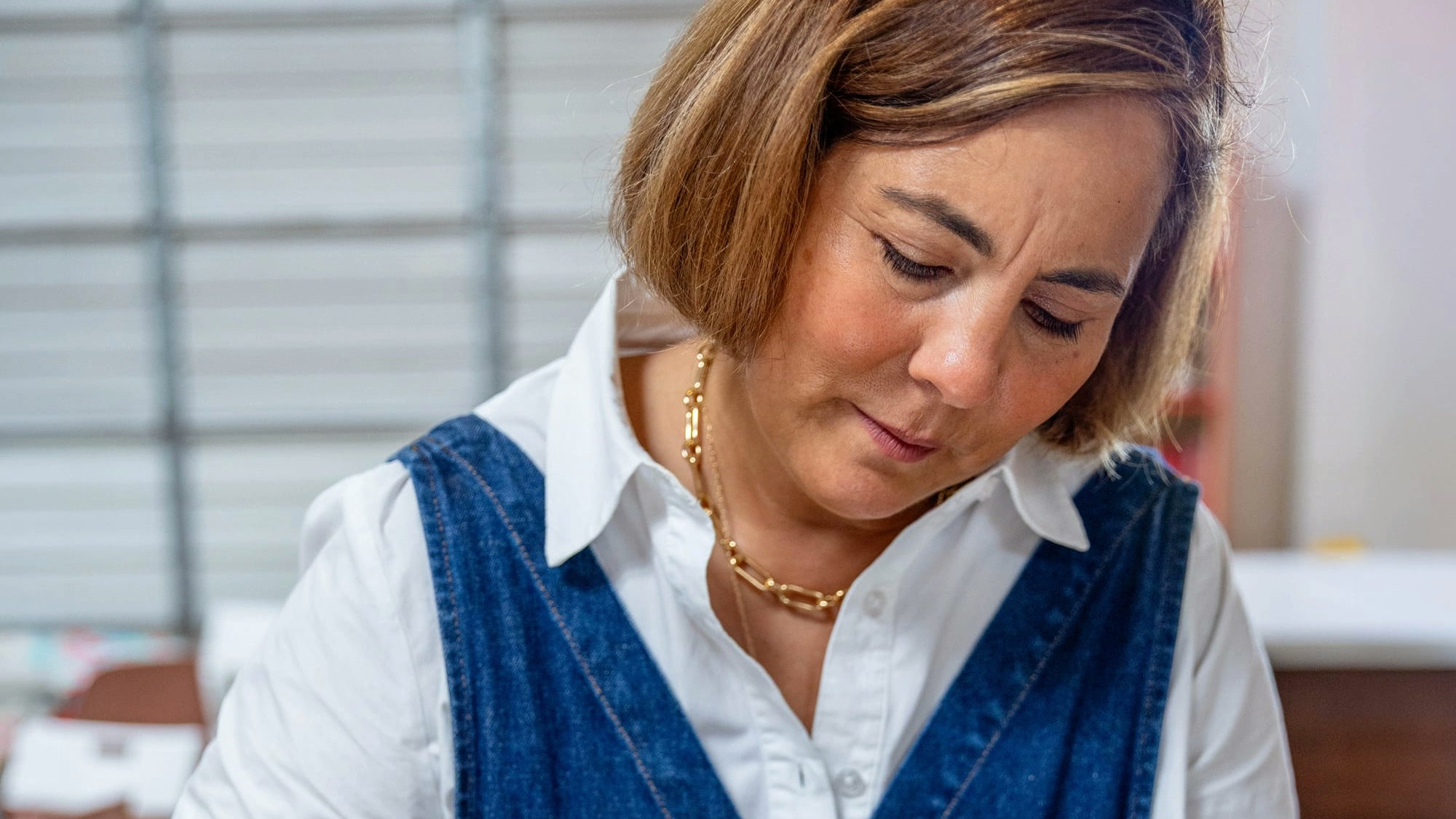
Allison Esposito Medina is in the business of opening doors
Rebecca Flint Marx is a writer and editor whose bylines include The New York Times, WIRED, and The New Yorker.
As a kid, whenever Allison Esposito Medina ran errands with her parents, she’d watch as they inevitably chatted with every person they ran into. The Espositos, both local educators in Eastchester, New York, knew “everyone in town,” Esposito Medina says, and her mother’s family roots (as one of nine kids who grew up locally) ran deep. “I get my community spirit from her,” Esposito Medina says of her mother, who passed away last year. “That sense of community we had locally carried into building Tech Ladies and everything else I did.”
When Esposito Medina joined the tech workforce in 2013 as a product marketing manager at Foursquare, it was “a very interesting time” in the industry, she says, the exciting emergence of an economy where VC checks flowed and apps could turn coders into millionaires overnight. “That was also the beginning of my naive vision that the rest of the working world was behind — sexist, racist — and tech was ahead.”
As she accumulated more experience (after Foursquare, Esposito Medina moved on to Oyster, a venture-backed startup in the ebook space; she subsequently joined Google when it acquired Oyster) she realized that her idealized vision of the tech industry didn’t quite line up with reality. Along with gender-based pay inequity, there were also mixed messages when it came to professional expectations. As a woman, “you’d get one round of feedback saying you need to be more aggressive, and then the next round of feedback would be, ‘Be less aggressive,’” she says. “This was the era of everyone saying how much they wanted and needed to hire more women in tech, and teaching girls to code. That’s awesome, but I saw plenty of women not being promoted or pushed forward; they just couldn’t get a piece of the pie.” Once she started talking to other women, she “realized it was everywhere: The same stories about being passed over, doing the work without the title, watching less-qualified men move up faster.”
I saw plenty of women not being promoted or pushed forward; they just couldn’t get a piece of the pie.
This, Esposito Medina says, was “exactly what made me think it wasn’t a ‘me’ problem or a ‘one company’ problem. It was structural.”
So in 2014, Esposito Medina began hosting coffee meetups for women in the industry. During those early events, attendees would discuss “the stuff you couldn’t say at work,” she says. Stuff like getting talked over in meetings, or being the only woman on a team, or not knowing what you should be paid. But almost immediately, “it went from venting to [people] genuinely opening doors for one another,” Esposito Medina says. “Women would trade salary numbers, pass along job openings, introduce each other to hiring managers, prep each other for interviews.”
In 2016, she officially left Google and founded Tech Ladies, a company that connects women in tech to one another and to companies seeking talent. In the beginning, the site was built from a template Esposito Medina found on Squarespace. The brand hosted weekly online events on numerous subjects — including negotiating for better pay, specific career paths within tech, and getting past perfectionism — and provided community support, initially through in-person meetups and then online. Members could choose from two access tiers: a free one that granted access to the Facebook group, job board, and weekly newsletter; and a paid founding membership that added group career coaching, a full event calendar, and a deeper job board. On the community Facebook page, women could post about how their negotiations went and offer feedback for others who were dealing with workplace issues. Watching women show up for each other without any prompting “was a big learning moment for me,” Esposito Medina says. “So much happened naturally; people were willing to help in these communities. People would get incredible advice and cheerleading. There were so many people who got raises or got hired, and I still hear from them today. That was the best feeling.”
In those days, Esposito Medina says, building a community-based platform didn’t usually hold great cachet with investors. She knew she “didn’t have the experience or chops to run a team at scale,” she says, and also didn’t understand “how venture worked” — meaning that she could have blown the investment. So at the onset, Esposito Medina had the modest goal of earning enough through Tech Ladies to live on and pay rent. The site’s revenue initially came from selling job postings at $300 a pop. As companies began making hires through the site and the community grew, it eventually pulled in millions, mostly from longer-term contracts with companies that used the site for recruiting and wanted access to the talent in the Tech Ladies community — which itself was the biggest asset. “The value wasn’t in a list you could buy,” Esposito Medina says. “It was an engaged, trusted, hard-to-replicate community of women in tech and the relationships inside it.”
Looking back, Esposito Medina says she’s proud of what she accomplished but also recognizes what she’d change: “I would have seen the opportunities a lot faster.” She didn’t realize she was undercharging for job postings, for one, and in retrospect underestimated the need for something like Tech Ladies, and for that reason was slow to treat it as a true business. The emergence of the #MeToo movement in 2017 helped fuel Tech Ladies’s growth; as Esposito Medina recalls, many companies didn’t “give a shit about [women in tech] before #MeToo.” As the movement sparked reckonings about gender-based discrimination and harassment across industries, it made Tech Ladies’s work “feel more urgent and more visible,” Esposito Medina says.
Along with #MeToo, Tech Ladies was finding its legs during the era of the girlboss, that neologism that encouraged women to stop trying to dismantle the patriarchy and instead take power for themselves. Although Esposito Medina was initially excited by the idea that “you can hold on to aspects of femininity and run a business,” she was less enamored by the extra pressure it put on women to succeed in a very specific way. She never wanted or tried to superimpose the girlboss ethos on Tech Ladies. “It was not, ‘We’re going to make utopia for women at work,’ but, ‘Can we get you a raise? Can we get you in the door?’” she says.
It was not, ‘We’re going to make utopia for women at work,’ but, ‘Can we get you a raise? Can we get you in the door?’
In 2020, Tech Ladies gained enough traction to attract an offer to sell; Esposito Medina rejected it because, as she puts it, she still had gas in the tank — enough, it turned out, to double her revenue within one year and reach some 200,000 members. But at the end of 2021, Esposito Medina received “a really great offer” to sell it to a company that buys community-based companies (she’s unable to name it publicly). Despite her earlier reluctance to sell, she decided that this was an offer she couldn’t refuse: the money was enough to retire on, she was tired and in the middle of a years-long fertility journey — and she’d also grown increasingly weary of the scrutiny that came with her role.
“You’re very much under the microscope when you’re in the DEI space, which is what it was called back then,” Esposito Medina says. “Then there was the girlboss backlash” that she sees in part as a “fair correction to a version of ‘empowerment’ that had gotten over-commercialized and glossy.” That said, she saw how some of this backlash landed on women, who were being held to a different standard of likeability and humility than men performing the same role. “A woman building an ambitious, profitable company got ‘girlboss,’ while a man doing the same just got ‘founder,’” she points out. The backlash compounded her feeling of walking on eggshells, and her fear that “if you’re doing anything ‘wrong,’ you’re going to get eviscerated.” The pitchforks never came for her, she adds, but still — she’d had enough.
Esposito Medina sold Tech Ladies for eight figures, enough money to retire at 40. And she did… for a grand total of five months. After that short stint away from work, she took on some consulting and event hosting projects and in 2023, founded Juniper, an online community aimed at Gen Z and millennial pet owners. The business was driven more by product recommendations, content, and audience than the hiring-partner and membership model that powered Tech Ladies, and Esposito Medina soon realized she didn’t want to run a completely different kind of business. Esposito Medina sold Juniper in June 2025 after learning “a lot,” she says. While she was figuring out what to do next, AI technology was advancing, and Esposito Medina grew curious about the emerging tools. The more she learned, the more she thought about the need to train women how to use them. “Every woman I know is behind on this,” she says. “We need to learn.”
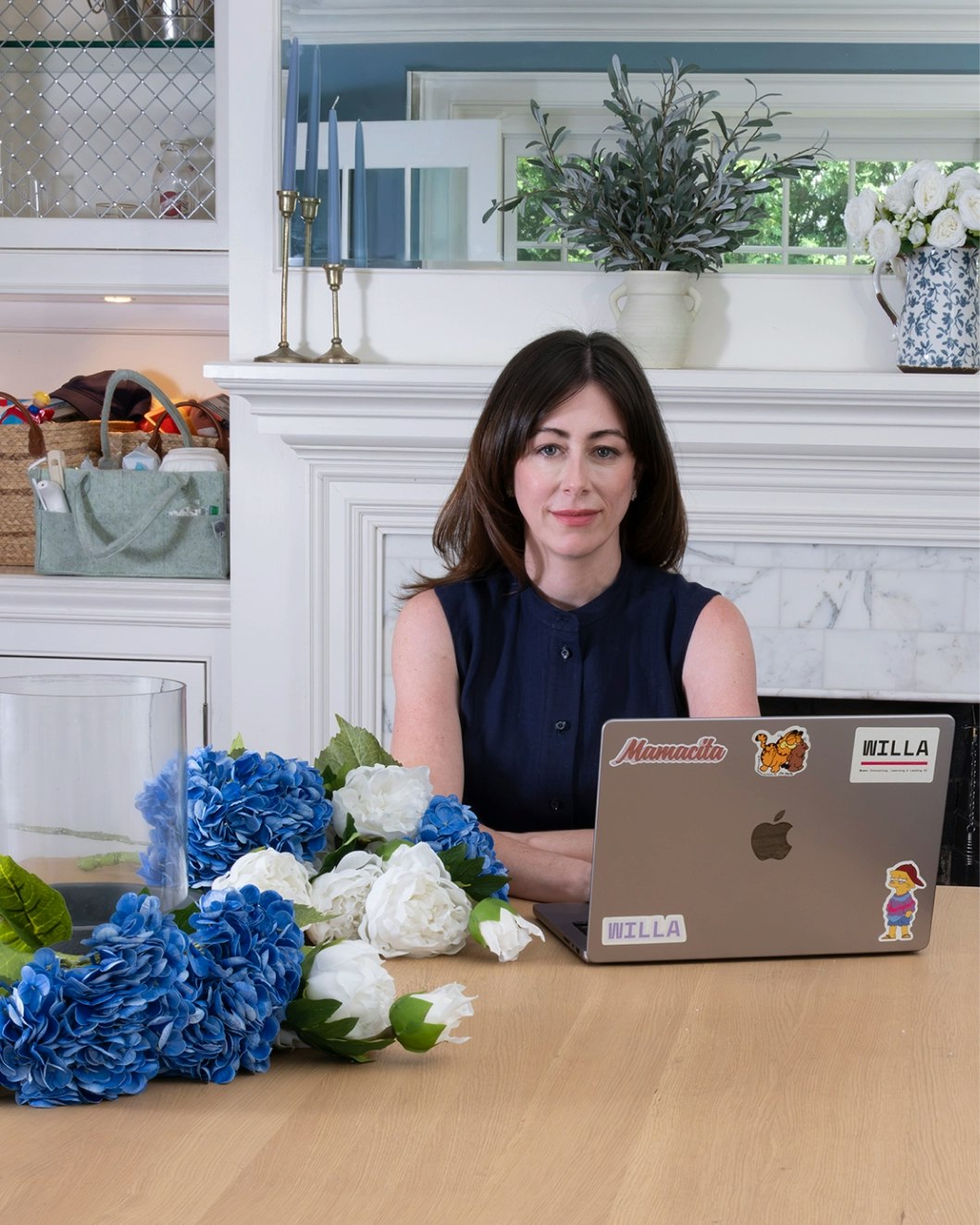
And so Esposito Medina found her next chapter in the form of Willa. The community teaches women how to use AI tools from Claude to Perplexity to Loveable; classes run about an hour in length and are taught by paid experts in the field. A couple days after Esposito Medina announced Willa’s launch on LinkedIn in March 2026, she had a 1,000-person waitlist. Three hundred people signed up for Willa’s first event, and the community now has more than 150 paying members. Esposito Medina calls the growth so far like “building at warp speed.”
Every woman I know is behind on this. We need to learn.
Esposito Medina launched Willa right around the same time that the gender gap in AI hit public discourse, fueled by an April LeanIn survey that reported that women in professional settings were 22% less likely to use AI regularly than men, and among regular AI users, men were 27% more likely to receive credit for their AI implementation. A flurry of public responses encouraging women to “lean in” — from the likes of Reese Witherspoon and Mel Robbins — led The Cut and other outlets to declare that we’re now seeing “the girlbossification” of AI. Esposito Medina gets the backlash — but also takes a pragmatic view. “I don’t know what the right answer is,” she admits. “I don’t purport to have it. I’m just like, Hey, if you’re interested, we’re here. I’d rather have women at the table than not, but that’s not the same as saying we should blindly go forward” without questioning the systems that women are being told they should take part in. She also adds that she has her criticisms of AI at scale: the environmental issues; the industry’s tendency to claim that the technology will minimize harm and maximize positive outcomes; the bias that’s baked into AI tools and the underrepresentation of women working on them. But the tools that are available right now are “insane,” Esposito Medina says. “I built my entire website in three days.”
Her belief in educating other women is the driving force behind Willa. “We’ve found that a lot of people in the community want to sit down and learn with someone, so we’ll invite our hosts back to do coworking days where we open our computers together,” she says. Those sessions are intended for teaching women how to build, say, an AI agent, but also to inspire them. “There’s no gatekeeping at all,” Esposito Medina says. “Nobody’s an expert on this stuff. These tools are coming out every week.” Many of her event hosts come from her network, but she’s gradually starting to bring in companies to do partnerships and host events, too.
Along with giving her a new community to build, Willa has allowed Esposito Medina to do something that fits with the life she’s living now. She left behind the New York grind a few years ago. Now, she works from her home in Connecticut, where she lives with her husband, dogs, and nine-month-old son. “I had no idea how I would feel about working once [my baby] was here,” Esposito Medina says. “I’m tired. But [thanks to Willa] I’m motivated again.”
Keep in touch
Subscribe to our community newsletter for monthly stories, resources, and inspiration from Meridian and across Mercury.
About the author
Rebecca Flint Marx is a Brooklyn-based writer and editor whose bylines include The New York Times, WIRED, and The New Yorker. Her debut novel Small Kingdoms will be published by Bloomsbury in June 2027.
Share article
Related reads

Devin Gaffney wants to overthrow the algorithm

Alex Fine of Fun on the dollars and cents of starting up

Sana Javeri Kadri finds flavor in sustainability