Filippo Sorcinelli gives form to what we feel
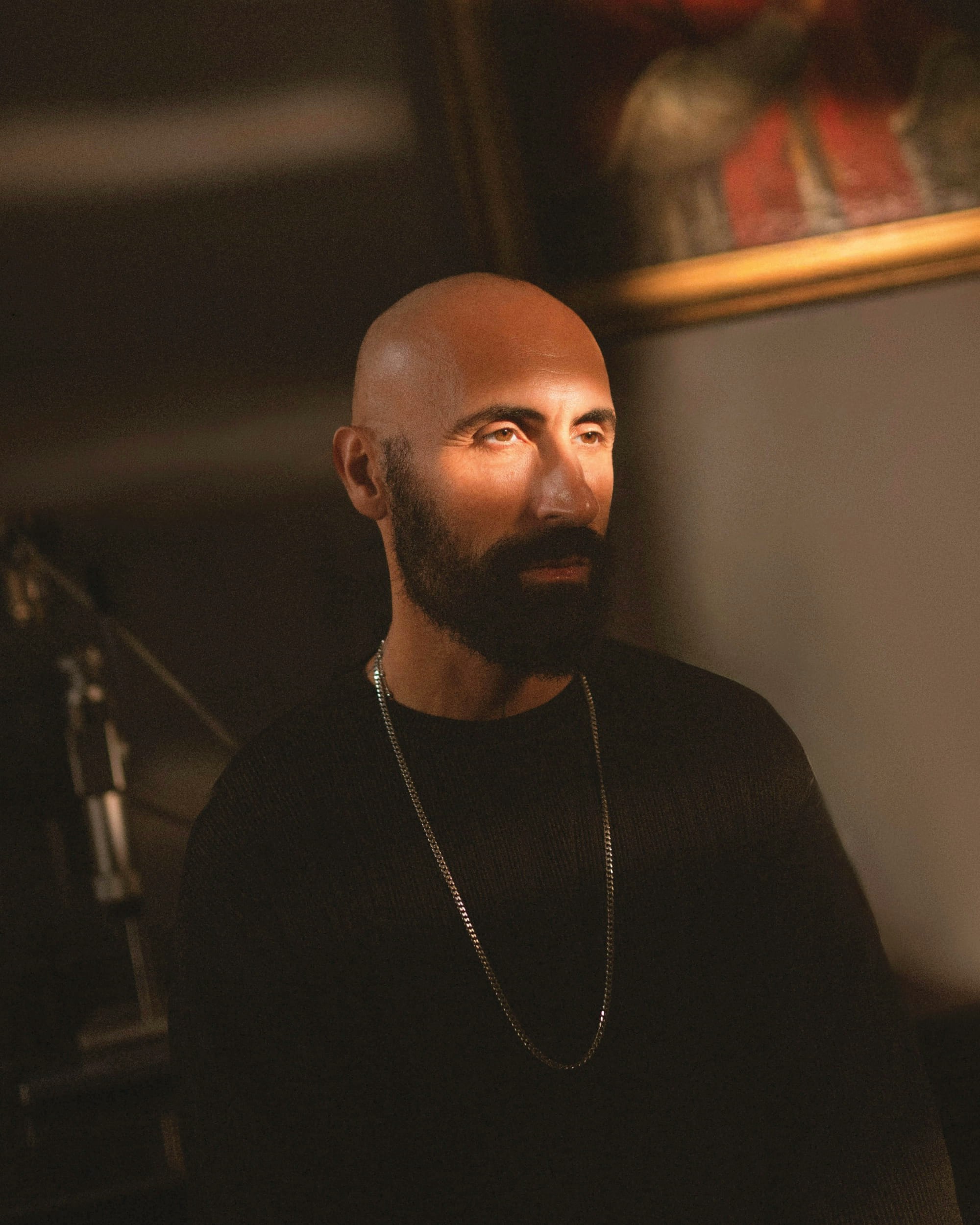
Amy McCarthy is a Texas-based journalist writing about food, booze, music, and culture.
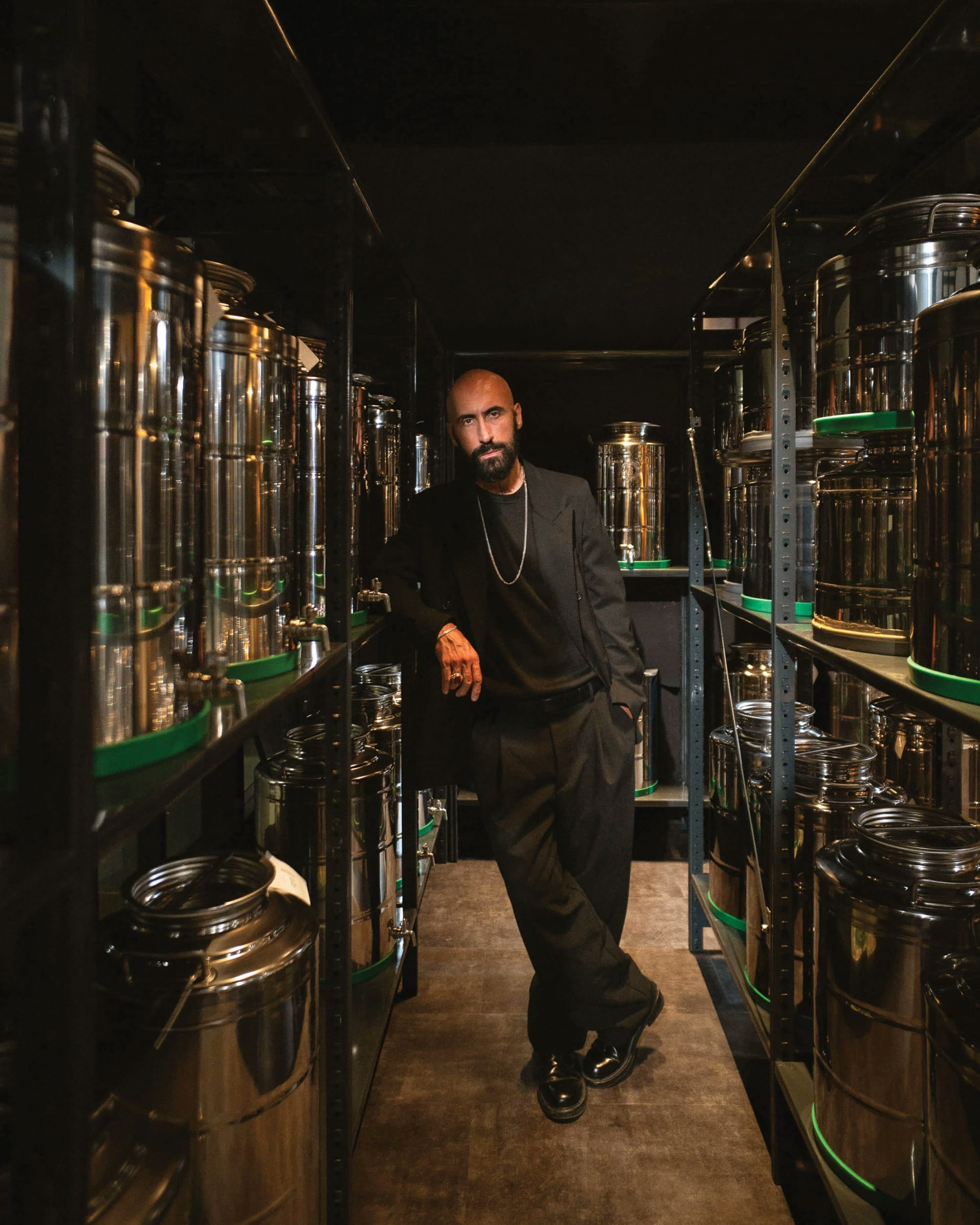
Italian multi-hyphenate Filippo Sorcinelli has dressed popes during their moments of ascension (Pope Leo XIV) and as they lie in state after death (Pope Francis): work that the designer, artist, and perfumer considers legitimately sacred. For his entire life, Sorcinelli has been steeped in the ritual and ceremony of the Catholic Church, beginning when he was a young child growing up in the picturesque Marche village Mondolfo, near the Adriatic Sea. “The Church has influenced my entire path, because I am a believer,” Sorcinelli says. “Faith has been the driving force of my existence, [and] a large part of my [practice] stems precisely from that relationship, my connection with the Church.”
Rooted in that belief, Sorcinelli’s artistic practice explores the human relationship with sight, sound, and scent. As he studied organ at the Pontifical Institute of Sacred Music, Sorcinelli, now 51, traveled Italy performing in numerous churches, first meeting the man who would become Pope Leo XIV more than three decades ago in Tolentino. Later, he moved to the history-rich town of Prato, where he studied sacred art and historical weaving at the Museo del Tessuto before launching Atelier LAVS (Laboratorio Atelier Vesti Sacre, or Sacred Vestments Atelier), designing vestments and liturgical garments, in 2001. Just six years later, the first call from the Vatican’s Office for the Liturgical Celebrations of the Supreme Pontiff came, commissioning him to make a garment for Pope Benedict XVI.
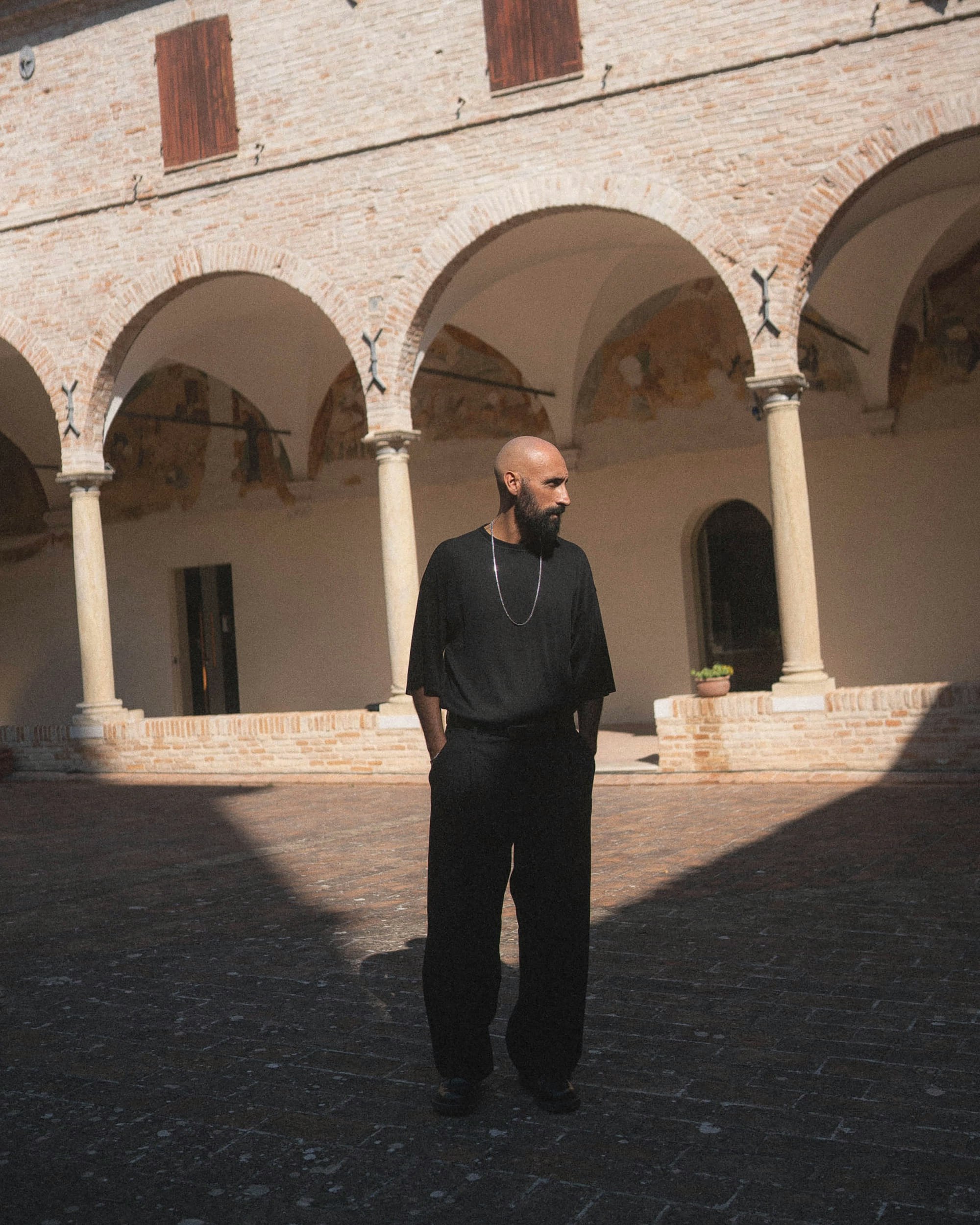
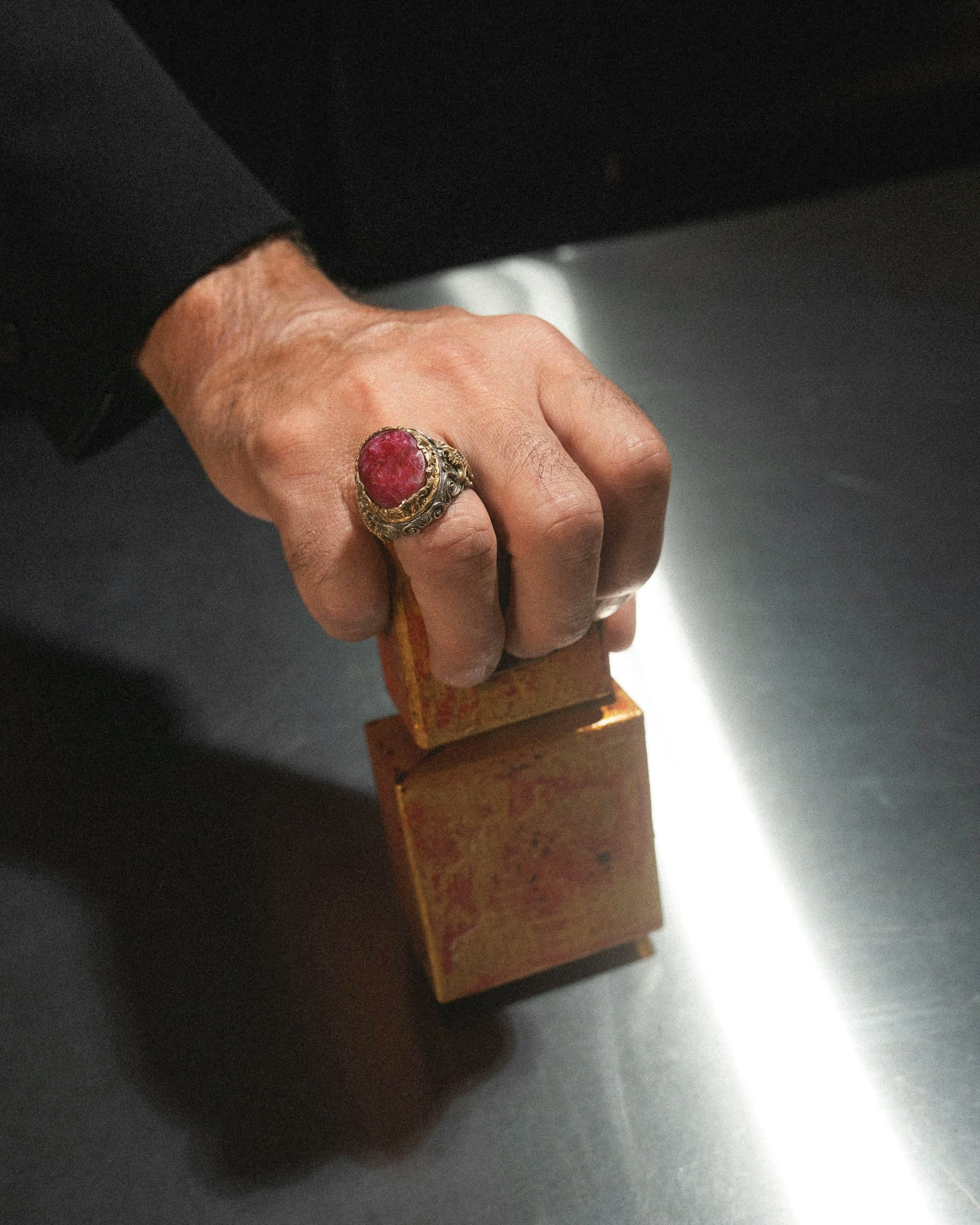
Sorcinelli would deliver his garments to the Church’s most senior leaders — he’s designed for three popes in total — in ornate boxes scented with an incense that he designed exclusively for the Church. Incense has played a role in Catholic mass since at least the 5th century, when the heady smoke from burned frankincense and myrrh helped monks and priests concentrate more intently on their liturgies — as well as provide a sensory signal to parishioners representing their reverence’s ascent to heaven. “[The idea for my] first fragrance originated right there,” Sorcinelli says, “inside that box meant to scent sacred vestments.”
That incense inspired what would become Unum, the global fragrance brand Sorcinelli founded in 2014. His very first fragrance, named LAVS, gestures to Sorcinelli’s faith directly: LAVS blends notes of labdanum, elemi, black pepper, and amber into what many fragrance enthusiasts view as the single most authentic interpretation of Catholic ceremonial incense on the market. It’s still the company’s best-seller. But for Sorcinelli, Unum is his way of translating the signals he’s interpreted throughout his life into evocative, impactful scents that capture what he calls his “emotionality:” his work turning sensory experience into something tangible and felt.
This interview was conducted in Italian through interpreter Elena Valeriote. It has been edited for clarity and brevity.
Amy McCarthy: Your creative journey has been deeply connected to your time in the church. What sparked your interest in being a perfumer?
Filippo Sorcinelli: When I was five years old, I used to go with my mother to clean the church in the small town where we lived. That’s where it all began. A curious child is like a sponge — they soak up everything. For me, it started naturally, with scenting the boxes of vestments before delivery. That is where my passion for perfumery was born, when I realized I could tell the story of my life through perfumes — small scenes that are part of my memories, things that might not be beautiful in the conventional sense, yet can still be recounted and translated into a fragrance.
What was the specific signal that made it clear that you should pursue creating your own fragrances?
I think it was that moment after the interest the world showed in this fragrance [I created for the Catholic Church] that couldn’t be bought or sold. That’s when I realized I could pursue this path. But above all, there was the moment when the Financial Times included [LAVS] in a feature about the 10 most famous incenses in the world and I found myself [and Unum’s first fragrance, LAVS] right there alongside the big names.
I am simply a very authentic person. Because of that, I’m able to convey emotion to others and share it with them.
How has your work with senior religious figures influenced your approach to scent? Do you feel a heavier sense of responsibility when you’re developing perfumes for religious spaces than for the general public?
It is a great responsibility because, naturally, I do not work solely for the Pope, but for the entire Church. It’s particularly significant regarding the Pope, as he is seen all over the world. We must be conscious of the fact that he speaks to everyone. This influences the attire; the design itself is shaped by this. Creating a perfume, on the other hand, entails a different kind of great responsibility because it speaks to my own life. And in speaking of my life, I decided to be sincere — and people can tell when you are [or not].
Much of the work in perfumery is interpreting fragrances — using various notes to convey a feeling or an experience. How do you use language to convey what your fragrances are like?
We describe emotional states — the deepest parts of the soul — through fragrance. [Sorcinelli’s fragrance line includes the scent Nebbia Spessa (in English “deep fog”), which he describes as the combination of “instant fear and convulsive pleasure” that one experiences upon jumping in the ocean.] That was the work I did: finding a way to express myself to others, using the sense of smell. I am an open book. I speak about my life and my emotions with great sincerity and transparency. I’m not a magician, someone with alembics and magic potions. I am simply a very authentic person — first and foremost with myself. Because of that, I’m able to convey emotion to others and share it with them.
Would you say that your primary skill is in translating these emotional experiences into something tangible?
Yes, maybe. Just two days ago I did an organ concert — one that incorporated scents — where my emotions were evoked through the music. There was a large audience and I was able to share — and many people shared with me — certain emotions that perhaps they hadn’t felt in a long time or simply hadn’t been able to feel.
Which scent notes are your favorite to work with? Which do you abhor?
It’s a bit difficult to talk about this. I can give some examples. For one, there’s a fragrance that came out in September [with notes of oxidized iron accord, burnt caramel, black vanilla, and leather], and the concept behind it is violence — not just physical, but also verbal, the kind found on social media, and so on. It was a very complex process trying to understand the wound left behind and the message inherent in that wound — a message that is ultimately positive, because you have to work on it in order to move forward with your life. As for [a favorite], something I’ve already created, Panna Sotto! [in English, “cream underneath”] deals with the sense of taste, which we translated into scent. It’s a memory from when I was a child, going to get ice cream in my small town and asking for whipped cream inside the cone.
I have to admit there are certain [scents] that really bother me, yet I managed to work with one of them until I actually liked it: tuberose.
When you set out to build Unum, how did you decide you would quantify its success?
I’ve never really had grand visions for the business. What I’ve certainly pursued is my own personal vision: the search for beauty, even in the most unusual or strange things. And then, love — love for the work itself. That is a fundamental ingredient. That is the only way things move forward: through passion and love. It might take longer, perhaps, but that’s how it is. When I decide that I’ve made the perfume of my life, I suppose I’ll stop doing this job, but I doubt that will happen.
Which of your fragrances do you think most effectively conveys your focus on emotional authenticity?
I think that’s the one I have not yet made.
Read more about founders turning creativity into something tangible
About the author
Amy McCarthy is a Texas-based journalist covering food, booze, music, and culture. She is the co-founder of Ravenous, a worker-owned food culture publication.
Share article
Related reads
Devin Gaffney wants to overthrow the algorithm
Alex Fine of Fun on the dollars and cents of starting up
Allison Esposito Medina is in the business of opening doors