A single idea can open in countless directions. Points of View is a series gathering perspectives around a concept, with each participant choosing their own journey through questions, answers, and the imagination and marvels in between.
This edition explores standards — where they come from, how they hold up, and what it means to set, inherit, or push back against them. What follows is a closer look at how standards move from abstract ideals to lived decisions.
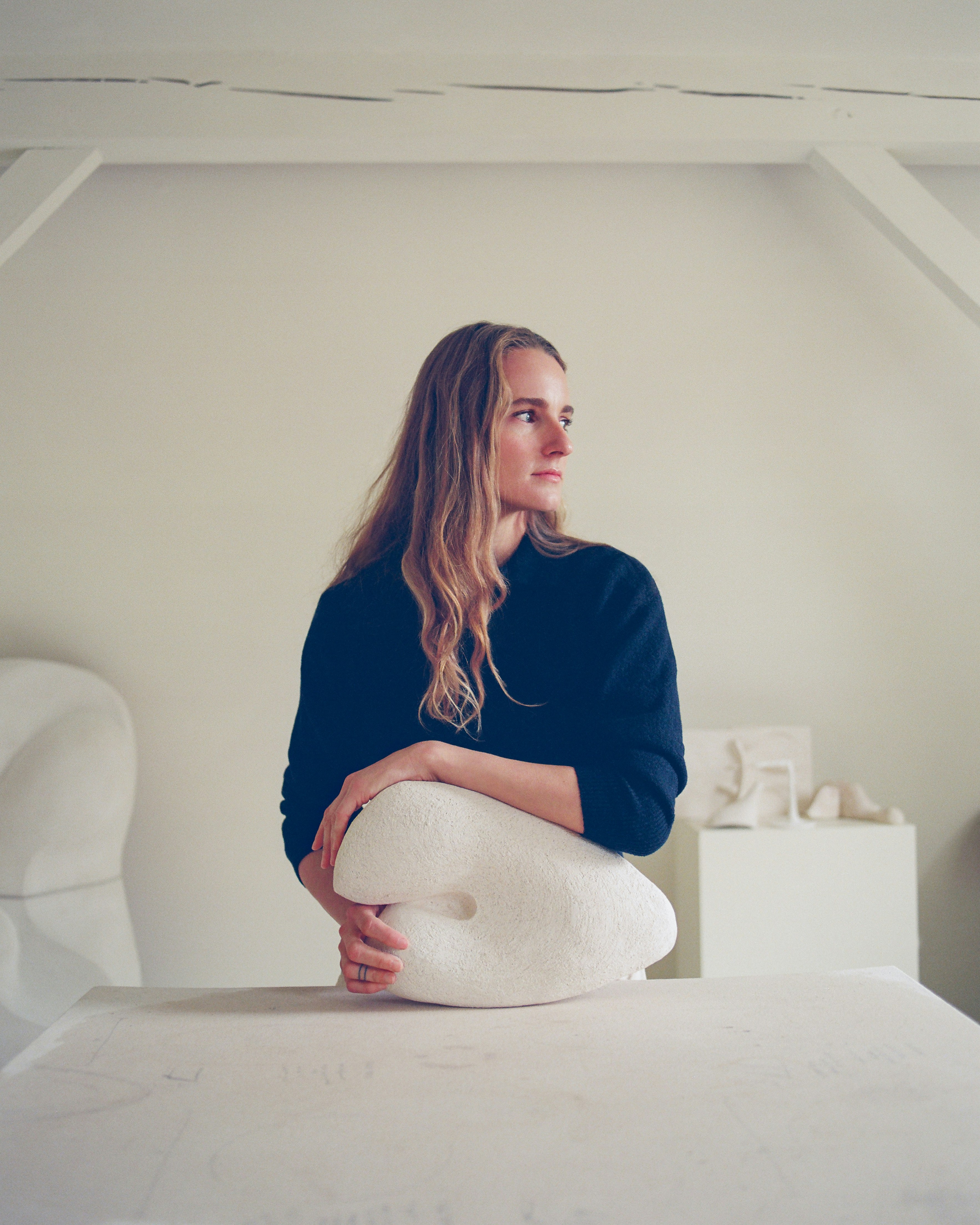
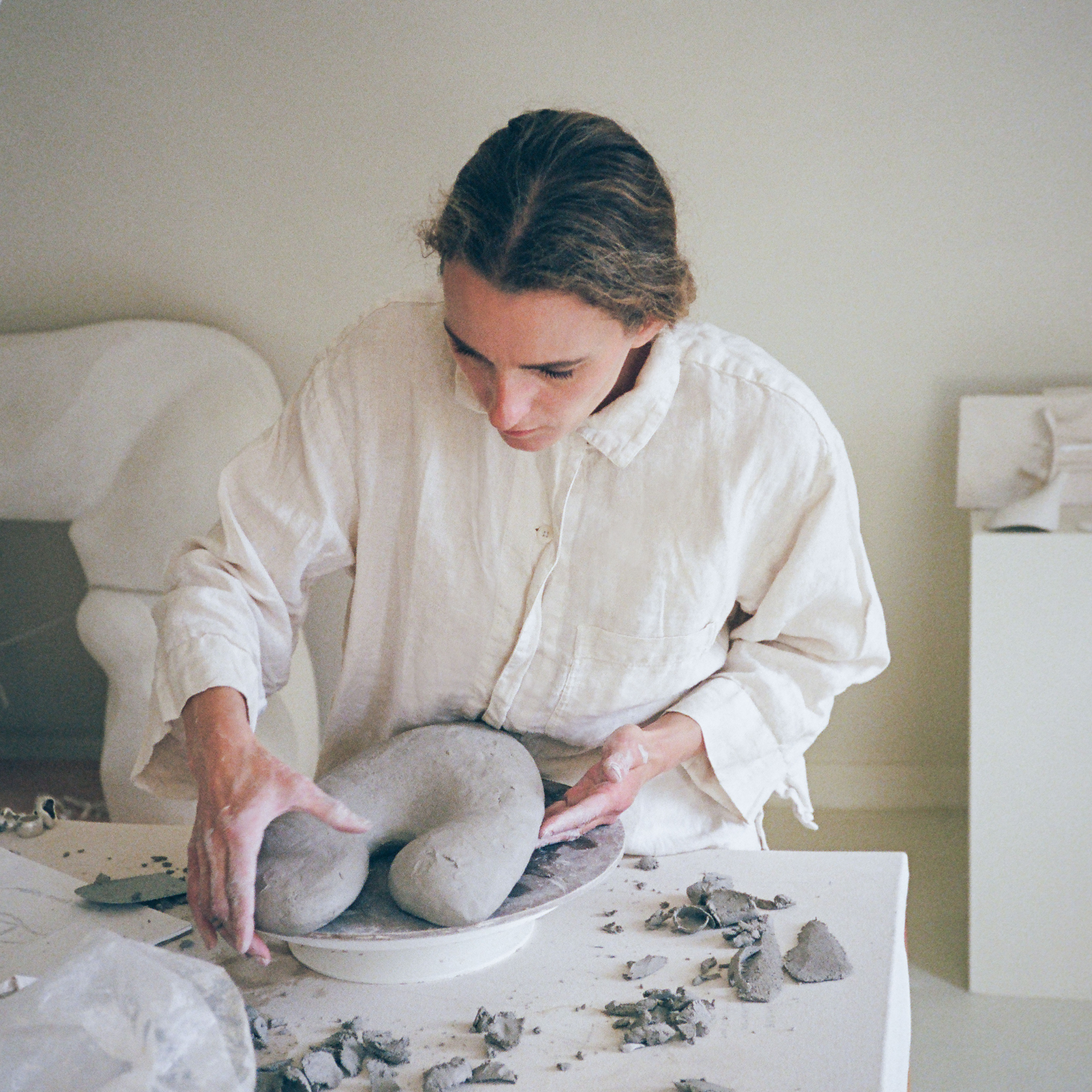
We spoke with Simone Bodmer-Turner, a multidisciplinary artist and founder of SB-T Studio, a Massachusetts-based design practice spanning furniture, lighting, decorative objects, and site-specific interior installations. Ceramic sits underneath all of it — from Bodmer-Turner’s one-off sculptural work to her ongoing open-edition line of vases and tableware to the clay maquettes she builds before any installation takes architectural form. Even as her studio grows, she prioritizes staying close to the work.
In this conversation, Bodmer-Turner talks about protecting the process of making, the tension between functionality and beauty, and how standards intersect with growth.
What is the one standard that you refuse to compromise on and why?
Something I haven’t compromised on is where something is made, by whom, and how. When we launched open edition work, many of my contemporaries were outsourcing to ceramic studios in China and Portugal, or doing collaborations with larger brands that have contracts with fabrication houses throughout Asia. Many people advised me to do that, and I was in conversation with people within the U.S. and overseas. I really wanted to do it in the States, and there were even some interesting companies that employed previously incarcerated people — [options] that could bolster the ethics around my making.
But ultimately, I couldn’t [outsource]. It was almost an emotional decision. Instead, I took a pause to really think about how I wanted to scale. At the same time, I moved outside of New York, which was one of the most expensive places to have a production business. In moving to Massachusetts — to a rural area where the cost of living is significantly lower and there’s an amazing community of craftspeople — things naturally started to come together. I rebuilt the production studio here. I didn’t have a grand plan at the time, but I listened to my instincts around the limitations of what felt in alignment for me when building a business, and I’m really glad I did.
When do you find it hardest to uphold your standards?
It’s hardest when I’m competing in the marketplace with other businesses that aren’t making their work in-house. I come up against that in both my personal work and our product line. Within collectible design and the home ceramics world, I’m doing it the harder way. But it’s what feels right to me, at least with the ceramic work.
I’m trusting that having the long view in mind at all times — even when it means compromising on your bottom line — will take me where I want to go.
How do you balance functionality and beauty while maintaining your standards?
Our work does need to be hyper functional, but we don’t want to compromise so much toward functionality that something gets flattened. Every push toward functionality, ease of production, and predictability of production flattens a piece and can slowly suck the life out of it.
Something that’s been so core to what we’ve been focusing on with our tableware line is preserving the nuance and variation across every piece. Even though it’s in production, we want each piece to feel different. One of the biggest delights of handling ceramics is picking up a piece and finding the one with that mark in that corner or that little thing in the glaze that you love. Every piece has personality. Being able to retain that within a production line has been really, really important, and quite the fabrication challenge as well.
A younger version of myself was excited about the potential of exponential growth, but that’s not how I feel anymore. I think there is power and beauty in ‘big enough.’
How do you think about standards when working with constraints or unfamiliar tools?
While carte blanche prompts are exciting, they can also be discombobulating. You’re like, “Where could I go? Where can’t I go?” But working within a pretty tight set of rules really does inform the design. Often with interior work, for example, you’re building into somebody’s home and these homes have constraints — there’s an air duct here or a pipe you can’t attach through, or the hearth can’t be drilled through because it’s a specific stone. You’re forced to think of something you wouldn’t have come up with in a carte blanche situation, and it can be really new and exciting and inform a whole new avenue of expression that you probably wouldn’t have come to on your own.
Even though it’s uncomfortable, moving through constraints is what creates a diverse and interesting practice — and that diversity is a standard in itself. I will never be somebody that does the same work on repeat for a whole lifetime, even though that can be a very successful model. Iteration, and creating this web you can almost trace back to its initial points of inspiration, is how my work has developed and why I have all these various arms of my practice.
What does growth mean to you in relation to your standards?
There will, in some ways, always be a ceiling for my growth, which is okay with me. I can live a full and beautiful life at the ceiling of what’s possible for the studio, operating in a way that feels right to me. A younger version of myself was excited about the potential of exponential growth, but that’s not how I feel anymore. I think there is power and beauty in “big enough.”
In terms of growing a team and building a studio and business, I feel like having clarity on those standards and bringing that into team building and company culture can leave that intact. But it’s an ongoing project. We have our first company retreat in September, so we’re working on it.