Mercury’s Periodic Table of Emotion
Creative creative creating creative creative.
Over the past decade, I’ve seen a consistent pattern across tech companies. They claim to want their brand to feel more “human” or emotionally resonant, but their experiences rarely accomplish this. The attempts are usually surface-level and almost never coherent or cohesive. Think images of people working, a friendly typeface, confetti animations, or a homepage that promises care without doing anything to prove it.
But emotion isn’t a finish coat you roll on at the end. It comes from the intent you can feel in every interaction, across every medium, and the choices that show someone thought about you, not just “users” in the abstract.
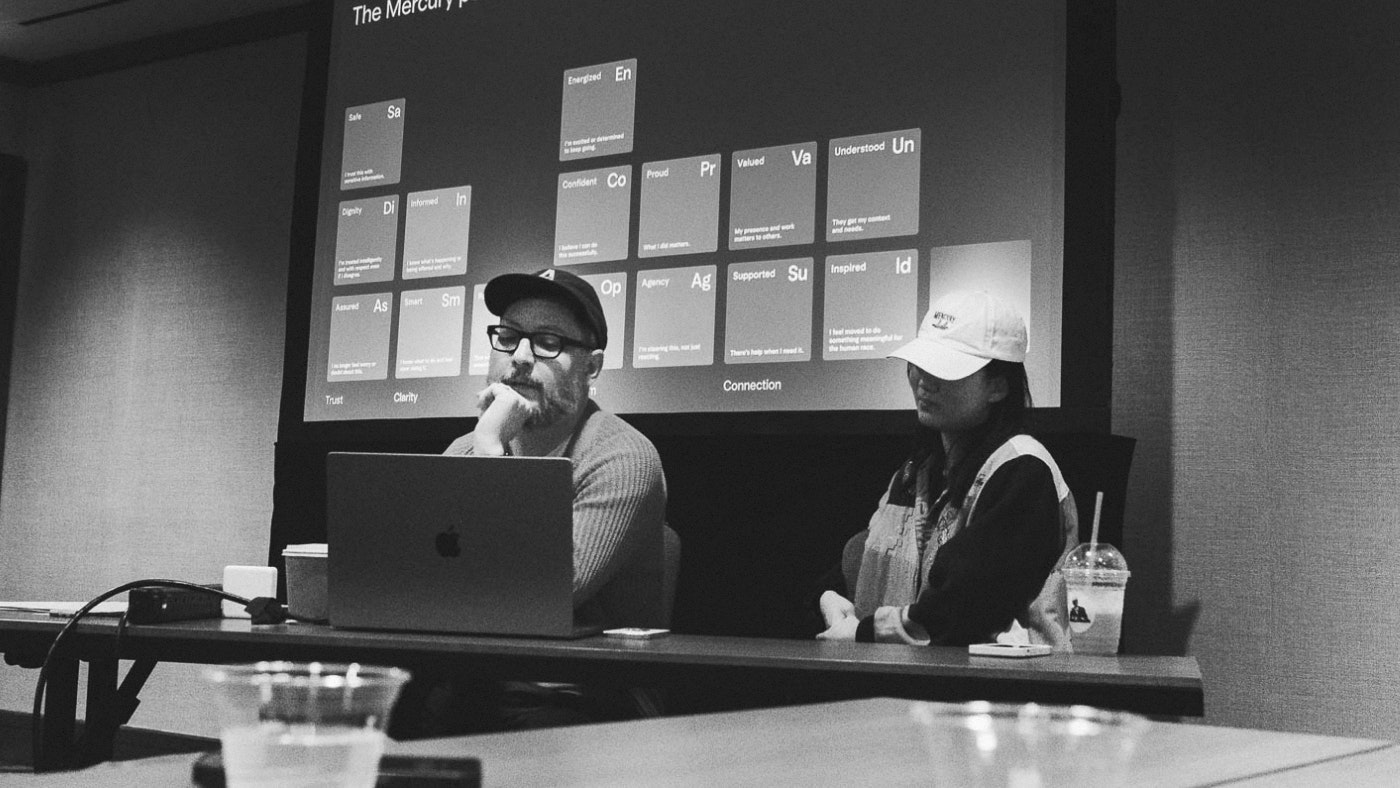
To cultivate more emotional resonance in the work we do at Mercury, I partnered with Wandi Liu, staff designer, and Jason Zhang, co-founder, to build a simple framework we call the Mercury Periodic Table of Emotions. It helps product and marketing teams:
- Name the feeling they want to evoke in their work
- Design to create that feeling
- See if they actually did
The problem we set out to solve
In design, we talk about how things “feel” all the time but we almost never define what we mean. We lean on gut instinct. We use words like surprise and delight until they lose their meaning. We react as individuals and present those subjective reactions as truth. Conversations that could be sharp and focused turn vague and unproductive.
When that happens, the “right” answer usually becomes whatever the loudest or most persuasive person says it is. It’s rarely what’s best for the customer, or even the teams trying to produce the work. We’re not immune to this at Mercury. The fuzziness around intent can dull our ability to differentiate and to build experiences with a clear, repeatable emotional impact. We wanted a way to turn instinct into more objective, repeatable intent without losing the soul that had long been essential to the brand.
Our lightbulb moment
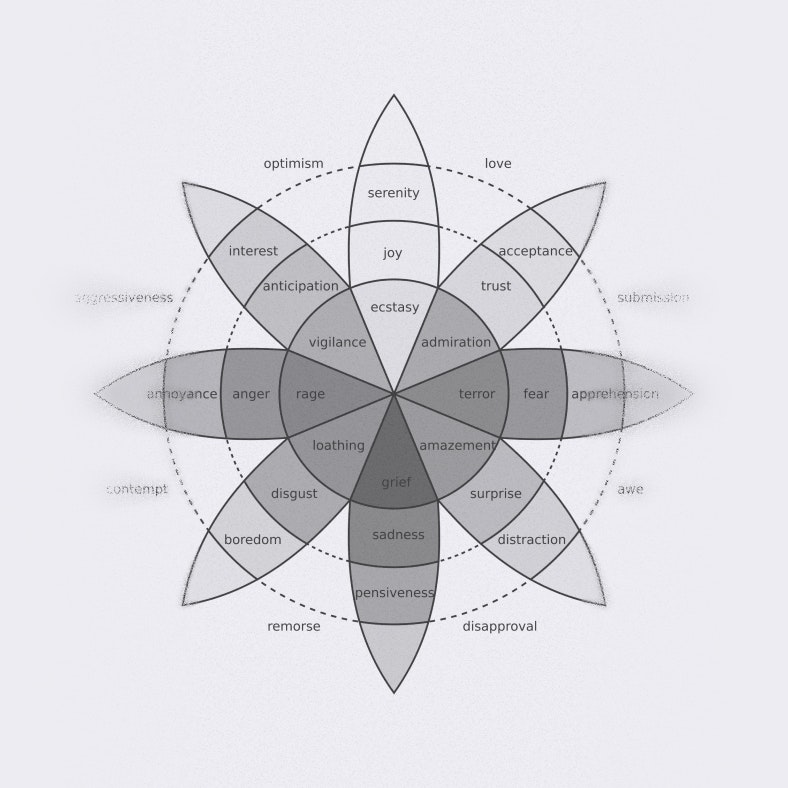
We started by looking at tools like Plutchik’s wheel of emotions. It’s a rich map of human feeling. It helped widen our vocabulary and sparked more concrete conversations about what “human” could mean in a brand.
But in practice, the wheel kept us spinning. Irrelevant options. No strong point of view on which feelings mattered most for Mercury’s brand. It was useful as a reference, but too open-ended as a working tool.
Since we had a good understanding of what wasn’t working, we set principles to guide us to a more effective solution. We chose to optimize for:
- Focus over flexibility. Fewer, clearer options to sharpen decisions.
- Clarity over cleverness. Terms people could understand and act on immediately.
- User-felt emotions, not product traits. How we intend for people to feel interacting with Mercury, not how an interface feels to us.
- Maximum distinction. If two emotions overlapped, we cut one.
- Purpose alignment. Each emotion had to guide a choice in design or content and be observable in research.
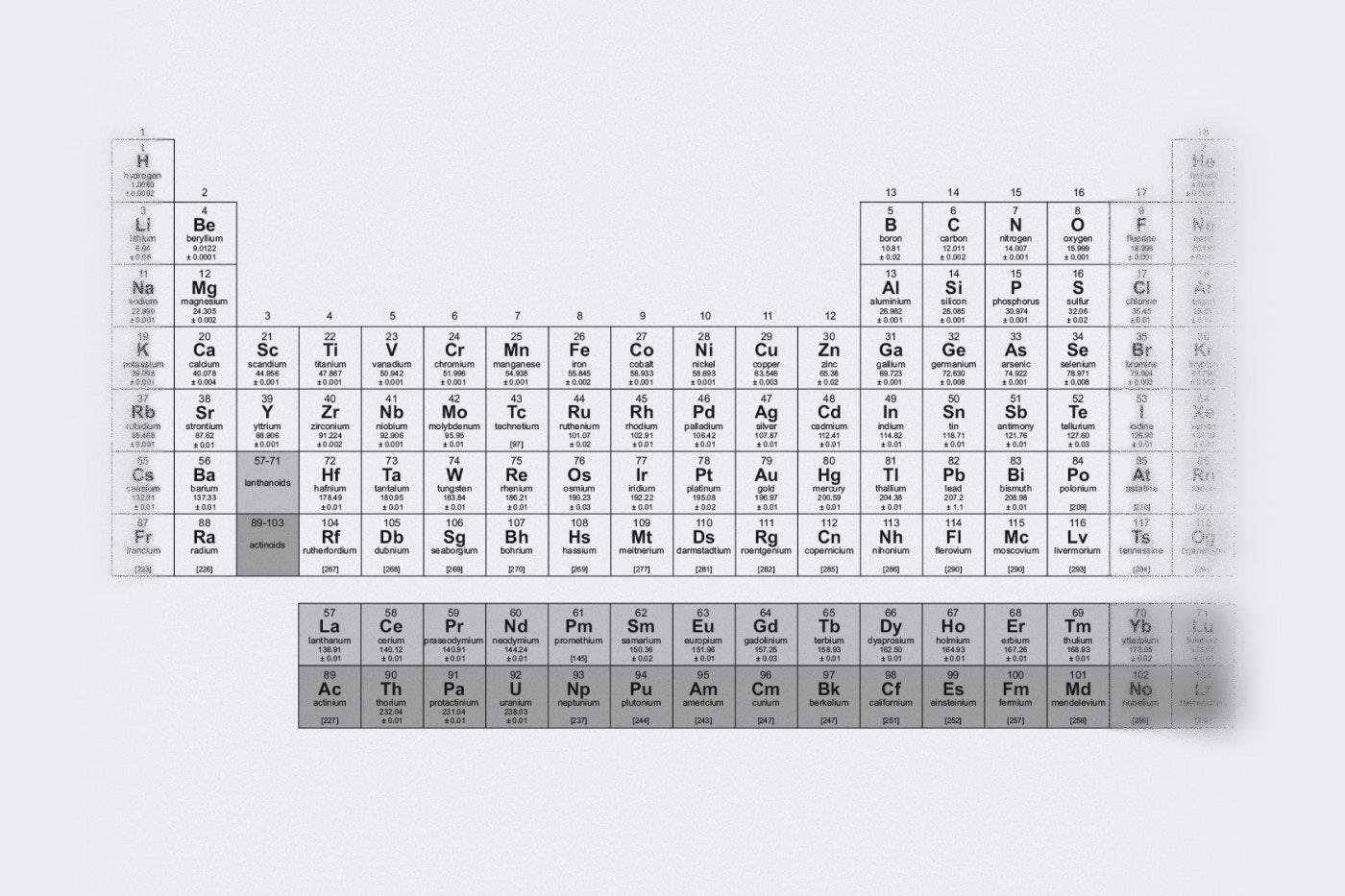
Ultimately, we needed something more opinionated. More chemistry, less poetry. That led us to find inspiration in the periodic table of elements.
The emotional resonance framework we built
We organized our emotions into five foundational categories. They’re kind of like our versions of alkaline earth metals and noble gases.
- Trust
- Clarity
- Connection
- Momentum
- Transcendence
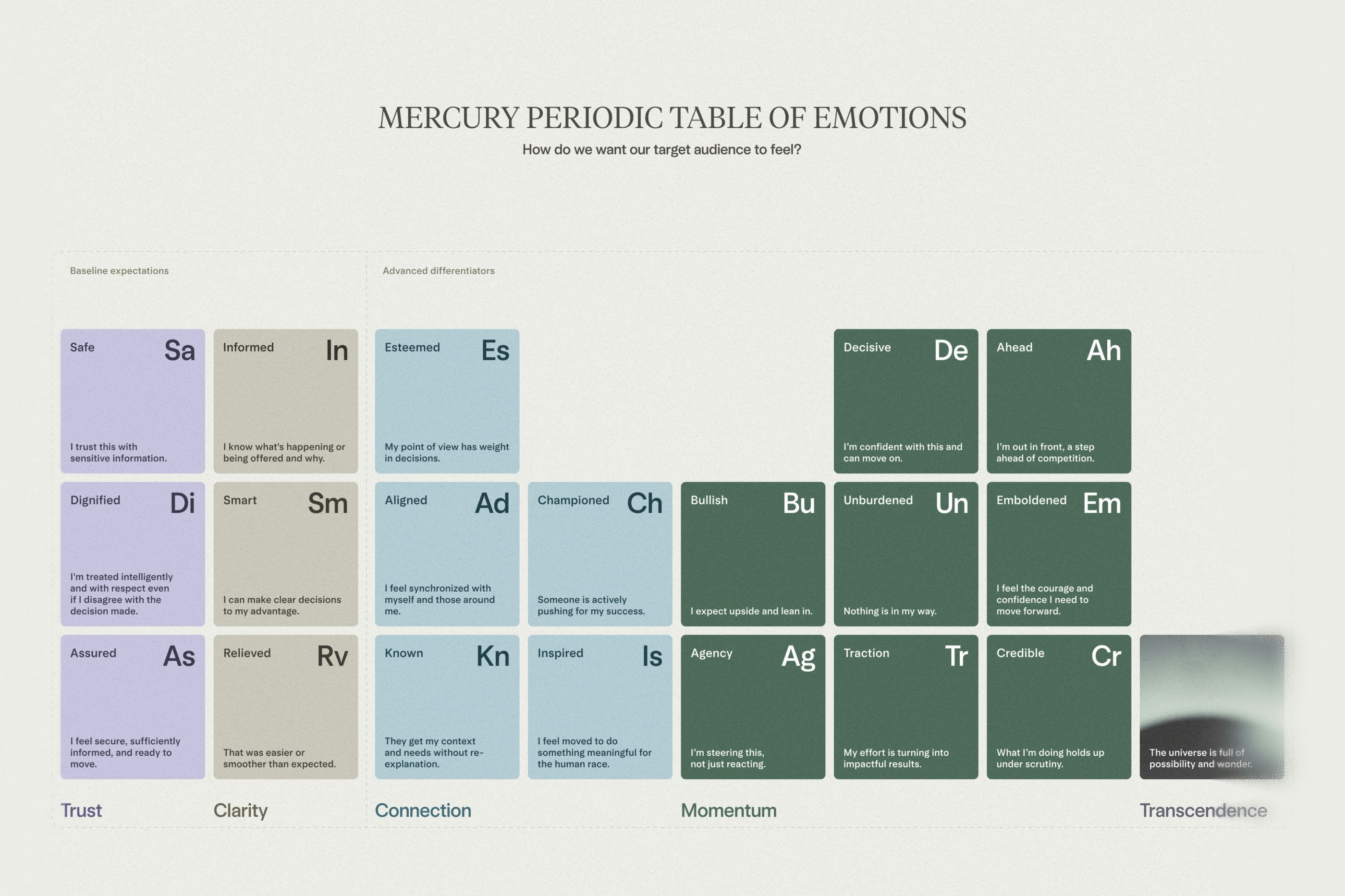
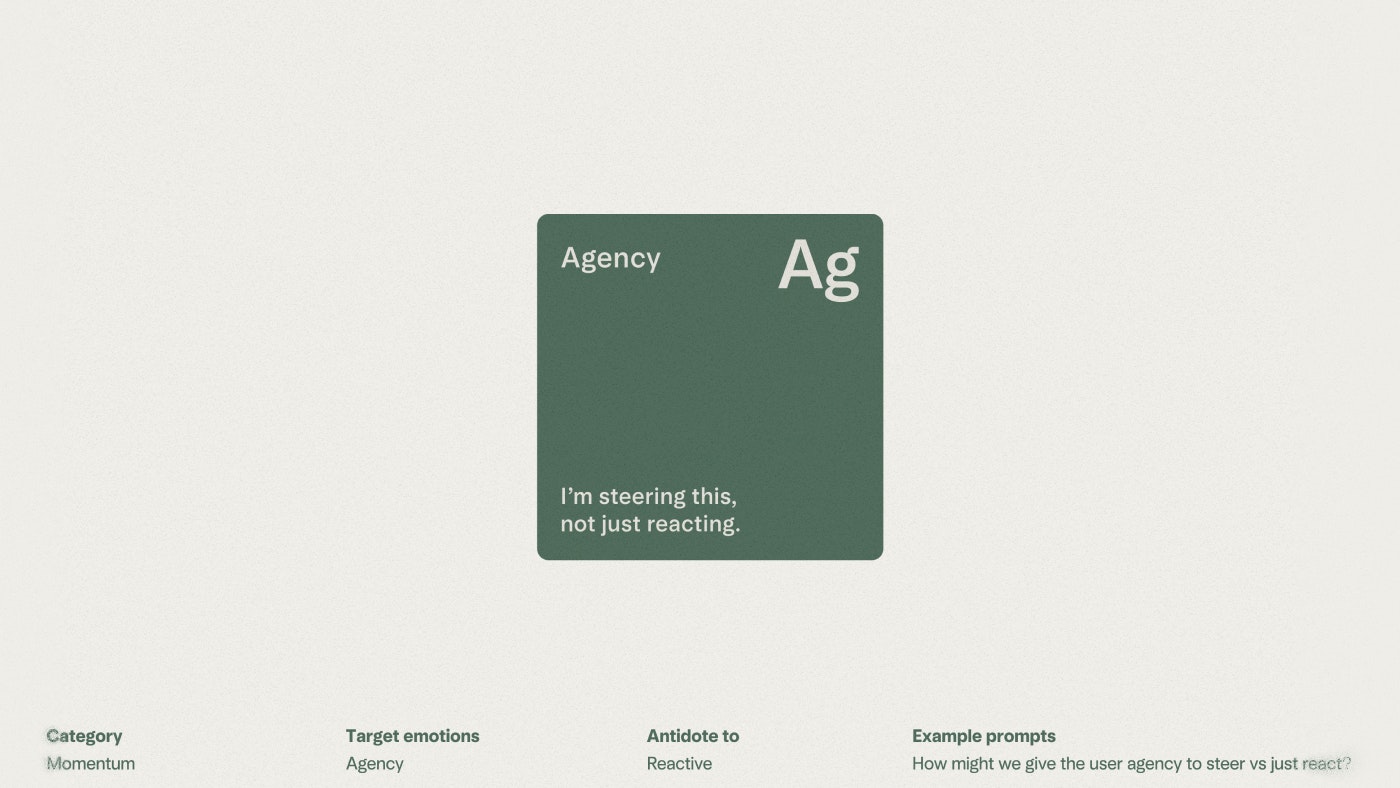
Each emotion in the table also includes:
- A short definition. To set the intention for the use of the emotion.
- An antidote. The counter-emotion it resolves, so we can think in arcs, not isolated moments.
- A practical prompt. An example question to help teams work toward that feeling.
These act kind of like our version of atomic numbers, chemical properties, and electron configuration in the periodic table.
How it works day to day
We’re starting to utilize the table in various ways on projects from briefs and product requirement docs (PRDs) to strategy workshops and design reviews with a few simple questions like:
- What’s the moment or journey?
- Where is the person likely starting, emotionally?
- What’s the primary feeling we want them to leave with?
- What choices in UX, copy, motion, etc. can bring that feeling to life?
For each journey, we pick one primary emotion as the center of gravity. But we leave room for supporting emotions. They can be used to create what’s akin to chemical compounds. They can create more complex, nuanced emotions but are also more unstable. For example:
- Audacious = Safe + Champion + Bullish
“I can take a swing because I’m protected.” - Autonomous = Unburdened + Agency
“Nothing is in my way, and I’m the one steering.” - Prescient = Informed + Ahead (+ Bullish)
“I know what matters and can act before others do.”
Then we approach our work around that center. If a choice doesn’t serve the target emotion, it’s questioned.
Example
Let’s look at a quick example. In an onboarding experience, we know a user is likely feeling unsure about what they can do or where to start. The antidote to this could be helping them feel smarter. And that they have agency over their choices. So, how might we reduce ambiguity and guide easier decisions? And how can we give the ability to steer vs just react?
- Starting emotion: Unsure
- Target emotion: Smart + Agency
From there, you can imagine a trail of decisions:
- What you say on each screen (and what you don’t).
- How much you ask for at once.
- How you prove safety and competence without shouting about it.
- How quickly someone feels a real win.
For example, UX patterns in this scenario could include:
- Progressive disclosure because showing one step at a time reduces cognitive load.
- A visible progress indicator to reassure users that the process is finite
- Optionality and skips reinforce control without punishing curiosity
Essentially, we treat emotion like any other product outcome: we name it up front, design toward it, and then we can check whether people actually feel it. The exact methods can vary by team and project. They’re hypotheses we can validate or disprove.
Why emotional resonance matters even more right now
In an AI-rich world, form and function are becoming baseline. Almost everyone can ship a clean interface and a useful workflow. What’s scarce is work that makes people feel something. Something true beyond “surprise and delight.”
We’re still early with the Mercury Periodic Table of Emotions. It will evolve as we do. But even now, it’s helping us:
- Align faster
- Debate with more precision
- Build with more heart
When someone senses that something was crafted for them with care, that’s the human coming through. That’s what keeps them coming back, telling others, and trusting you.
About the author
Sean is a designer and musician. At Mercury, he helped teams connect the dots between brand, product, and marketing across all mediums.
Share article
Related reads