Mercury Annual Letter 2025
Co-founder and CEO of Mercury.
Since Jason, Max, and I founded Mercury in 2017, our goal has been to shift the paradigm of banking and introduce a radically different way of using money to build great things.
We built Mercury for the moments where founders and entrepreneurs need their financial tools to really work. When something changes in your business or your life, the products you use to manage your finances should help you understand what’s happening and act quickly.
Traditional banking tools aren’t built that way — the regular fees, friction, and outdated processes are obstacles you’re expected to work around. Simple actions can take days, access to credit depends on history you might not have yet, and understanding cash flow often means stitching together barely compatible reports. That’s not good enough.
Software can help address it, but isn’t enough on its own. When you’re responsible for people’s money, the business underneath that software has to be durable. In 2025, we raised our Series C with Sequoia leading, reached three consecutive years of GAAP profitability, and applied for a national bank charter. Each of these reflects how seriously we take the responsibility of building financial infrastructure people depend on every day.
Today, more than 300,000 customers use Mercury. Many of those companies are tech startups — the businesses that pushed us to build the product we have today. But over time, Mercury has also become central to how other entrepreneurs use money — from ecommerce companies navigating cash flow to professional services firms juggling growing books of business to individuals seeking to build the life they want. By the end of 2025, 73% of new customers came from outside the AI or tech startup category, while NPS remained strong at 73.8, compared to the banking industry average of 34.
The numbers
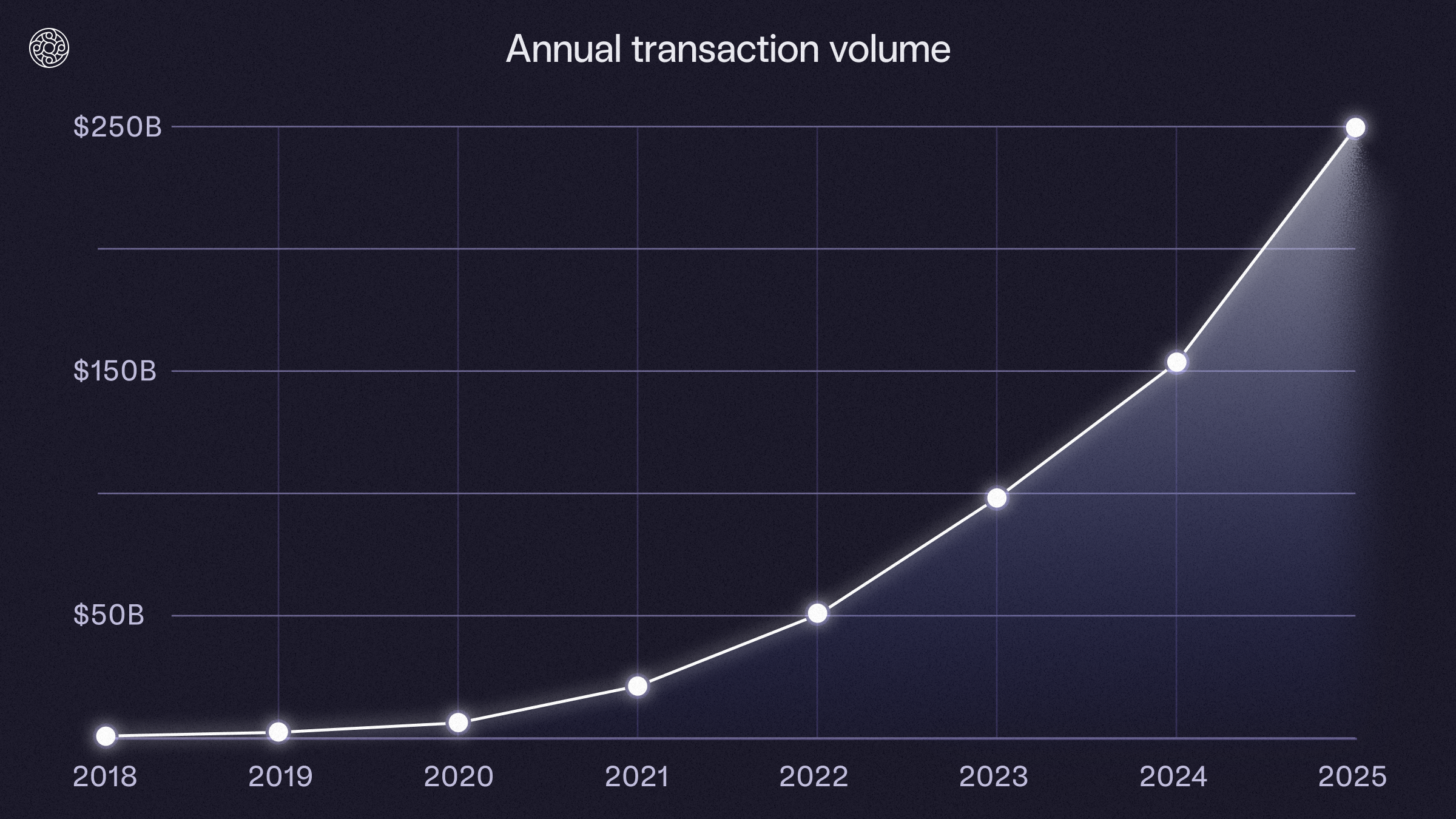
In addition to sustained profitability, as of September 2025, we hit $650M in annualized revenue. By the end of 2025, customer growth reached 50% year over year, and Mercury transaction volume grew to $248B, up 59% from $156B in 2024.
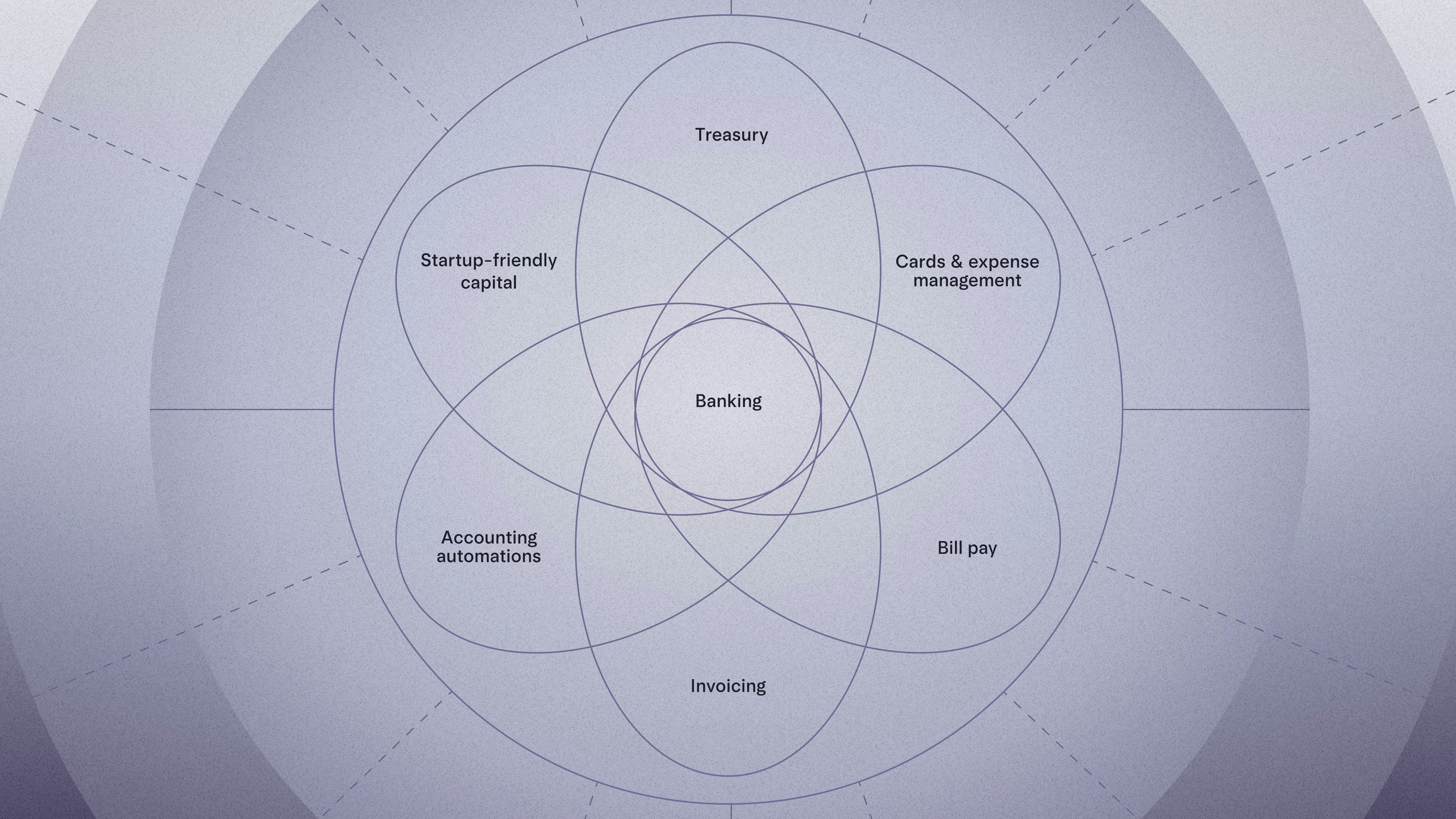
This probably wouldn’t have been possible if we had remained a single-product company; increasingly, businesses expect their software to work as a system, not a collection of disconnected tools. Last year, I wrote about becoming a multi-product company, and 2025 underscored the impact of that work.
Customers don’t rely on Mercury for just one task — they use cards, payments, invoicing, and more. Different companies come in with different needs, but many of them adopt more Mercury products over time.
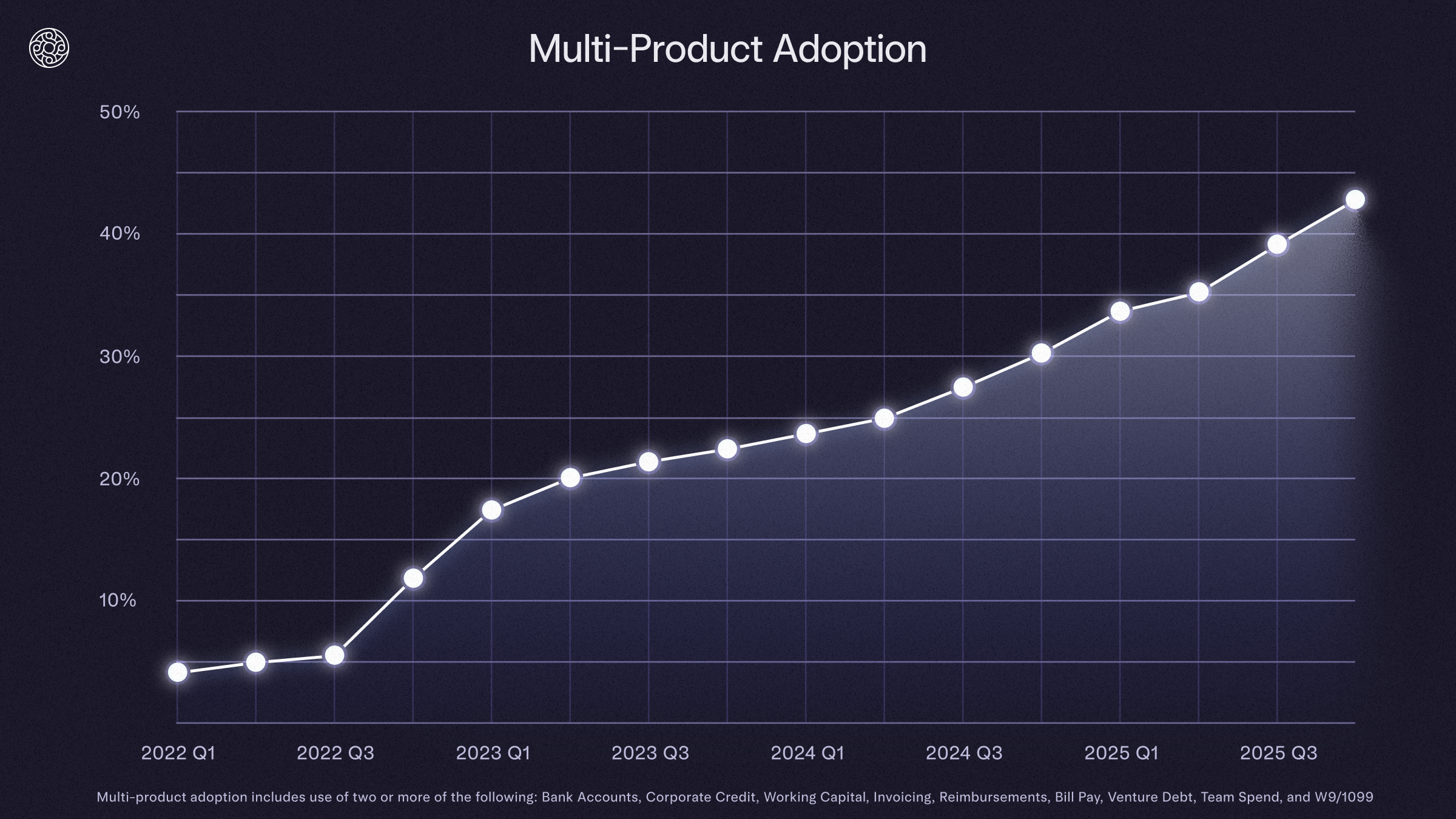
As customers came to rely on Mercury for more of their day-to-day financial work, we focused on the details that matter at scale: clearer card controls, better legibility in how money moves, and faster, more predictable operations. These weren’t flashy changes, but they addressed real operational needs and made Mercury even more dependable day-to-day. When those needs are handled well and the tools work together, customers use Mercury more deeply over time, and the relationship compounds.
Extending beyond startups
Today, 1 in 3 U.S. startups use Mercury, including a rapidly growing share of AI companies — in 2025, we onboarded 2.4x more AI companies than the year before. These customers have some of the highest expectations for speed, reliability, and products that don’t get in the way of running their business. Building for startups of any kind has always meant building for what comes next.
But for years, businesses outside of tech startups were signing up, sticking around, and using Mercury more deeply. In 2025, the data made it clear this was durable demand, particularly among ecommerce and professional services businesses.
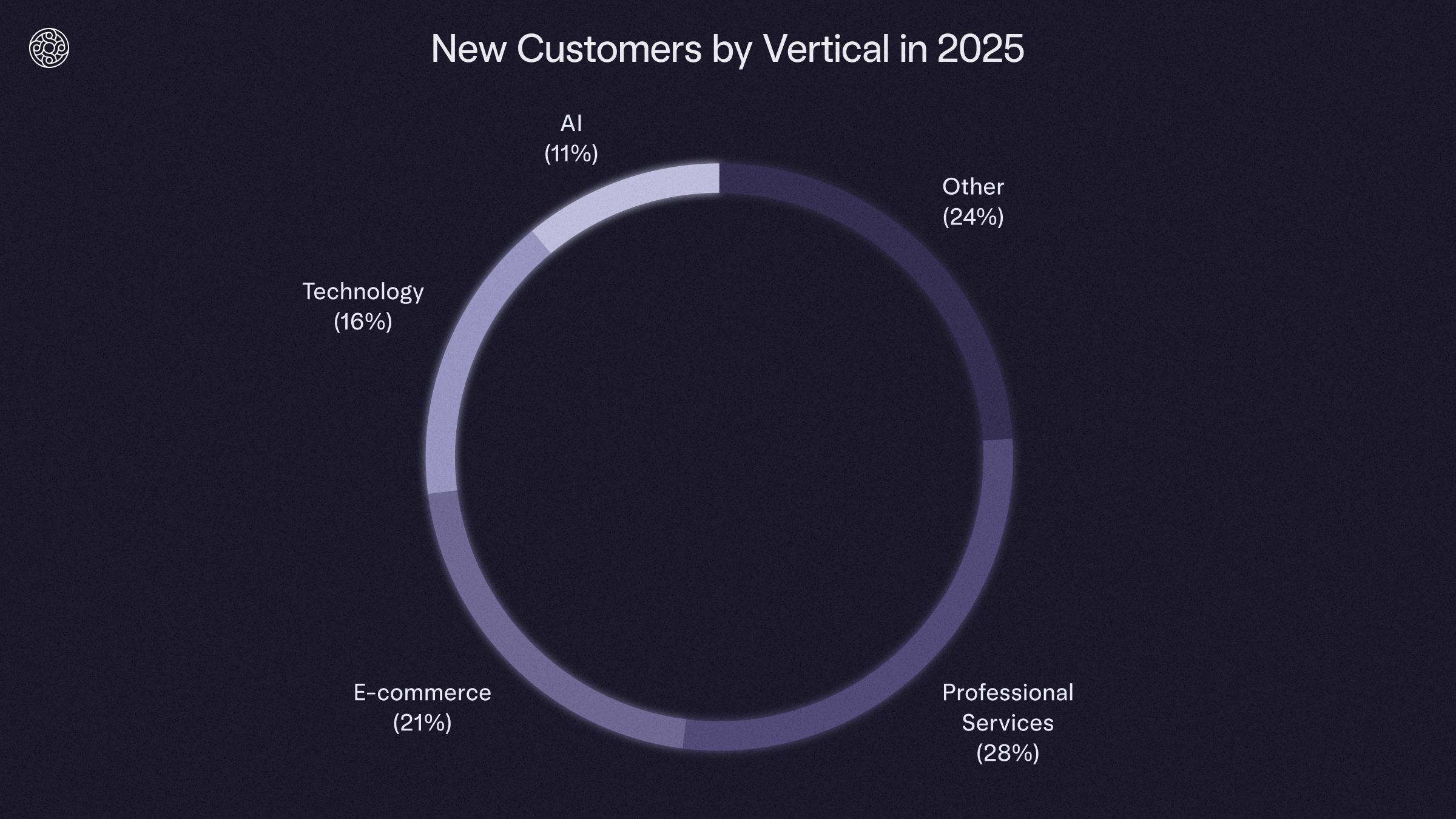
Ecommerce businesses made up 21% of the new customers we acquired in 2025. These teams live and die by cash flow — inventory often has to be paid for long before it’s sold. We saw ecommerce customers using Mercury across cards, payments, and lending to manage that reality. Working capital and cash back on ad spend mattered because they aligned with how these businesses actually operate.
“I used to think of a bank as a place where money sat between decisions. With Mercury, it became part of how we actually run the business. When spending, cash flow, and financing are connected, you stop reacting and start planning. It changed how we think about growth,” said Peter Tzemis, Founder & CEO of Pup Labs, an ecommerce brand improving dog health.
Professional services businesses are another rapidly growing vertical. What mattered here was removing friction they had learned to live with. Invoicing, getting paid, and managing client-specific finances needed to be simpler, faster, and more transparent.
“We didn’t choose Mercury because it was incrementally better than legacy options. We chose Mercury because it felt like it was built for a completely different era. Once we saw what running our finances could feel like, choosing an outdated system just didn’t make sense anymore,” said Ted Harrison, Founder & CEO of neuemotion, an Hermes Platinum Award-winning advertising agency.
We also saw that builders and founders regardless of industry wanted the same level of clarity and control in their personal finances that they relied on in their businesses. So in 2025 we made Mercury Personal available to everyone.
Features like virtual cards, fast transfers, controls and user permissions, and clear visibility translated naturally into how people wanted to manage their personal finances.
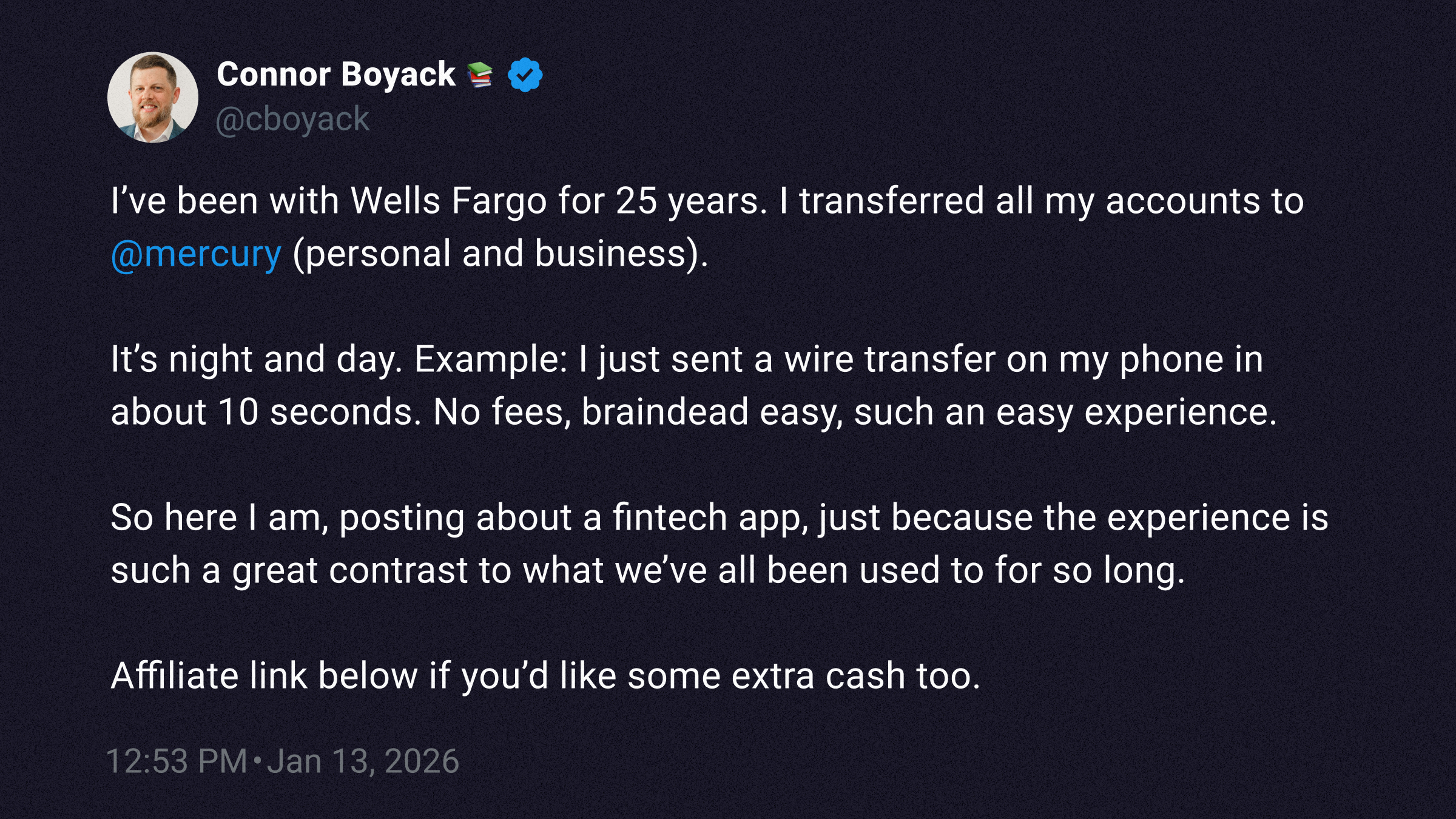
Supporting these new audiences taught us that we didn’t need to massively change the product, but we did need to change how we brought it to customers.
How we operationalized expansion
Expanding beyond a single audience forced us to be more deliberate about how we learn and where we focus.
We reused a model that already worked
As I wrote in last year’s letter, we had success treating new products like internal startups, with clear ownership, dedicated resources, and real accountability. In 2025, we applied that same model to go-to-market. We formed cross-functional pods — spanning Sales, Product, Marketing, Data, and Partnerships — that were given the time and budget to operate with focus rather than as a side project.
How the pods were staffed mattered. Expanding into new audiences involves ambiguity, constant iteration, and some dead ends. The work went best when teams were comfortable operating without predefined playbooks, could adjust in real time, and had deep context on how Mercury works, even as they learned a new audience. Designing for that upfront made the experiments more effective and the learning clearer.
Learning before scaling
Ecommerce businesses, professional services firms, and startups think about money very differently. We deliberately avoided shortcuts like buying lists or automating outreach to AI SDRs, and instead each pod focused their first few weeks heavily on listening. We spent time understanding what these business owners worried about, how cash moved through their business, and which decisions felt risky.
This approach helped us rethink seemingly familiar concepts like timing. For example, startups tend to think in funding cycles, but we saw that ecommerce businesses think in days. Inventory has to be paid months in advance, and a million dollars in revenue can require hundreds of thousands of dollars up front. This helped us understand why working capital mattered so much to ecommerce founders, and why something as specific as getting card cash back paid 15 days earlier was meaningful, even for very large businesses.
One product, different contexts
We also saw the same product show up differently across audiences. Take cards, for example. Startups used virtual cards to give employees spending access with controls. Agencies used the same feature to create a card for each client and simplify accounting. For another example, startups tend to use multiple accounts to manage runway as things get more complex, separating receivables, taxes, payroll, and operating cash. Ecommerce businesses used the same structure to run profit-first workflows, separating taxes, ad campaigns, and inventory purchases as money came in.
That lesson carried over into how we went to market, and we tested heavily across channels, creative, and targeting. We found that some audience-specific messaging worked, but often over-segmentation added complexity without improving results. We learned to be precise about where differences mattered and disciplined about where they didn’t.
A horizontal product still needs to evolve
As we built, tested, and learned more about a broader audience set, we also had to reconsider some of our defaults. Because we had long been building with venture-backed startups in the sharpest focus, there were some assumptions baked into the product that didn’t reflect how early businesses across other sectors or bootstrapped businesses operate. We assessed these scenarios, and focused on evolving areas where constraints could be removed without changing the core of the product.
In 2025, one example of that was expanding access to business credit from day one for all eligible customers through our IO credit card. Instead of limiting day-one access to businesses that met specific balance or profile criteria, we updated our underwriting policy to make the same credit card available to most U.S. businesses as soon as they opened an account. This allowed us to offer the same product to nearly all audiences rather than building a new one, removing requirements that didn’t serve our growing new audience segments.
We expanded where both the math and the motion worked
After our multi-product expansion in 2024, many new audiences appeared promising. We did a lot of exploring which types of businesses we could best support now. But with enough data on acquisition costs, depth of usage, and long-term value, the unit economics simply didn’t work out for all of them. In order to focus on maintaining a strong banking core and providing the very best experience across all audience segments, we decided to focus on the audiences who most urgently needed what Mercury could offer, and who did not require a fundamentally different way of selling or supporting them.
We looked to customers who needed a fast signup and self-serve experience that works out of the box, who wanted to issue virtual cards for specific merchants in seconds, set up separate accounts for things like taxes and operating cash, configure spend controls immediately, and scale their setup as the business grows, all without waiting on Sales or Support.
What we’re carrying forward
As our audience broadens, the job isn’t to average everyone’s needs together. It’s to make changes that raise the bar for more customers without lowering it for anyone.
That means continuing to be deliberate about who we build for; maintaining a high bar for quality, reliability and execution; and making improvements that strengthen the core of the product. The work ahead is about deepening what already works, and extending it carefully to more people who need it.
About the author
Co-founder and CEO of Mercury.
Tags
Share article
Related reads

Mercury applies for OCC national bank charter to become the bank for builders