The new social life of learning
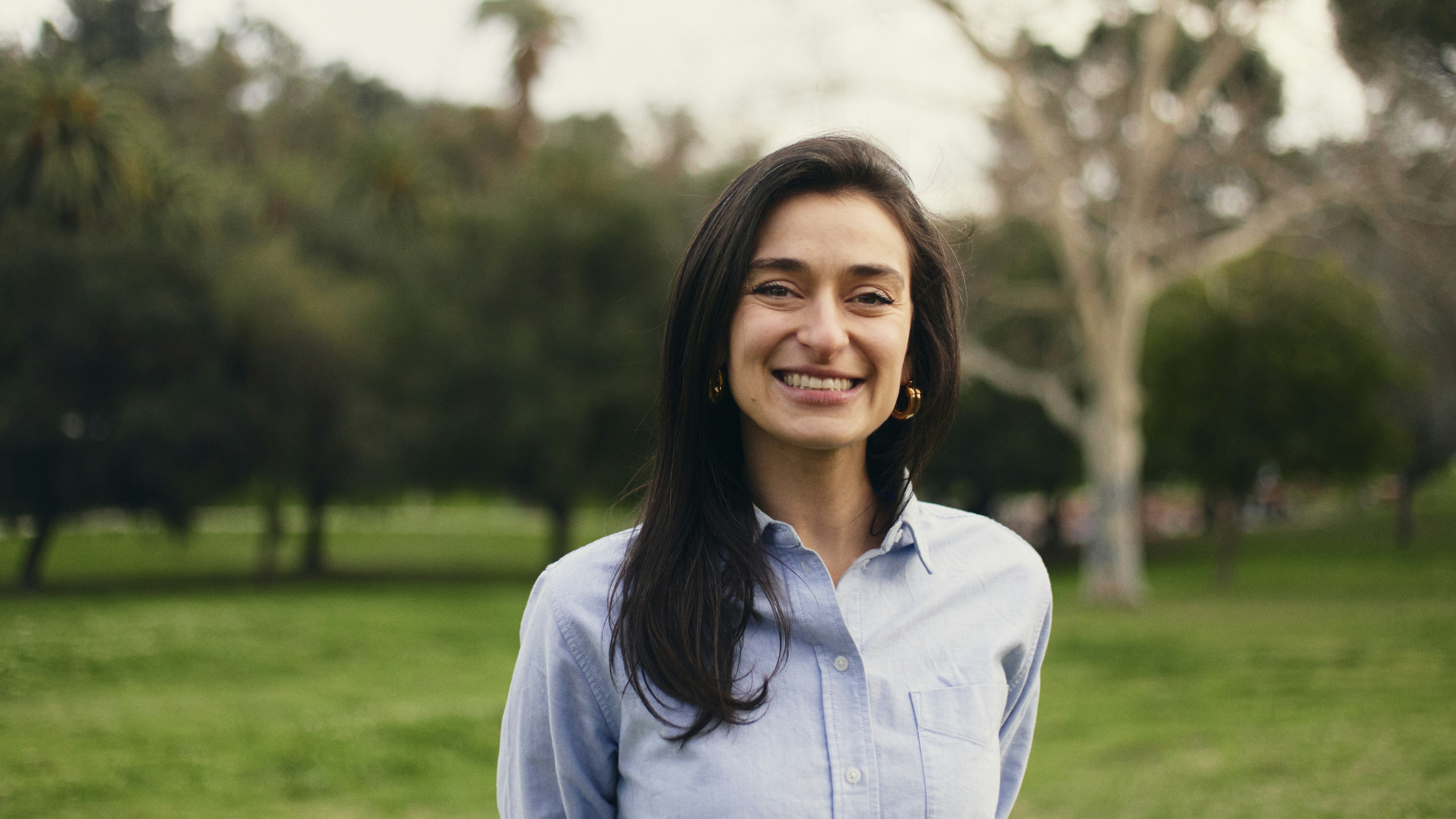
Megan Carnegie is a London-based independent journalist who specializes in writing features about technology, work, and business.
As self-proclaimed nerds, Tyrone and Felecia Freely considered public lectures and speaker events their ideal date night. After the couple attended a talk on the Argentinian Revolution at Columbia University in March 2024, Felecia, a content creator, posted a quick Instagram story to her 250K followers and thought nothing more of it. “The next day, I opened my Instagram and found all these people asking how they could get tickets for the next one,” she says. The couple saw an opportunity to make new friends with shared interests, and “the seed for Lectures on Tap was officially planted.”
Lectures on Tap, which started in 2024 as weekly series of talks by professors and experts in New York City bars, now hosts 75+ events a month across New York City, Los Angeles, Boston, Chicago, and San Francisco, where attendees pay around $40 a ticket to learn about free-wheeling topics like “the violin, uncorked,” what Jurassic Park gets right, and the history of medical marketing. Two years on, the company has hosted 50,000 people (events regularly sell out), with plans for a 10-city expansion this summer: The growth has been so rapid that Felecia pulled back her content creation and Ty paused his master’s degree at Columbia to run it full time. ”It’s been a wonderful surprise,” says Felecia. “It feels as if we’re part of a knowledge revolution that was lingering in the zeitgeist, and all it took was the right spark to set it off.”
There have always been sites for casual, self-directed learning — the edX platform has offered free online courses from higher education outfits like Harvard Professional and Lifelong Learning since 2012; community-driven spaces like Brooklyn Brainery foster IRL “crowdsourced education.” But in recent years, these “knowledge nights” — whether a skills sharing event, an intimate mini-salon with an expert, or a glorified show-and-tell — have combined the idea of leisurely learning with an explicit social component. In 2024, PowerPoint parties and DIY learning parties, where friends teach one another about their niche interest (whether local bird species or how to make the perfect extra-dirty martini), trended on TikTok and Reels. Since the COVID pandemic, “cookbook clubs” have gained popularity, encouraging groups to cook through a book together, sometimes culminating in potlucks or events where the authors appear.
We’re part of a knowledge revolution that was lingering in the zeitgeist, and all it took was the right spark to set it off.
In response, founders see opportunities. In the UK, Pints of Knowledge debuted in 2025 offering pub-based expert talks built on a “respect for authentic enthusiasm and expertise”; Lost Property’s nights of “miscellaneous lectures” invites four speakers to deliver 10-minute presentations on the obscure fascination currently holding their attention. Elsewhere, founders rework older formats for a new audience. In NYC, Gael Aitor and Kayla Suarez’s community Grownkid reimagines the social club with play-based events designed to help participants “develop life and social skills.” Its program has included a Protein Slop Potluck, preceded by a guide to proper workout form at a gym in Bushwick, Brooklyn; a wabi-sabi pinch pot ceramics workshop; and a “tennis and tanning” day, with lessons for those who wanted them.
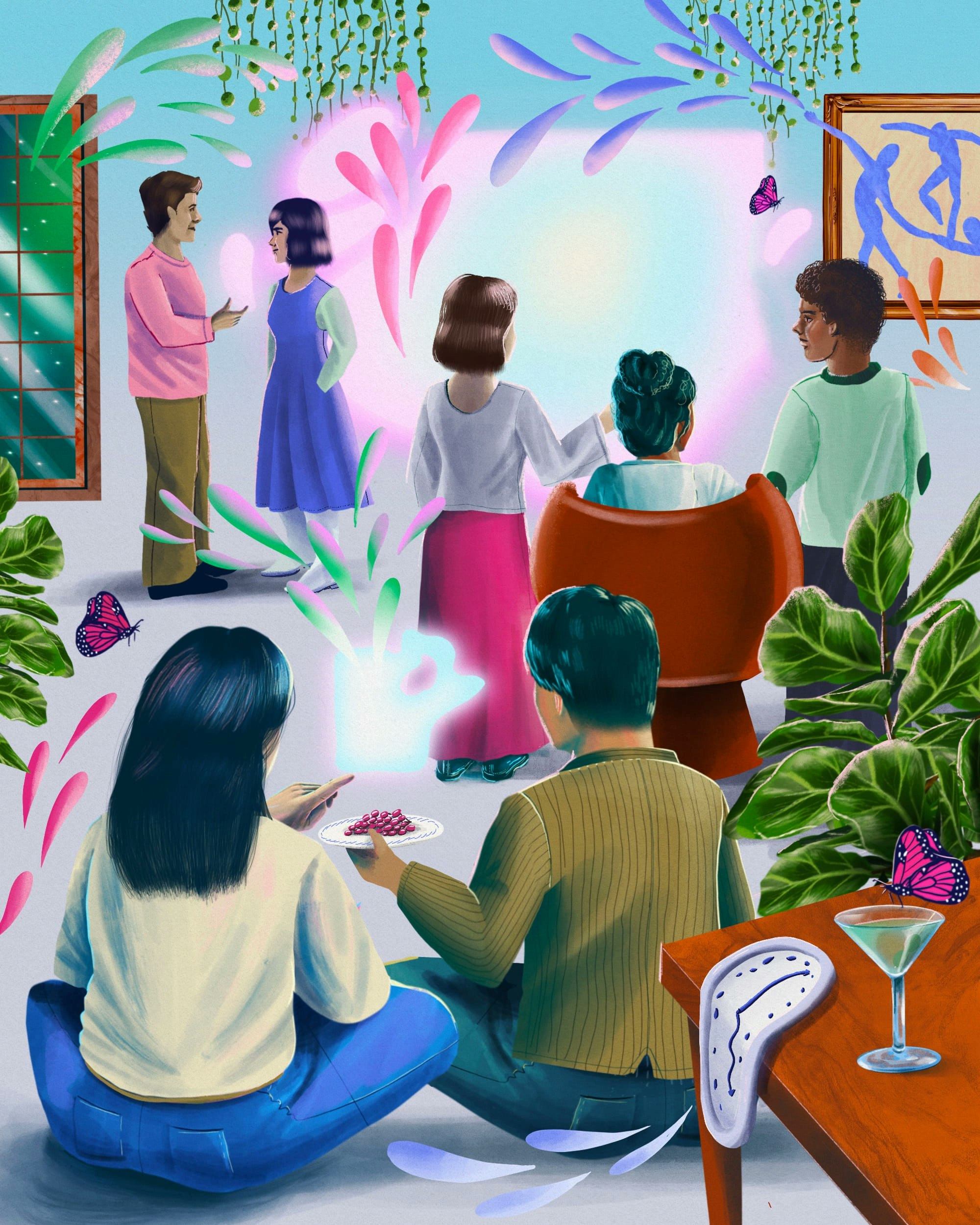
Across formats and geographies, the draw is the same: a chance to gather, learn something unexpected, and feel part of a room that’s thinking together. The emergence of these learning opportunities indicates a wider embrace of intellectualism stripped of pretension. In public and private spaces, knowledge has become both a social currency and a new mode of socializing, one particularly potent in an era where many people are hungry for IRL connection. Amid pernicious disdain for intellectualism in the U.S., there’s something revolutionary about it: people tending to their minds like tiny patches of green on a city balcony. Fueled by curiosity, irony, and the desire to undo internet-induced brain rot, the hottest ticket in town is learning something new, together.
Keep in touch
Subscribe to our community newsletter for monthly stories, resources, and inspiration from Meridian and across Mercury.
Rage against the algorithm brain
In many ways, the rise of the knowledge night is a response to how we learn and glean information online, which has changed irrevocably in a dizzyingly short time. AI assistants can now rapidly condense complex research that once called for several pages of reading (or at least, clicking through several different tabs, forum threads, and search queries). As AI tools absorb more of the labor involved in learning, anxiety is mounting — for example, a GoTo survey of 2,500 global employees and IT leaders found that 46% of Gen Z worry that AI is already eroding their skills and making them less intelligent. But there’s also a countermovement underway. As the learning night trend picked up steam in 2024, workers in the U.S. reported greater use of self-directed informal learning than the learning assigned by their organizations. In the UK, a 2024 survey found that over half of adults had taken part in learning in the last three years, which is the highest figure since the survey started in 1996. Since the pandemic in particular, participation has been driven by a rise in self-directed education, often for personal or leisure reasons.
Kel Rakowski, founder of the queer social connection app Lex and author of the creative newsletter Popular, sees echoes of the old blog era in the current lean towards self-directed inquiry. Like many working-age Americans, she would love to re-engage with continued education but finds the cost prohibitive. “It’s a push-pull: I want the depth, but not the institution,” she says.
People want to define their own interests and intellectual life, instead of having it shaped by platforms.
Over the past year, she’s taken workshops led by other creatives and begun sharing DIY creative education exercises through Popular and her Instagram account Herstory, like a 30-minute ritual to refocus your aesthetic or experiments to keep your creativity alive “while your full-time job tries to kill it.” Lately, she’s gotten really into four-week “mini universities,” self-directed and tightly themed courses with reading lists, discussion prompts, and something tangible to ship at the end. “It allows you to braid together ideas and let them sink in,” she says. “All this self-directed learning has to be because people want to define their own interests and intellectual life, instead of having it shaped by platforms.”
Atomized, lonely, and hungry for shared interests
Knowledge nights are the public version of this personal inquiry, and according to its practitioners, has an additional benefit. “Knowledge is cheaper than it’s ever been, so I don’t buy that people are going to these nights just for more knowledge,” says Anthony Silard, host of the podcast ReSocial and author of Screened In: The Art of Living Free in the Digital Age. “I believe their principal function, underneath any skittishness about social overtures, is a place for people to bond, connect, and perhaps even find long-lasting friendships.”
In a world where our digital landscape runs on constant stimulation — fast, surface-level interactions and instant gratification — people are hungry for real-world connection. In late 2025, data from the American Psychological Association found that 54% of respondents reported feeling isolated often or some of the time, while 50% of respondents reported feeling left out or that “I lack companionship.”
And “while it had previously always been the elderly,” Silard says, “young people are now the loneliest cohort. That’s a first in human history.” Just one in six (17%) of the under-30s polled by Harvard Kennedy School of Politics in 2025 say they’re deeply connected to at least one community. Nearly one in five (18%) don’t feel a strong sense of community anywhere.
Lectures on Tap began as a way for the Freelys to make friends, and the team continues to design their events with this in mind. Each evening is dedicated to one topic, so the crowd arrives with an existing shared curiosity, and the room is intentionally packed tightly enough that strangers can’t help but strike up conversation with their neighbor. “At least 30% of attendees come solo and we try to seat them together,” Freely says. “There’s nothing more satisfying than looking over to see them all still there chatting after everyone else has gone.”
There’s nothing more satisfying than looking over to see them all still there chatting after everyone else has gone.
This is part of a larger, generationally fueled shift in social connection. In a 2025 report, Julia Hartz, co-founder and CEO of ticketing and events platform Eventbrite, noted how Gen Z and millennials often “transform online interests into dynamic in-person spaces.” Ninety-five percent of the survey’s 18-to-35-year-old respondents expressed interest in exploring an online interest through an in-person event, while almost three-quarters reported they planned to attend a similar live event in the next six months. Eighty-four percent of attendees at interest-led gatherings reported forming close friendships through them.
“Our goal is to make young adulthood less lonely through community and play,” Grownkid co-founder Aitor writes on the brand’s Substack. Under the tagline “the meaning of life is play,” Grownkid’s sessions of structured silliness are open just to 18-to-24 year olds. “While our mission is to give young people a consistent space for connection,” Aitor writes, “our true marker of success is if they branch off and begin hosting their own events, learning how to form community in their unique way.”
A combination of performance and knowledge transfer
Whether staged as standalone evenings or folded into house parties, unofficial, independently organized PowerPoint parties have developed their own unique voice. Redditors swap tips on the best approaches, including that presentations should be delivered with the gravitas of a TED Talk, but on something novel or silly. The golden rule, however, is that the vibe stays playful. Lightly edgy is fine, but nothing mean-spirited and no punching down.
Kian Vatanian, who’s studying for a master’s degree in regional and urban planning, likes how a PowerPoint party reveals layers in people you already know — or at least, folks within your social network. “Of course, you know they’re smart, but you never see them like this,” he says. His most recent PowerPoint night presentation, titled “Got Nut?,” charted the rise and fall of a peanut butter conglomerate after one of the largest food recalls in history.
For participants, PowerPoint parties offer a low-stakes opportunity to perform one’s tastes and expertise. “I get nervous, but because it’s among friends, it feels safe,” says Kian’s partner Kiley Taplin, an environmental policy master’s degree student who got into PowerPoint nights after seeing them dominate her Reels. “The joy is in how you present — you can go in with a really big personality, or act exactly as yourself.”
Chris Balakrishnan, who started irreverent lecture series Nerd Nite at Boston’s Midway Cafe in 2003, would agree: There’s no strict formula. “The best presentations go the perfect depth on the topic, they’re neither too fluffy or go over everyone’s heads,” he explains. The best presenters “bring real information, convey deep curiosity, and do so either with comedy or great visual content.”
Most presenters are in their 20s and 30s so we’re often the first organization that gives them a platform — we launch one thousand ships.
A beautiful butterfly effect is that many people not only gain confidence presenting at the event, but they also find the drive and interest to dig deeper into their own research. Over a dozen presenters (that the team knows of) have gone on to write books and produce documentaries based on their Nerd Nite presentation. “We like to think we gave them the initial platform to shore up their ideas and the positive feedback from our audiences sent them on to make something bigger and better,” says Balakrishnan. “Most presenters are in their 20s and 30s so we’re often the first organization that gives them a platform — we launch one thousand ships.”
One such ship was former New York Times reporter Mary Pilon, who presented on the shady origins of Monopoly at Nerd Nite NYC in 2009. After positive reception, she had a book proposal accepted and went on to write her New York Times bestseller The Monopolists: Obsession, Fury, and the Scandal Behind the World’s Favorite Board Game.
Balakrishnan has seen the purpose of Nerd Nite evolve as it’s grown to have a presence in over 100 cities around the world. “I started Nerd Nite purely to convey information about my science, to people who didn’t understand what I did for a living,” says the evolutionary biologist and now program director at the National Science Foundation. “We stumbled upon this formula based on what resonated with audiences and what didn’t, but it’s now definitely a combination of performance and knowledge transfer.”
It probably doesn’t matter whether anyone remembers the finer points of a slideshow on comics or quantum physics. What lingers is the experience of paying attention — to a subject, to a person, to a room — and feeling, if only fleetingly, part of something shared.
About the author
Megan Carnegie is a London-based independent journalist who specializes in writing features about technology, work, and business for publications like WIRED, BBC, and Newsweek. Her work is underpinned by a desire to investigate what’s not working in the working world. She also loves to write about topics that straddle culture and lifestyle, digging deep into how we think, work, and unwind.
Tags
Share article
Related reads
Fishwife founder Becca Millstein on brand as leverage
A new age for an anti-slop internet
Catalyst founder Will Leatherman on why specific knowledge is the starting point
