A problem of communication

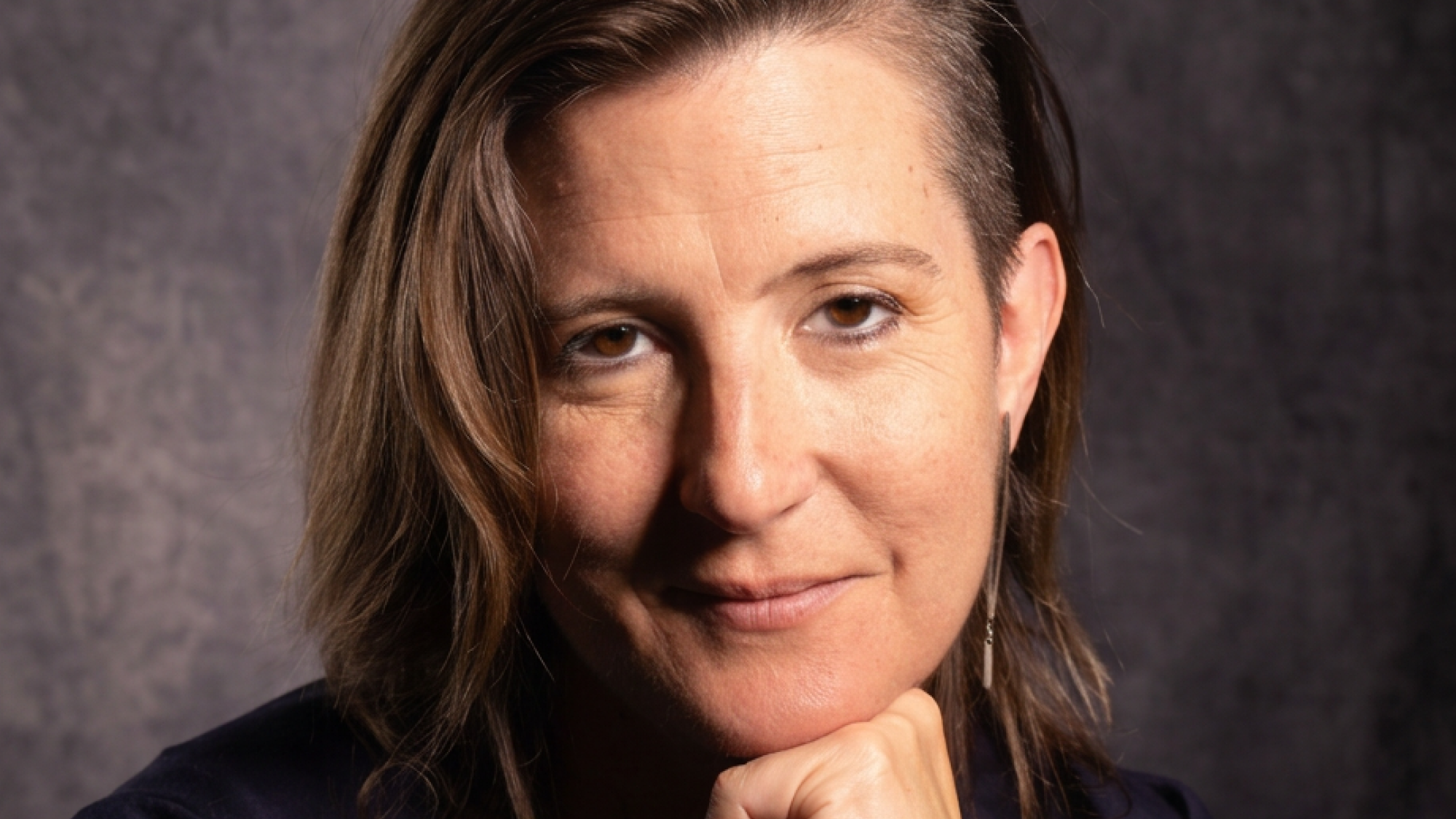
Alexandra Pattillo is a health and science reporter based in New York City.
Much of what goes wrong in elder care is, at its core, a communication failure. A woman with dementia falls in the night and can’t explain what happened. A daughter across the country learns her father has stopped eating only after he’s hospitalized. A home aide, a physician, and a hospice nurse each hold one fragment of a medical chart while no one sees the patient’s experience in its entirety.
These gaps exist, in part, because the system meant to support elders was built for acute health crises, not the often necessary years of daily help with bathing, medication, and memory. Programs like Medicare generally don’t cover long-term custodial care, so some 38 million Americans provide care to an adult, work valued at more than $1 trillion annually. Families are being stretched thin to cover costs, professional and informal caregivers are scarce and burnt out, and nursing homes are strained. And the need for elder care is only growing. For the first time in recorded history, adults over 65 years old outnumbered children under five years old worldwide. In the United States, the share of seniors in the population is projected to jump from 19% to more than 23% by 2060.
We’ve got to find a way to bridge the gap because there is a very real existential risk of this aging problem.
“In Western culture, we don’t love to think about our own mortality, so we often push seniors to the side and try not to think about them,” says George Netscher, founder of the AI care platform SafelyYou. “But we’ve got to find a way to bridge the gap because there is a very real existential risk of this aging problem.” Overburdening the system may worsen health outcomes for older folks and hamper the economy as a whole, he adds.
A growing cohort of founders, targeting a global elder care market forecasted to hit $114.57 billion by 2034, believes artificial intelligence can help fix these problems. AI is a “massive unlock” for streamlining operations and improving outcomes, says Seth Sternberg, co-founder and CEO of the in-home senior care company Honor, which delivers an average of 60 million hours of care annually across five countries. “As [people] get older, life gets really complicated with painful logistics,” Sternberg says, particularly for the “sandwich generation,” those caring for aging family members on top of their children. “If technology can help take those logistics away so that people can spend more time just being with each other and being human, that’s a mega net-win.”
To these founders, AI can connect a scattered circle of care: family to patient, patient to caregiver, caregiver to operator. But the opportunity for builders isn’t just to close the communication gap, it’s to decide what fills it. The products that matter most may be the ones that use every alert, check-in and conversation as a prompt for more human contact, not a replacement for it.
Read more about founders whose products reshape users’ everyday lives:
Creating the conditions for better care
When Sternberg co-founded Honor in 2014, the outlook was grim. “No one wins in elder care,” he says. At the time, the market was hyper-fragmented: thousands of home-care agencies operating independently and struggling to scale. As an industry, employee turnover was rampant: caregivers report a taxing emotional and physical toll coupled with limited support from their employers.
Facing these hurdles, Honor harnessed AI early — in 2015 — using it to predict caregiver retention, match providers to clients, tailor training, and optimize caregiver-to-client reporting. Staff turnover fell from an industry norm ranging from 85 percent to as high as 100 percent annually to less than 30 percent, Sternberg says.
Embedding technology across its operations, along with a pivotal 2021 acquisition of the home care franchise Home Instead, has made Honor the world’s largest private-pay home senior care provider. Today, the company employs more than 100,000 care professionals globally and delivers more than $2.6 billion dollars in annual sales, according to Sternberg.
Humans cannot do this at scale, but AI can.
AI helps map the “weirdness of humanity,” Sternberg says, predicting how people actually behave, not what they say they will do, such as when a care professional bails on a shift or escalates a problem to management. According to Sternberg, more than 30 bespoke algorithms funnel the deluge of client and staff information — employee reports, client data, family complaints — into a single channel, cutting average issue handling time from 39 minutes to 14.
The ultimate goal, Sternberg says, is to “care for the care pro”: give caregivers the best client fit, minimize paperwork, and streamline patient-family communications so that they take better care of the person in front of them. “Humans cannot do this at scale, but AI can,” Sternberg says.
Giving a voice to the vulnerable
For Netscher, SafelyYou’s founder, a family history with Alzheimer’s — his grandmother, mother, and aunt all lived with the disease — sparked an interest in the notoriously tricky field. “You lose a bit of them every day,” he says. “Everyday complications arise that you never foresee.” One of those complications is invisibility. Roughly 77% of falls in hospital settings happen without a staff member’s observation — and for a resident with advanced dementia, that can mean a potential injury with no witness and no testimony.
Fearing for his own family members, Netscher, an alum of the Berkeley AI Research Lab, founded SafelyYou. Its AI-enabled camera sensors, which are active in over 1,000 senior living communities in the U.S., watch for those accidents in senior living and memory care facilities, alerting staff when a fall happens and providing video that shows the cause (and thus, potential safety problems to fix). The company reports falls drop by nearly half within one year of use, and fall-related emergency room visits fall by 82% within 90 days of active monitoring. That means fewer hospitalizations, less care disruption, and more stable residents.
Netscher frames the product, which also tracks more than 50 data points including sleep quality and staff efficiency, less as surveillance than translation. “We’re using SafelyYou not just for more accurate fall detection, but to give a voice to folks who can’t tell you what happened,” he says. Once a system can narrate what a person can’t, the “sky’s the limit” for spotting safety risks before they become emergencies.
I wanted to build some layer of visibility into those very intimate environments.
Romi Gubes, founder of Sensi.AI, an agentic AI platform for home care, shares Netscher’s optimism around using AI to protect patients. “I wanted to build some layer of visibility into those very intimate environments where someone who is ‘vulnerable’ cannot speak for themselves and cannot necessarily share the quality of care that is provided to them,” says Gubes.
Sensi’s ambient sensors listen for red flags such as calls for help, nighttime wandering, and signs of a urinary tract infection like increased bathroom frequency or cognitive decline like changing speech patterns — then route them to a dashboard shared by the care team and family. This turns a patient’s daily life, once opaque to everyone outside the room, into something the whole circle can see and make adjustments to if necessary. Internal case studies report a 22% reduction in hospital re-admissions and a tripling of how long clients stay in home care.
As a product that’s always on, Sensi.AI operates beyond the limits of human attention — a response, Gubes says, to a structural labor shortage, not a replacement for people. “The caregiver shortage is real, and it’s going to be even bigger than it’s been before,” Gubes says. “Technology can [extend] what caregivers cannot do today.”
Gubes expected privacy to be a dealbreaker with Sensi. Instead, she found that when families weigh safety against privacy at this stage of life, they tend to choose safety. With limited care staff and exploding demand, aging in place increasingly means aging in a monitored place, even though questions about the ethics of consent remain unsettled.
Sensi is also tackling a second communication gap, between families and the system itself. Finding trusted, quality providers can be a stressful game of trial-and-error, so the team has built a certified network for Sensi clients. “No one teaches you how to take care of an aging loved one,” Gubes says. “We want to be there for [families], helping them navigate the aging journey.”
Keep in touch
Subscribe to our community newsletter for monthly stories, resources, and inspiration from Meridian and across Mercury.
Connection as a health metric
If SafelyYou and Sensi.AI help the world see older adults, Intuition Robotics wants older adults to feel seen themselves. Its tabletop companion, ElliQ, talks with users, reminds them about medication, helps them call friends, and also hosts online bingo, lectures, and cultural tours with virtual peers nationwide. It’s like a supercharged Alexa, infused with an extra layer of emotional intelligence.
The device may sound like a glorified tablet, but it does more than keep seniors on their screens. It sparks real-time connection, inside and outside the home, a core human need that often goes woefully unmet in this population: An estimated one-quarter to one-third of older adults report loneliness on a regular basis. These fraying social ties can jeopardize health; long-term loneliness has been compared to smoking up to 15 cigarettes a day and shown to strip away multiple years of disease-free life.
Assaf Gad, Intuition Robotics’s chief strategy officer, calls ElliQ “empathetic AI.” “ElliQ is there to understand a challenge and empower the user to solve it [directly] with guidance,” he says, rather than passively report data to a care team.
We don’t just build technology to support the older adults, individually. It also brings people together.
That distinction, a companion versus a sensor, reflects a philosophical split in the field over whether the older adult is the subject of the data or its user. Gad says he designs for the person first, and lets connection radiate outward. ElliQ, he says, is the “glue” that expands someone’s circle of care. “We don’t just build technology to support the older adults, individually. It also brings people together.”
The company says 90 percent of people who use ElliQ for more than 30 days keep it, that more than 80 percent describe it as trustworthy, like a family member, and that participants report a roughly 95 percent reduction in loneliness. “They feel that they are not alone anymore,” Gad says.
What closing the care gap could mean
Each product promises unique benefits to seniors, but figuring out who pays the bill wasn’t straightforward. The founders learned early that initial assumptions — like that there was a clear direct-to-consumer sales pipeline or that seniors were tech-averse to AI to begin with — were stumbling blocks to growth. “Finances are a major barrier to adoption because aging is so costly today in the U.S.,” Gubes says. With most home care paid out of pocket, “it is very hard for seniors to bear another cost.” Instead, implementation happened more naturally within the space of care facilities. SafelyYou found traction in senior housing, where lifetime customer value justifies higher acquisition costs — when one resident moves out, another moves in. Sensi.AI and Honor target home care agencies, which, unlike hospitals or hospice, are often present across the whole aging journey.
It’s tempting to read this wave of products as a technological fix for a set of deeply human problems, but algorithms and hardware still can’t replace caregivers. What technology can do is optimize scarce human attention. For generations, aging in the West has happened behind facility doors and in quiet apartments, hidden in the private exhaustion of family caregivers. These founders are pulling it into the open, turning the unwitnessed fall, the unspoken symptom, or the unreturned phone call into information someone can act on.
That shift could reshape expectations. If Sensi.AI’s dashboard flags an infection before it progresses, Honor’s algorithms match clients to a better caregiver, ElliQ reminds users if they miss their medication, and SafelyYou enables a son in another state to know how his mother slept, distance becomes less of a liability. Aging in place starts to look more like a default the system can support.
“Reducing readmissions and extending the life of seniors in their homes without going into facilities — this is the holy grail,” says Gubes.
Still, the limits of digital communication are real. A dashboard can tell a family something is wrong, but it can’t sit hand in hand with a frightened senior. A companion robot can ease loneliness; it can’t substitute for a face-to-face conversation over breakfast. Every alert is either an invitation to check in and engage or another anonymous data point. And the companies iterating in this space can measure themselves not by how much caregiving they absorb, but by how much they give back to clients — fewer logistics, fewer falls, fewer errors, and more connection.
About the author
Alexandra Pattillo is a freelance reporter who covers health and science for the New York Times, National Geographic, Scientific American, the BBC, the Guardian, CNN, and the Atlantic.
Share article
Related reads
The limitations of the ‘internet of things’
Brooklyn Delhi founder Chitra Agrawal on identifying what consumers want
Game designer Kellee Santiago on finding the patterns in a constantly shifting industry