A guide to contra accounts: Types, examples, and accounting treatment
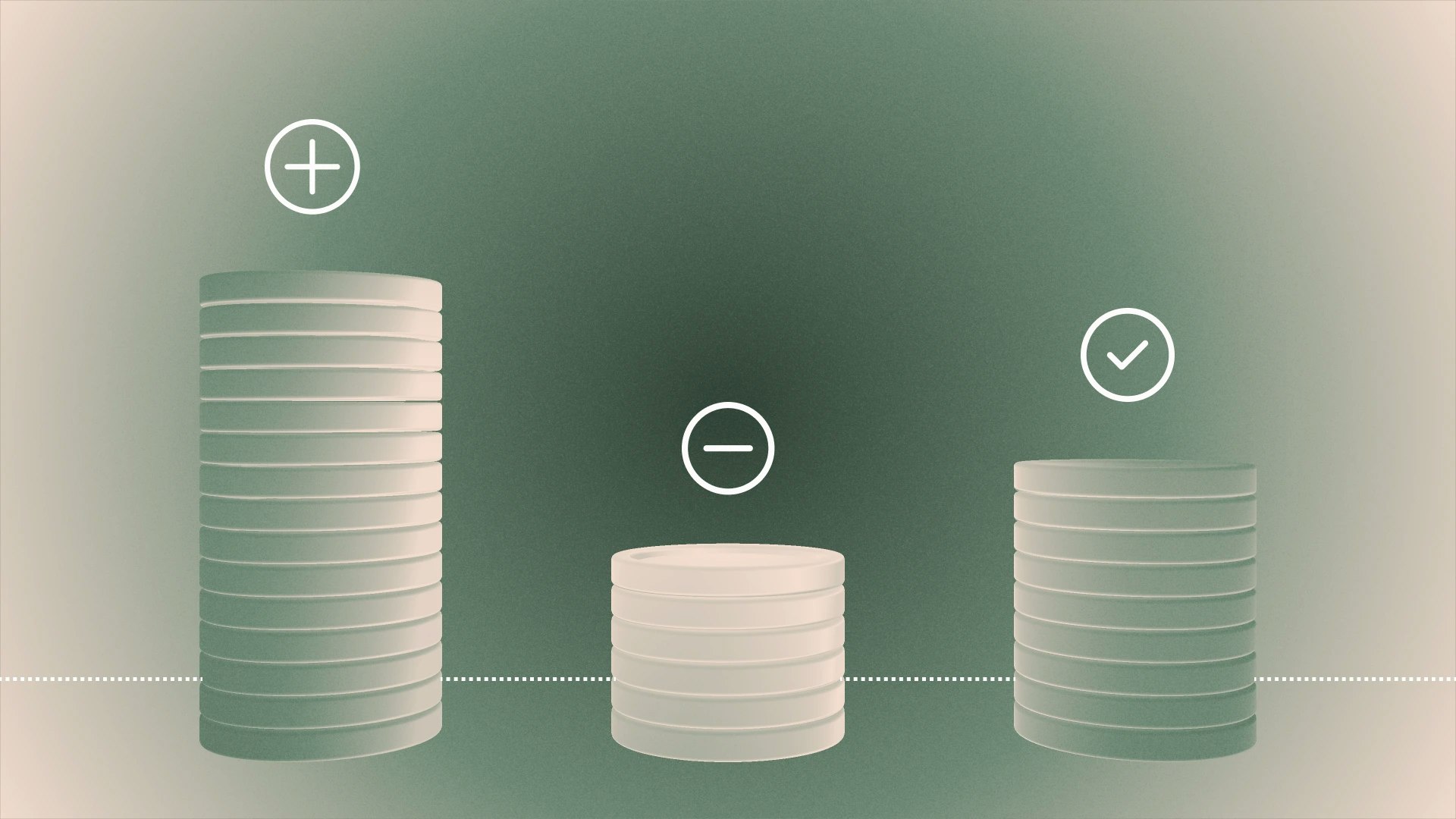
A business's records don't always give the full financial picture at first glance. For example, equipment loses value over time, some customer invoices might never get paid, and product returns can reduce sales revenue.
So, how do you account for these changes without losing track of the original amounts? Setting up contra accounts can help. You can use a contra account to separately record reductions to another account, so you can see both the original balance and its adjusted value.
Here, we explain how contra accounts work, with the goal of helping you make sense of your financial statements and get a more accurate picture of your company's finances overall.
What is a contra account?
A contra account is a separate account that’s used in double-entry bookkeeping to offset the balance of a related account, without changing its original amount. In your chart of accounts, you or your accountant will organize contra accounts alongside their related accounts, which will help you track different types of financial transactions and adjustments.
Why do businesses use contra accounts?
Businesses use contra accounts to maintain accurate bookkeeping. Contra accounts also make it easier to monitor changes in your company's finances and understand what's behind reported balances.
Using contra accounts can help your businesses to:
- Preserve the original balance: Contra accounts are a way to keep a record of an asset's purchase price, gross revenue, or outstanding receivables.
- Track changes over time: You can use contra accounts to monitor depreciation, sales returns, estimated losses, and other adjustments.
- Improve financial reporting: By using a contra account, your records will show both gross and net amounts, giving a clearer picture of your company's finances.
- Support audits and reviews: When you maintain a contra account, you’ll also maintain a record of adjustments that accountants and other stakeholders can examine.
As your business grows, keeping these details separate also makes it easier to review your general ledger and understand the transactions behind your financial statements.
How do contra accounts work?
In accounting, every account has a normal balance, which determines whether a debit or credit increases its value. Assets generally increase with debits, whereas liabilities, equity, and revenue increase with credits. Contra accounts work in reverse.
You can use contra accounts to offset the balance of a related account. The contra account will carry the opposite normal balance. For example, an asset account typically has a debit balance, but a contra asset account will have a credit balance. This allows businesses to record reductions in an asset's value without changing its original recorded cost.
For example, suppose your company buys equipment for $10,000. Over time, you’ll record $2,000 in depreciation to account for the portion of the equipment's cost that’s been used up. So, your books would show:
- Equipment (debit balance): $10,000
- Less accumulated depreciation (credit balance): ($2,000)
- Net book value: $8,000
By recording depreciation in a separate contra asset account, you can see both the equipment's original cost and its remaining book value.
Since you'll keep original balances and subsequent adjustments visible in the accounting records when using contra accounts, this method is a way to maintain a clearer picture of your business's finances, while following generally accepted accounting principles (GAAP).
What are the different types of contra accounts?
There are four main types of contra accounts, each named for the account it offsets: assets, liabilities, equity, or revenue. Although they all work in the same way, each type of account serves a different purpose.
1. Contra asset accounts
These accounts can be used to offset the reported value of an asset, such as equipment or accounts receivable, and they help businesses distinguish between an asset's original value and its current carrying value.
Contra asset accounts can be used to track and assess:
- Accumulated depreciation: how much of an asset's cost the business has expensed over time, such as machinery, equipment, or furniture
- Allowance for doubtful accounts: how much your company may not collect from outstanding customer invoices
2. Contra liability accounts
A contra liability account can be used to offset the reported amount of a liability, such as a debt obligation or a discount on bonds payable.
For example, when a company issues bonds for less than the face value, the company will record the difference as a discount, which reduces the bond's initial carrying value. The company then amortizes the discount over the bond's life.
Contra liability accounts may become relevant as your company’s financing arrangements grow more complex.
3. Contra equity accounts
You can use a contra equity account to offset the amount of equity that you report on your company's balance sheet.
A common example is treasury stock, which represents shares a company has repurchased from shareholders. The cost of those shares reduces total shareholders' equity.
4. Contra revenue accounts
A contra revenue account can be used to offset gross revenue to reflect adjustments, such as customer returns, allowances, or sales discounts.
Recording sales and returns separately allows the business to track both figures, and it can help reveal changes in customer behavior or product performance. An increase in returns, for instance, may signal problems with product quality, fulfillment, or customer expectations.
How to record contra accounts
Contra accounts have the opposite normal balance of their related accounts. So, to increase the balance of a contra asset account, you’ll record a credit, whereas for a regular asset account, you’d record a debit. Similarly, to increase the balance of a contra liability, equity, or revenue account, you’ll record a debit, whereas for their related accounts, you’d record a credit.
Here are a couple examples:
- Accumulated depreciation: When recording depreciation for equipment, you’ll debit the depreciation expense and credit the accumulated depreciation. This reduces the equipment's net book value without changing its original cost.
- Sales returns: When a customer returns a product, you’ll debit sales returns and allowances, and you’ll credit accounts receivable. This reduces net revenue while keeping gross sales visible.
For a recap, here’s how each type of contra account can offsets its related account:
Account type | Normal balance | Contra account balance | Common example of when this might be used |
|---|---|---|---|
Asset | Debit | Credit | Accumulated depreciation |
Liability | Credit | Debit | Discount on bonds payable |
Equity | Credit | Debit | Treasury stock |
Revenue | Credit | Debit | Sales returns and allowances |
How do contra accounts appear on financial statements?
On the balance sheet, you'll find contra asset, liability, and equity accounts reflected in their respective categories. On the income statement, contra revenue accounts affect the net revenue figure.
When analyzing your balance sheet, check whether the amounts shown are gross or net adjustments. This can help you understand what the reported figures represent.
How accumulated depreciation affects your books: A sample scenario
Suppose your company purchases equipment for $10,000. Over time, you’ll record $2,000 in depreciation to reflect the portion of the equipment's cost used up.
Here's how the purchase and depreciation will appear in your accounting records:
Transaction | Account | Debit | Credit |
|---|---|---|---|
Equipment purchase | Equipment | $10,000 | |
Cash | $10,000 | ||
Depreciation | Depreciation expense | $2,000 | |
Accumulated depreciation | $2,000 |
After recording depreciation, your balance sheet will show this:
Account | Amount |
|---|---|
Equipment | $10,000 |
Less: Accumulated depreciation | ($2,000) |
Net book value | $8,000 |
The equipment account retains its original $10,000 cost, and accumulated depreciation tracks how much the business has expensed. Together, these accounts show the equipment's remaining book value and its original purchase price.
How unpaid invoices affect accounts receivable: A sample scenario
Contra accounts can also help businesses account for money that they may never be able to collect.
For example, suppose your SaaS company has $50,000 in outstanding customer invoices. Based on past payment patterns, you estimate that customers may not pay $2,000.
To account for this, you’ll record $2,000 as a bad debt expense, and you’ll credit the allowance for doubtful accounts in your contra asset account.
Your balance sheet would show:
Account | Amount |
|---|---|
Accounts receivable | $50,000 |
Less: Allowance for doubtful accounts | ($2,000) |
Net accounts receivable | $48,000 |
The company in this example still has $50,000 in outstanding invoices, but expects to collect $48,000. Recording the allowance separately will give you a clearer picture of your expected collections, without needing to change the original receivables balance.
If you’re unable to collect a specific invoice, you can write it off against the allowance, rather than recording the same expected loss as a new expense.
Common mistakes to avoid when using contra accounts
Even if your bookkeeper or accounting software handles contra accounts, knowing what to look for can help you catch errors and better understand your financial records.
Some common mistakes include:
- Reducing the original balance directly: This can obscure historical costs, gross revenue, or outstanding receivables, making adjustments harder to track.
- Using the wrong debit or credit: Contra accounts have the opposite normal balance of their related accounts, so recording an entry on the wrong side can distort financial results.
- Confusing contra accounts with expenses: Accumulated depreciation will reduce an asset's book value. But a depreciation expense is a different concept, which reflects the cost of the asset, which your business will need to allocate to a specific period.
Regularly reviewing these balances can help you spot accounting errors and identify potential business issues before they become larger problems.
What contra accounts can tell you about your business
When you use contra accounts, you’ll collect more contextual information and details, which a single financial figure may not be able to convey. A growing allowance for doubtful accounts, for example, could signal that your business is having collection problems, whereas increasing numbers of returns may point to issues with product quality or customer satisfaction. Reviewing these balances can help you recognize the areas where your business may need attention and help you make more informed financial decisions.
Maintaining accurate, up-to-date books makes that process easier. With Mercury's accounting integrations, you can connect your banking activity to your accounting software and easily keep your financial records organized.
Related reads
The best payroll software for multi-state tax compliance in 2026
How to analyze payroll data to find hidden costs
How automated transaction categorization works