What does it mean to build in public today?

Vince Dixon is a digital media journalist and multimedia storyteller.
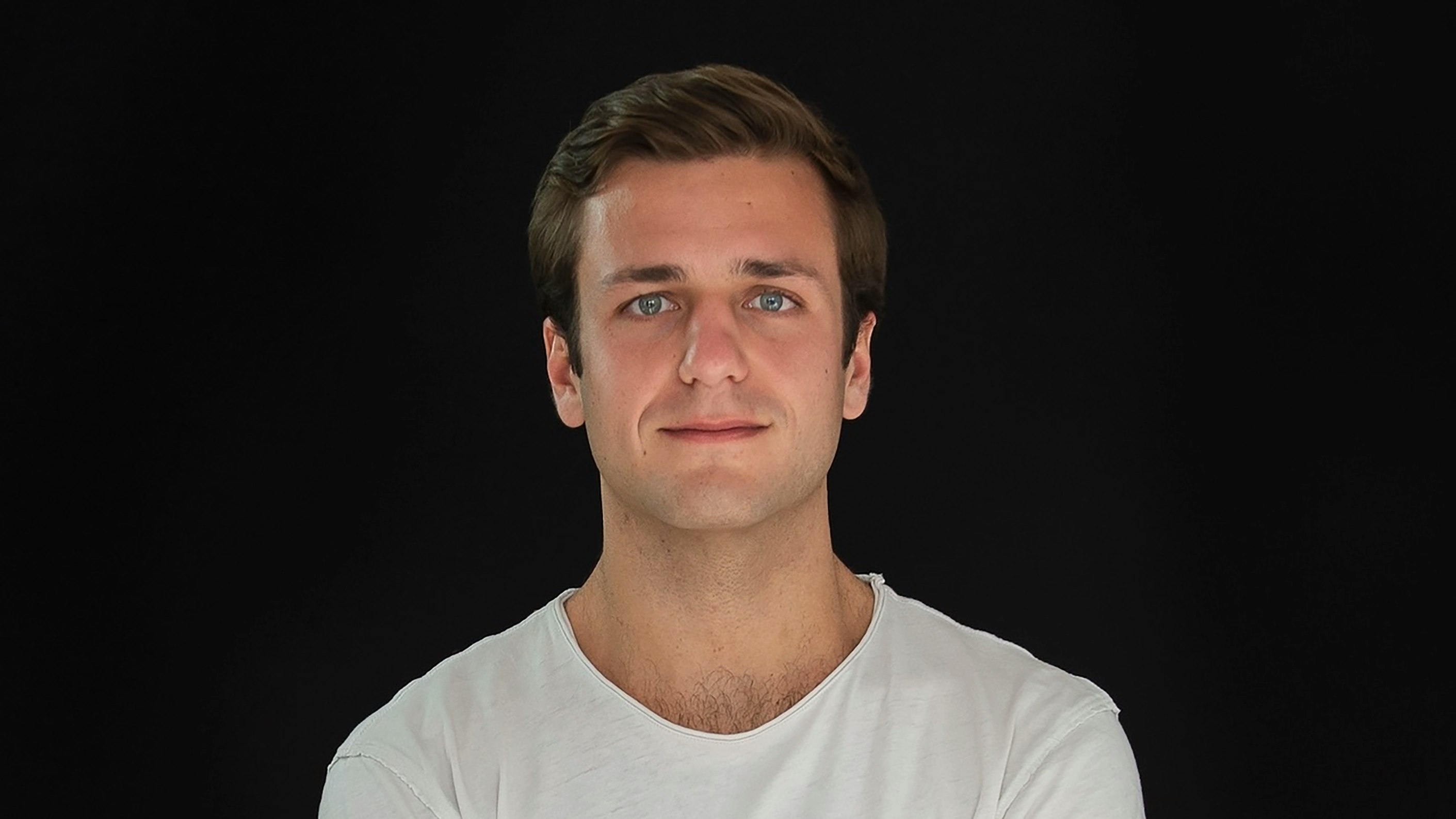
For as long as he can remember, Marc Köhlbrugge has been fascinated by the behind-the-scenes process of how things are made. As a child, he enjoyed watching cooking shows, despite being, as he says, a very picky eater. He still prefers watching the “making of” a movie, over sitting through the movie itself. So when he started building online businesses like PressDoc (in 2009) and BetaList (in 2010), he says it was only natural for him to start publicly sharing his own journey. Back then, that instinct didn’t necessarily have an official name. By the late 2010s, though, many people aptly started calling it “building in public.”
Building in public — the unofficial process in which entrepreneurs publicly document their startup journeys — started as a loose online concept, enticing entrepreneurs who maintain that a transparent online presence is key to establishing visibility, consumer trust, credibility, and brand positioning. “I think as a company, if you build in private, it’s harder to connect with your customers,” says Köhlbrugge, whose X/Twitter community helped normalize the “build in public,” or #BuildInPublic, moniker. “The way to stand out from the competition as a business is to be more authentic.”
The way to stand out from the competition as a business is to be more authentic.
Building in public has grown alongside two digital movements where signaling one’s identity has become commonplace: social media, which prioritizes the act of sharing content, and social networking, which has the goal of community building and interaction. According to Köhlbrugge, building in public usually follows at least one of the two. On social media, founders share content with their followers, subscribers, and potential customers to highlight their startup journeys. The social networking component involves founders sharing their startup journeys with a community of fellow builders to receive feedback, inspiration, and support. This happens on several platforms, including YouTube, LinkedIn, Reddit and forums dedicated to building in public, like Indie Hackers. “In practice there can be overlap between them,” Köhlbrugge says, with some benefits to reaching both audiences simultaneously; one group may have feedback the other isn’t thinking of, for example.
According to Köhlbrugge, the building in public movement has yet to reach its peak, but he’s unsure of what it will look like when it does. As a byproduct of the Web 2.0 era, it served to build community around individualism, entrepreneurship, and radical transparency. But with AI, evolving platforms, and elusive algorithms, its use and appeal may be reshaped by the tools that come next. For many new founders, joining the movement already feels less like an option and more like a necessity. Understanding this foundation might offer a clearer picture of where the build in public movement is heading.
The startup roots of building in public
The building in public concept has roots in early 2000s online startup culture, an era that celebrated corporate emancipation and self-branding — the latter fueled by founders and writers reaching audiences in an exciting new format: blogs. At the same time, a wave of new, non-traditional VC models changed how founders could secure funding. In 2005, a group of entrepreneurs created Y Combinator, widely regarded as the first modern startup accelerator: The idea, which would later help launch tech giants like Airbnb and DoorDash, turned angel funding into a more open and accessible process for bootstrapping entrepreneurs eyeing Silicon Valley. Its legacy lowered the barrier to entry and institutionalized the cohort model, allowing founders to build and grow alongside other founders in their cohorts.
Four years after YC’s launch, crowdfunding site Kickstarter debuted in April 2009, allowing creators to leverage online communities to fund their projects directly, often turning them into businesses (crowdfunding is now a multi-billion dollar market). Soon after Kickstarter’s launch, the U.S. version of Shark Tank premiered on ABC, bringing the act of seeking investment into mainstream culture, and turning it into entertainment. Both Kickstarter and Shark Tank put founders front and center and marketed their minds, lives, and experiences, not just their products. Both normalized the practice of founders creating a story to pitch in public, instead of to investors in private.
In this era, many people building innovative businesses benefited from public-facing campaigns, and the lines between company leadership, company culture, and public image thinned. By the 2010s, some companies took it a step further by taking traditionally guarded elements of their operations “public” in order to appeal directly to consumers outside just the funding stage. Companies like Buffer and Baremetrics started using the term “open startup movement” to refer to what many call “build in public” today. Back then, the focus was more on startups transparently sharing their salaries, metrics, and finances — and using that accountability as a marketing and differentiation tool. By 2015, the nonprofit Open Startup Initiative, which counted seven startups in its first cohort, aimed to centralize the movement.
In this era, the lines between company leadership, company culture, and public image thinned.
The era also saw the emergence of bootstrapping entrepreneurs-turned-influencers like Pieter Levels, who adopted and popularized elements of the open startup movement, attaching it to the digital nomad and liberated solopreneur mindset; Courtland Allen, who founded the bootstrapping social networking platform Indie Hackers in 2016; and more recently, influencer/indie hacker Marc Lou.
Transparency and individualism grounded the early years of building in public as a movement, but another important element emerged alongside the rise of the social web. In her book The Influencer Industry: The Quest for Authenticity on Social Media, Emily Hund, research affiliate at the University of Pennsylvania’s Center on Digital Culture and Society, tracks how technological and social norms in the late 2000s and early 2010s led to a new industry of “digital influence”: one that sought to systematically market the personalities and identities of the people behind digital content. From its initial, free-for-all state, social media developed a lucrative polished and “curated” approach, then one attuned to “authenticity” by the mid-2010s. In Hund’s view, this shift from performance to a demand for authenticity followed a backlash to the rise of the overly commercialized influencer, specifically the trends of purchasing fake followers and “secretly sponsored” content, both of which eroded trust in influencer culture.
But being authentic can mean different things to different people. Despite the internet’s hunger for it, authenticity is becoming increasingly tricky to define, package, and present. In the current and future online landscape, authenticity is a volatile subjective construct that changes and looks different depending on who is broadcasting it and their comfort level with vulnerability. Finding the right balance can become an additional job that founders have to master, then learn to re-master every time internet trends and consumer tastes pivot.
Keep in touch
Subscribe to our community newsletter for monthly stories, resources, and inspiration from Meridian and across Mercury.
Building in public in 2026
When Nicole Young decided to adopt a build in public strategy in 2025 for her content marketing consulting business, she says other entrepreneurs sharing their journeys online were an inspiration. “I’ve always looked at social media from the perspective of studying it as a creator, not as a consumer, so as I’m scrolling and seeing ‘this person was able to build their own company because they were sharing the process as they went,’ that kind of stuff was inspiring to me.” Young says. “Even though I wasn’t really calling it ‘build in public,’ it was a movement and a language that I recognized that people were starting to use to be successful.”
Young and other founders currently building in public are doing so in a very different, rapidly changing internet environment than that of even five years ago. With predictive algorithms, humans are no longer fully in control of the experience or its benchmarks; the act of discovery feels more predetermined as platforms seek and reward content that yield expected results over unproven formats and new ideas. With more than 5 billion people on social media and AI making it easier to build, saturation adds another barrier to visibility.
I don’t want to perform things out of a desire to impress people or get them to follow me.
Building in public’s usefulness as a discovery tool in the age of AI, algorithms, and decreasing reliance on search engines is becoming clearer. For some founders — including Young — it’s one of the few ways they can hit all the elusive marks that an algorithm-driven internet now demands. Young’s approach spans platforms from Instagram to YouTube and TikTok, and leverages her actual experiences and expertise. “I don’t want to perform things out of a desire to impress people or get them to follow me,” she says. “I want to start from what my true goals or desires are and then I think about more of the marketing side, like ‘Okay, how do I frame this in a way that will make other people see themselves in the story or be inspired by it?’”
Unfiltered authenticity also comes with some practical concerns, which are specifically exacerbated by the modern internet. Even as a champion of building in public, Köhlbrugge worries about privacy. As his popularity in the space has grown, he no longer posts how much he earns from his ventures or his specific whereabouts. He is conflicted about using photos of himself for his profiles despite firmly believing that customers respond better to seeing a founder’s face. “I’ve had times where people would recognize me [in person], which is kind of fun,” Köhlbrugge says, but then he thinks of an influencer friend with a lot more followers and who uses real photos of themselves in their profile, “and to me that starts to sound a little bit scary.”
Moreover, as any online “main character of the day” can attest, saying too much at times can backfire. Oversharing to the point of revealing to potential customers or investors that the founder is actually more green than they realized, making things up as they go, or struggling to make sage judgment calls can take control of the narrative away from the founder and erode trust. Saying something that works within the context of one internet bubble or network may turn others off, leaving founders dealing with the digital — and real life — aftermath of “stepping in it.”
Founders have to figure these things out on their own, navigating the ever-changing standards for acceptable authenticity and vulnerability — even if it means making brand-damaging mistakes. In her book, Hund describes authenticity as a contrived ideal with corporate influences. “There is not, nor has there ever been, one ‘true’ meaning or embodiment of authenticity, as its existence is always dependent on ideas of the people invested in it at any given time or place,” Hund wrote.
Case in point: Naomi Bahta, the Toronto-based founder of Good Dogs Only, a K9 accessories brand, took a step back from her building in public content, such as showing product samples and how she stored inventory, to reflect on whether it was helping or hurting her business. “We have moved to a space where people are oversharing more and more and more to try to be that leader in transparency, but a lot of the times it comes at the expense of the viewers seeing how premature, how unorganized, how unsure you are with a lot of your decisions,” Bahta says.
She also realized that even as a fan of other founders building in public, she rarely became a customer of their actual products, and wondered if the same might be true for her brand.
“When it comes to sharing your personal brand to other business owners, the end consumer there is someone who is much like you,” Bahta says. “But for your business, your end consumers are probably very, very different in a lot of ways. They might not be business owners. They might be college students. They might be middle-aged people. They might be moms, or whatever it is. It just simply isn’t the same core demographic, so why would you try to speak to all of these people all at once?”
There is not, nor has there ever been, one ‘true’ meaning or embodiment of authenticity.
Bahta has since scrubbed her social media accounts of most of her build in public content, particularly videos documenting her failures and mistakes. She has re-oriented her consumer-facing content around her brand messaging.
True believers like Köhlbrugge are standing by the benefits, despite the drawbacks; Köhlbrugge says he hasn’t met anyone who regretted building in public, saying even the drawbacks can have an upside. Young tries not to treat her social media activity as a separate job, and recommends entrepreneurs organically convert their everyday business tasks into content to make it feel less forced. This approach is allowing her to build as much trust as she can, she says.
“There’s definitely a balance you have to strike to stay authentic, but you’re going to be doing certain things anyway,” Young says. “You’re going to be doing your job of growing your business, anyway. This is just giving people a window to see into your process.”
Köhlbrugge agrees, adding that the whole point of building in public is to build a personal, relaxed connection with peers and with customers. “A common mistake I see people make when they start building in public is to be too polished,” he says. “But the lesson is to kind of be human.”
About the author
Vince Dixon is a digital media journalist and multimedia storyteller. He tells a variety of stories using reporting, data, code, AI, and visuals.
Share article
Related reads
Illustrator María Jesús Contreras on the value of authentic work

Fishwife founder Becca Millstein on brand as leverage
A new age for an anti-slop internet